
Intramuscular vs. Subcutaneous TRT: Benefits, Disadvantages, and Needle Sizes
When planning testosterone replacement therapy administration, choosing the right delivery method is just as vital as understanding what testosterone levels qualify for TRT. Patients are generally faced with two primary application routes: intramuscular (IM) and subcutaneous (sub-Q).
Each method impacts hormone pharmacokinetics, injection comfort, and daily convenience differently depending on the specific ester used—such as testosterone cypionate, enanthate, or multi-ester blends like Sustanon 250.
This guide examines the scientific evidence, pros and cons, needle gauge requirements, absorption variations, and practical considerations associated with both injection methods in the UK.
In This Guide
Understanding the Core Differences in Injection Pathways
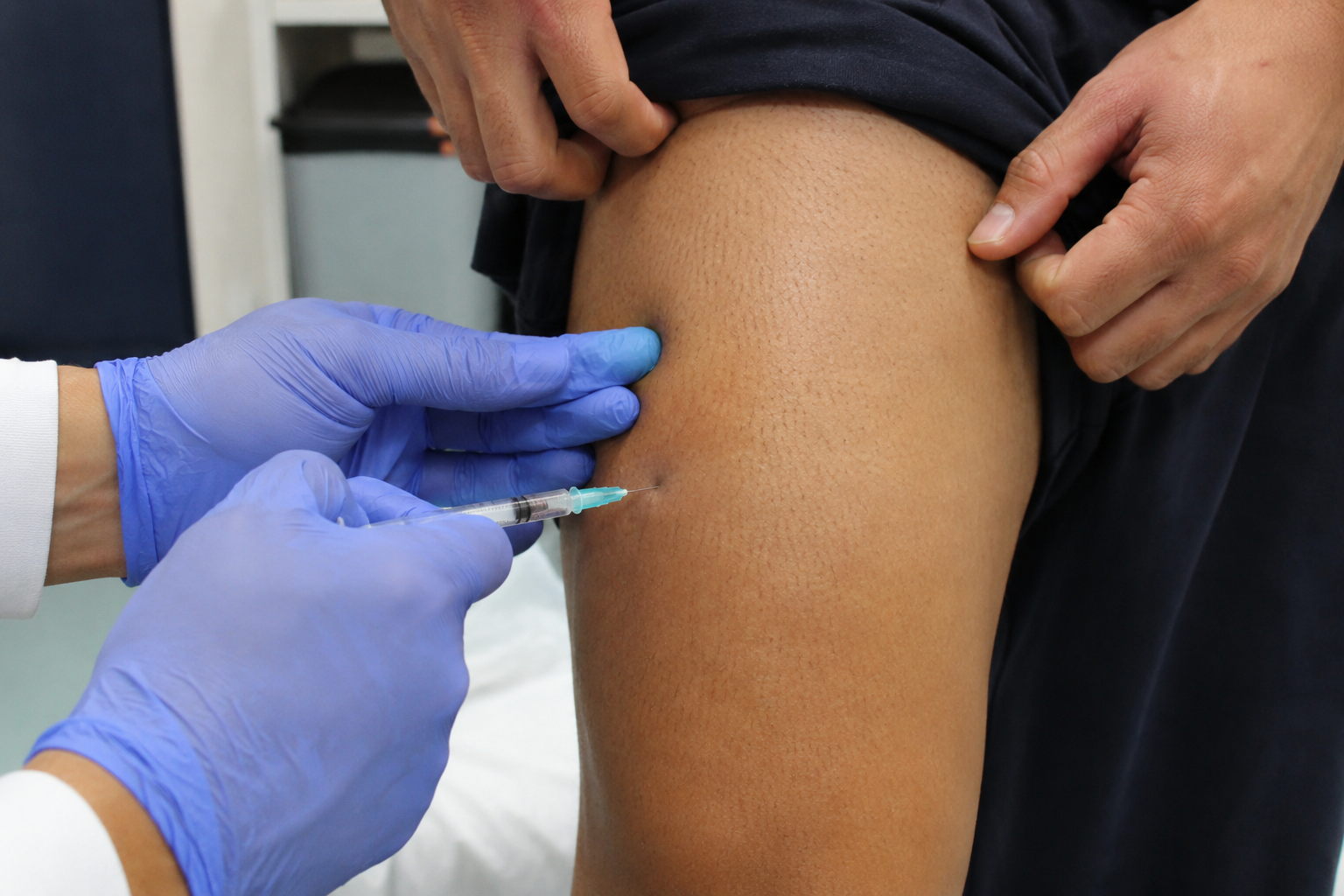
Intramuscular injections deliver testosterone deep into muscle tissue, where a rich blood supply absorbs the hormone steadily over several days or weeks depending on the ester. Conversely, subcutaneous injections place the oil-based solution into the fatty tissue just beneath the skin, typically in the abdomen or thigh.
While traditional medical protocols have leaned heavily toward IM delivery, modern clinical practices increasingly support sub-Q applications—particularly for men utilizing frequent, lower-dose protocols to maintain stable blood serum levels.
Testosterone Esters: Cypionate, Enanthate, and Sustanon
Not all testosterone formulations behave the same way across different injection routes. Understanding your specific ester is essential for safety and efficacy:
- Testosterone Cypionate: Officially labelled for intramuscular use. However, there is an abundance of scientific evidence supporting its safe and effective use via the subcutaneous route (considered an off-label practice supported by clinical literature).
- Testosterone Enanthate: Highly versatile, enanthate can be administered comfortably via both intramuscular and subcutaneous pathways with predictable pharmacokinetic profiles.
- Sustanon 250: A multi-ester blend containing short and long-acting esters. Sustanon should strictly be administered intramuscularly due to how its blend interacts with subcutaneous tissue, which can sometimes lead to localized irritation or unpredictable absorption.
Where to Administer: Intramuscular vs. Subcutaneous Sites
Choosing the correct anatomical site ensures medication is absorbed safely and minimizes post-injection discomfort. The preferred locations differ depending on whether you are using an intramuscular or subcutaneous route:
- Intramuscular (IM) Sites: Most commonly, patients use the deltoid muscle (shoulder), the rectus femoris or vastus lateralis (quadriceps/thigh), or the gluteal muscle (glutes). Note that targeting the glute requires a longer needle depth to successfully clear the subcutaneous fat layer and reach the muscle tissue.
- Subcutaneous (Sub-Q) Sites: Most commonly administered an inch or two away on either side of the navel (belly button) in the abdominal fat layer. Alternatively, some individuals utilize the flank or upper gluteal fat areas if they present a suitable fatty tissue depot.
Recommended Needle Sizes and Gauges
Choosing the right equipment minimizes discomfort, tissue scar formation, and post-injection pain. Requirements vary significantly depending on whether you are drawing from multidose vials or snap-open glass ampoules.
For thin, oil-based solutions like testosterone cypionate, many patients use a fine 27G, 1/2-inch needle for both shallow intramuscular (such as ventrogluteal or shoulders) and subcutaneous injections.
In contrast, medications packaged in glass ampoules—such as Sustanon—require an initial thicker drawing needle (typically an 18G) to prevent blunting the needle tip on glass and to draw the oil quickly. Clinicians then swap this out for a finer injection needle, such as a 25G, 1-inch needle, to ensure proper deep intramuscular depth.
Evaluating the Pros and Cons
Subcutaneous Route
Pros: Uses ultra-fine needles, highly convenient for frequent microdosing, significantly reduces scar tissue build-up.
Cons: Some patients experience localized lumps, mild bruising, or skin irritation from the oil depot.
Intramuscular Route
Pros: Reliable and consistent absorption for all ester types, well-established clinical history.
Cons: Requires longer needles, can cause muscle soreness (PIP), and carries a minor risk of hitting superficial blood vessels or nerves.
Microdosing Strategy
Pros: Splits total weekly volume into smaller doses (e.g., every 3.5 days or daily), flattening peak-and-trough hormone fluctuations.
Cons: Requires significantly more frequent injections, which some patients find tedious over time.
Absorption Dynamics and the Power of Microdosing
Subcutaneous administration is especially advantageous for individuals who prefer microdosing protocols (such as injecting small amounts every day or every other day). By smoothing out hormone delivery, microdosing minimizes estrogen spikes, reduces red blood cell volatility, and mimics natural testicular output more closely than traditional weekly or bi-weekly large bolus injections.
Real-World Patient Realities, Absorption Anomalies, and Personal Preference
While clinical studies show comparable overall bioavailability between IM and sub-Q routes for cypionate and enanthate, practical reality introduces individual variance.
In everyday clinical practice, there is the odd patient who struggles to absorb the medication correctly via the subcutaneous route, resulting in subpar serum levels. When these individuals switch over to intramuscular administration, their blood levels jump higher and stabilize appropriately.
Conversely, others find intramuscular injections intimidating or uncomfortable, thriving entirely on sub-Q routines once they find the right injection site. At the end of the day, choosing between intramuscular and subcutaneous administration comes down to patient preference, individual comfort, and what fits best into your lifestyle under medical supervision.
Frequently Asked Questions About TRT Injection Methods
Is subcutaneous testosterone injection considered off-label?
Yes. While esters like testosterone cypionate are officially labelled for intramuscular use, extensive scientific evidence and modern clinical practice support subcutaneous administration as a safe and effective alternative.
Can Sustanon be injected subcutaneously?
No. Sustanon 250 is a multi-ester blend that should strictly be administered via the intramuscular route to ensure proper absorption and minimize localized skin reactions.
What needle size is best for cypionate injections?
For cypionate, many patients use a fine 27G, 1/2-inch needle for both subcutaneous and shallow intramuscular applications, minimizing discomfort and tissue trauma.
Why do ampoules require a different drawing needle?
Glass ampoules require an 18G drawing needle to extract the oil cleanly without dulling the needle tip on glass. Clinicians then swap to a finer gauge (such as a 25G, 1-inch needle) for the actual injection.
What should I do if my sub-Q levels appear low?
A small subset of patients experience poor absorption through fat tissue. If blood tests show lower-than-expected serum levels despite consistent dosing, your clinician may recommend switching to intramuscular injections.
Does microdosing reduce estrogen and hematocrit spikes?
Frequently splitting your weekly dose into smaller, regular intervals helps prevent large peak-and-trough hormone fluctuations, which can often smooth out secondary spikes in oestradiol and haematocrit.