Join our community
Acne is a recognised side effect of testosterone treatment and is something some men notice after starting Testosterone Replacement Therapy (TRT). It may appear on the face, chest, shoulders or back, particularly during the early stages of treatment or following changes to a testosterone protocol.
TRT does not automatically cause acne, and many men receiving testosterone therapy will never experience significant skin problems. However, testosterone and other androgens can influence the oil-producing glands within the skin, which helps explain why acne can appear or become more noticeable in susceptible individuals.
This UK-focused guide explains why acne may occur during TRT, what factors may contribute to it, when skin changes are worth discussing with your clinician or GP, and how acne is normally assessed and treated.
The main points to understand about testosterone therapy and acne.
Acne develops when hair follicles within the skin become blocked by oil and dead skin cells. This can lead to blackheads, whiteheads, inflamed spots, pustules and, in more severe cases, deeper nodules or cysts.
Testosterone is an androgen hormone. Androgens influence sebaceous glands — the glands responsible for producing sebum, the natural oily substance that helps protect the skin.
When sebaceous activity increases, more oil may be produced. Combined with changes within the follicle and local inflammation, this can create an environment in which acne is more likely to develop.
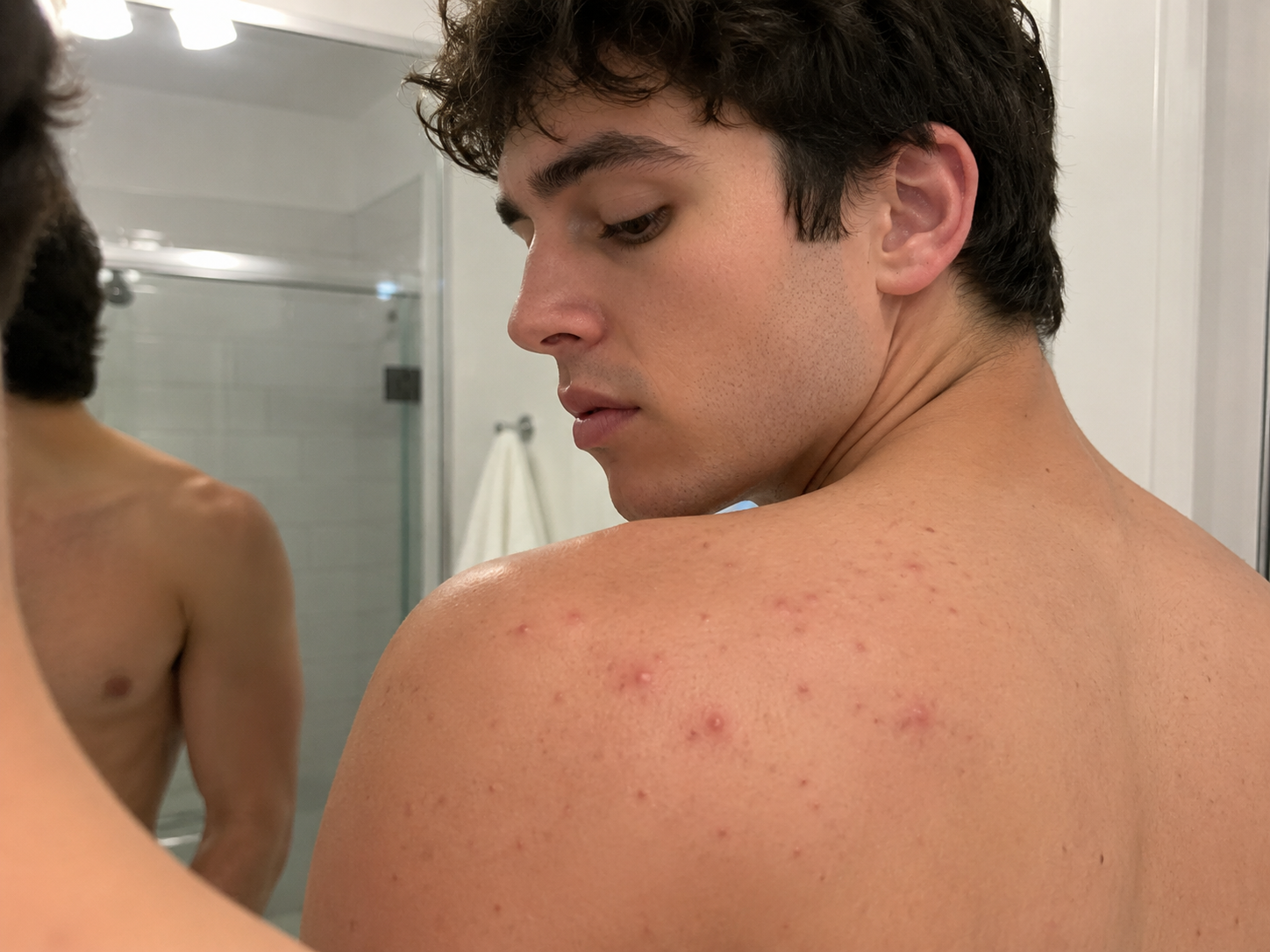
Acne is a recognised side effect of testosterone therapy. This does not mean that everyone receiving TRT will develop acne. Skin response to androgen exposure varies considerably between individuals.
Acne can appear anywhere there are sebaceous glands, but areas with greater numbers of oil-producing glands are commonly affected.
Not necessarily. Developing acne after starting TRT does not, by itself, prove that your testosterone level is excessive.
Skin sensitivity to androgens varies considerably between individuals. Someone may develop acne while their testosterone levels remain within their intended treatment range, while another person may experience no acne at all.
Testosterone levels should be interpreted using correctly timed blood testing appropriate to the testosterone preparation being prescribed.
New acne that appears after starting TRT or after a change in treatment is worth mentioning to the clinician responsible for your testosterone therapy.
Men who experienced significant acne during adolescence or who already have naturally oily or acne-prone skin may be more susceptible.
Do not change your prescribed testosterone dose solely because acne has appeared. If acne becomes problematic, discuss both the skin symptoms and your TRT monitoring results with the clinician responsible for treatment.
Testosterone prescribed for diagnosed testosterone deficiency aims to restore testosterone to an appropriate physiological range. This is different from using supraphysiological doses of testosterone or other anabolic steroids for bodybuilding or performance enhancement.
Acne can also occur with anabolic-androgenic steroid misuse, particularly where androgen exposure is substantially above normal physiological levels. Medically supervised TRT and anabolic steroid misuse should not be treated as equivalent.
TRT vs Anabolic SteroidsTestosterone may contribute to acne in susceptible men, but skin problems are often influenced by several factors at the same time.
Sweat, tight gym clothing and friction can irritate acne-prone skin, particularly across the back, chest and shoulders.
People with naturally oily skin may already have a greater tendency towards blocked follicles.
Some oily cosmetic, moisturising or hair products can contribute to blocked pores in susceptible people.
A personal or family tendency towards acne can influence how strongly the skin reacts to hormonal changes.
Mild acne can sometimes be managed with sensible skin care, while persistent or moderate-to-severe acne may require treatment through a pharmacist, GP or dermatologist.
Acne treatment is generally selected according to severity, the type of acne present, whether scarring is developing and how much the condition is affecting the individual.

Acne treatment depends on severity, the type of lesions present, whether scarring is developing and how much the condition is affecting your wellbeing.
Mild acne may sometimes respond to topical treatment or suitable over-the-counter products. A pharmacist or GP can advise which options may be appropriate.
More persistent inflammatory acne may require a structured treatment plan through a healthcare professional. Treatment generally needs time to work and should be reviewed rather than repeatedly changed after only a few days.
Severe acne, painful nodules, cysts or evidence of permanent scarring may require specialist dermatology assessment. Prescription acne medicines should be used under appropriate medical supervision.
Acne treatment can take time. Do not assume treatment has failed simply because the skin does not improve immediately. Follow the advice provided by the healthcare professional managing the acne.
Sometimes the clinician managing TRT may review treatment when a new adverse effect appears, but acne should not automatically lead to stopping testosterone.
Depending on your individual circumstances, the clinician may look at:
Do not change your dose, treatment schedule or testosterone preparation without speaking to the prescribing clinician. Treatment decisions should be based on symptoms, blood results and wider clinical circumstances rather than acne alone.
Mild occasional spots are common, but medical assessment becomes more important when acne is persistent, painful, widespread or beginning to leave scars.
UKTRT provides general educational information and is not a medical service. We are not doctors. The information on this page should not be used as a substitute for individual medical advice, diagnosis or treatment.
Do not start, stop or alter prescribed testosterone or prescription acne medication without discussing it with the appropriately qualified healthcare professional responsible for your care.
Further UK clinical information about acne and testosterone treatment is available from organisations and prescribing resources including:
Acne is a recognised adverse effect of testosterone therapy. However, not everyone receiving TRT develops acne and individual susceptibility varies.
Androgens such as testosterone can increase activity within the sebaceous glands of the skin. Greater oil production can contribute to blocked follicles and inflammation, increasing the likelihood of acne in susceptible people.
Not necessarily. Skin sensitivity to androgens differs between individuals, so acne alone cannot determine whether a prescribed testosterone dose is excessive. Blood results, symptoms and wider monitoring information need to be considered together.
Do not stop or change prescribed TRT because of acne without speaking to your clinician. Mild acne may be treatable without altering testosterone therapy, while more significant symptoms may justify reviewing both the skin condition and treatment.
Acne commonly affects areas containing many sebaceous glands, including the face, chest, shoulders and back. The exact pattern varies between individuals.
Showering after exercise and changing out of sweaty clothing may reduce skin irritation and remove excess sweat and oil, although hormonally influenced acne may still require appropriate treatment.
Speak to a GP or appropriate healthcare professional if acne is painful, widespread, persistent, producing nodules or cysts, beginning to scar or significantly affecting your wellbeing.
Medically supervised TRT and anabolic steroid misuse are not the same. TRT aims to treat diagnosed testosterone deficiency using a prescribed treatment plan, whereas anabolic steroid misuse can involve substantially greater androgen exposure and additional health risks.