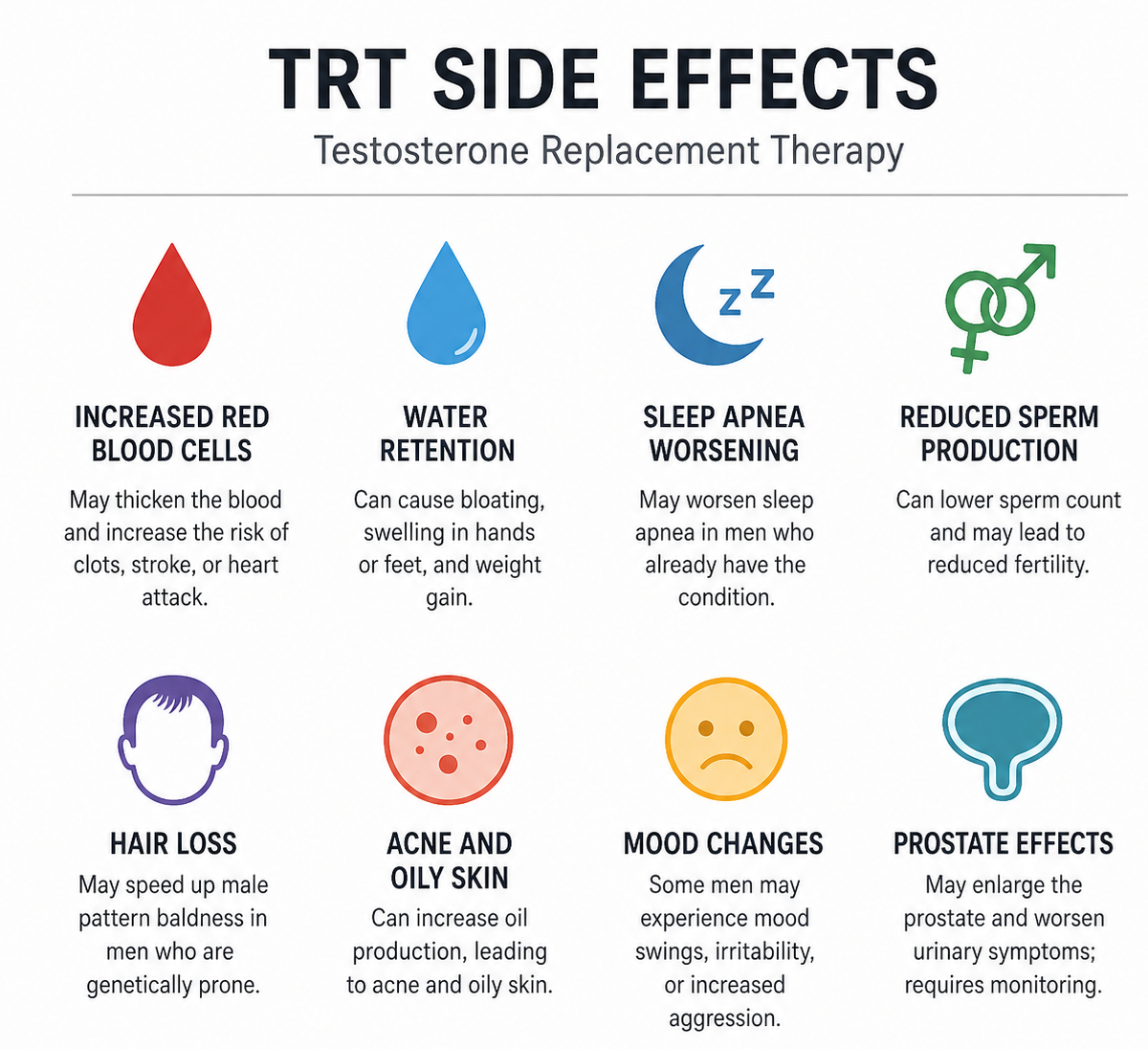
Join our community
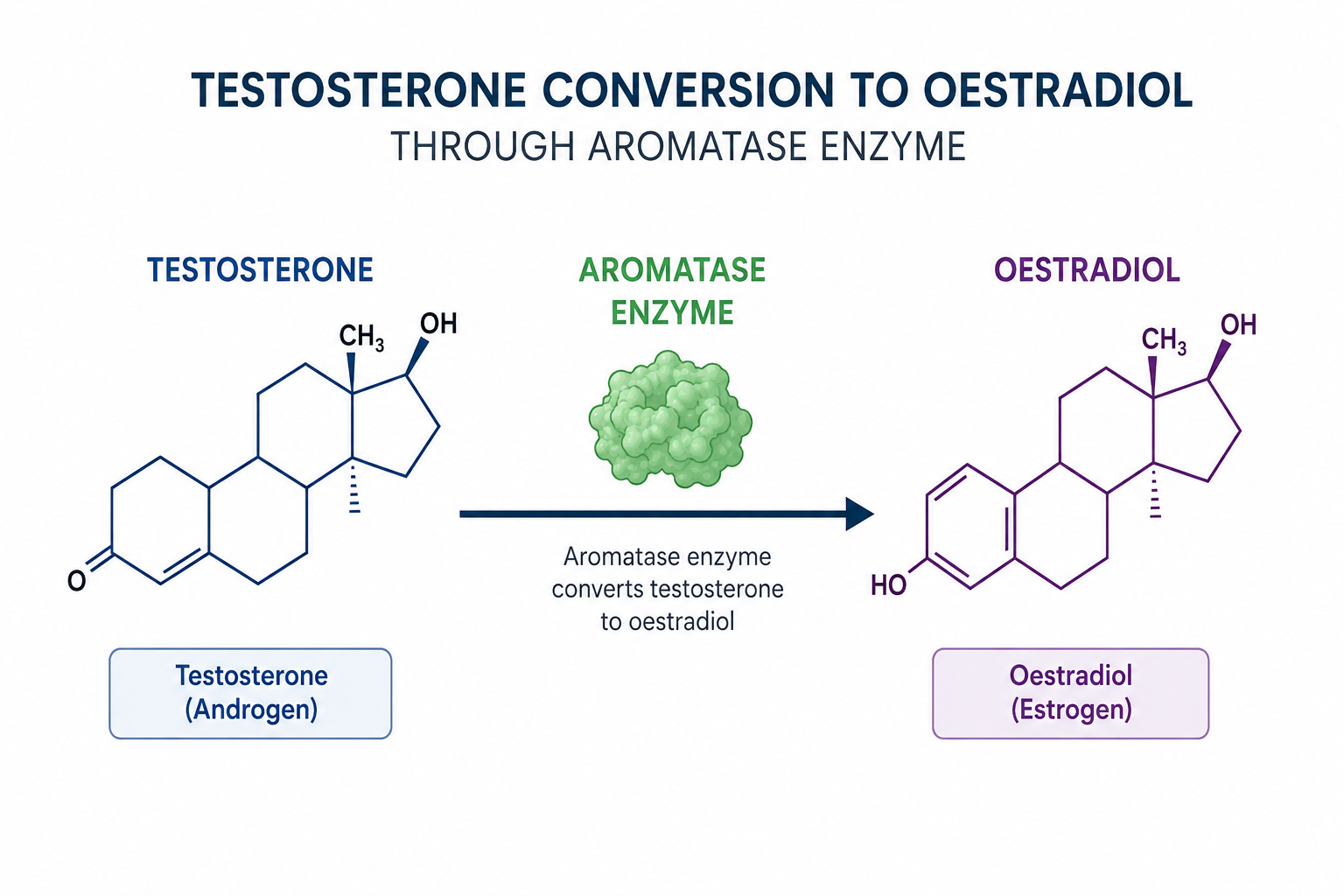
Aromatase inhibitors are sometimes discussed alongside Testosterone Replacement Therapy (TRT) because testosterone can be converted into oestradiol through the aromatase enzyme.
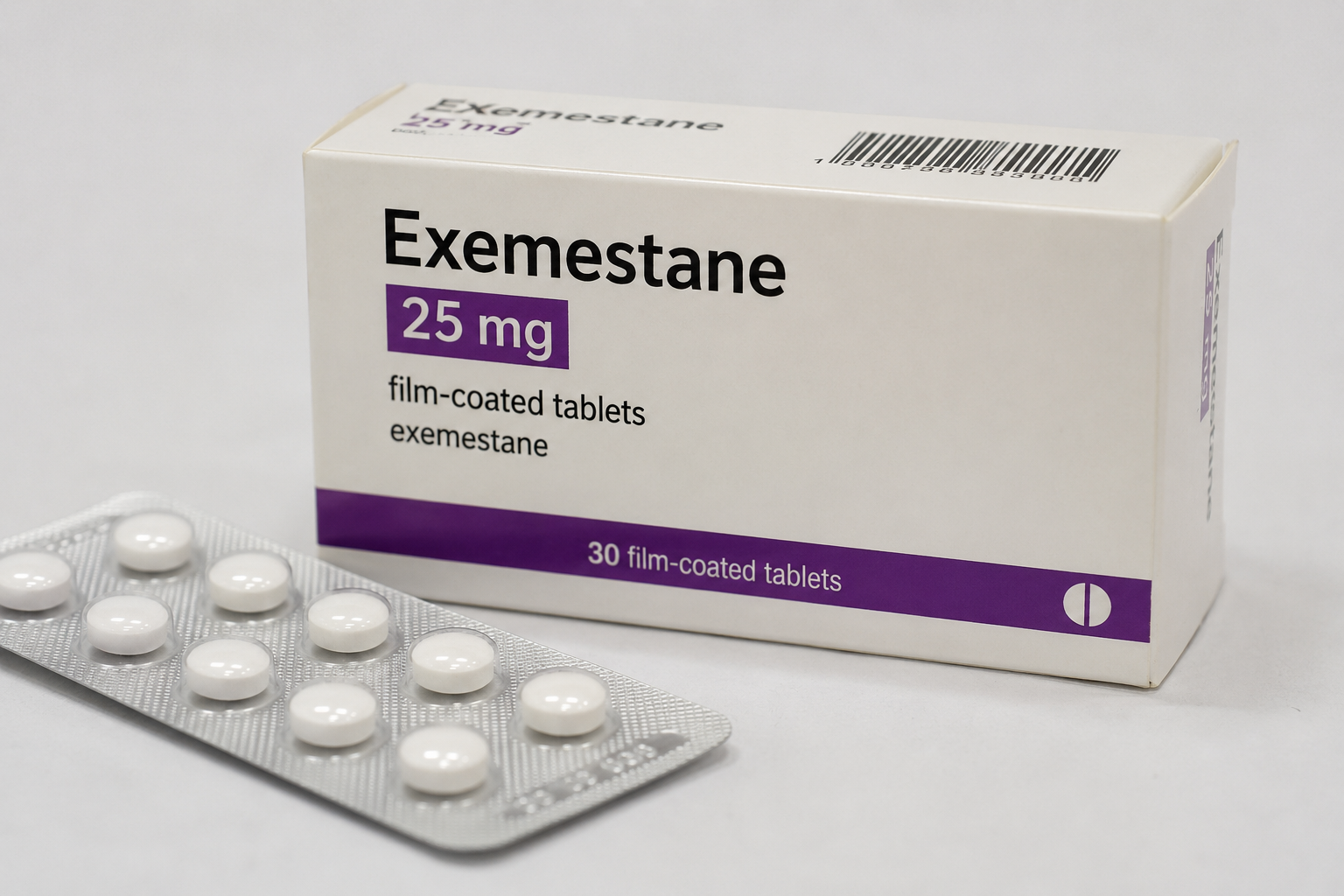
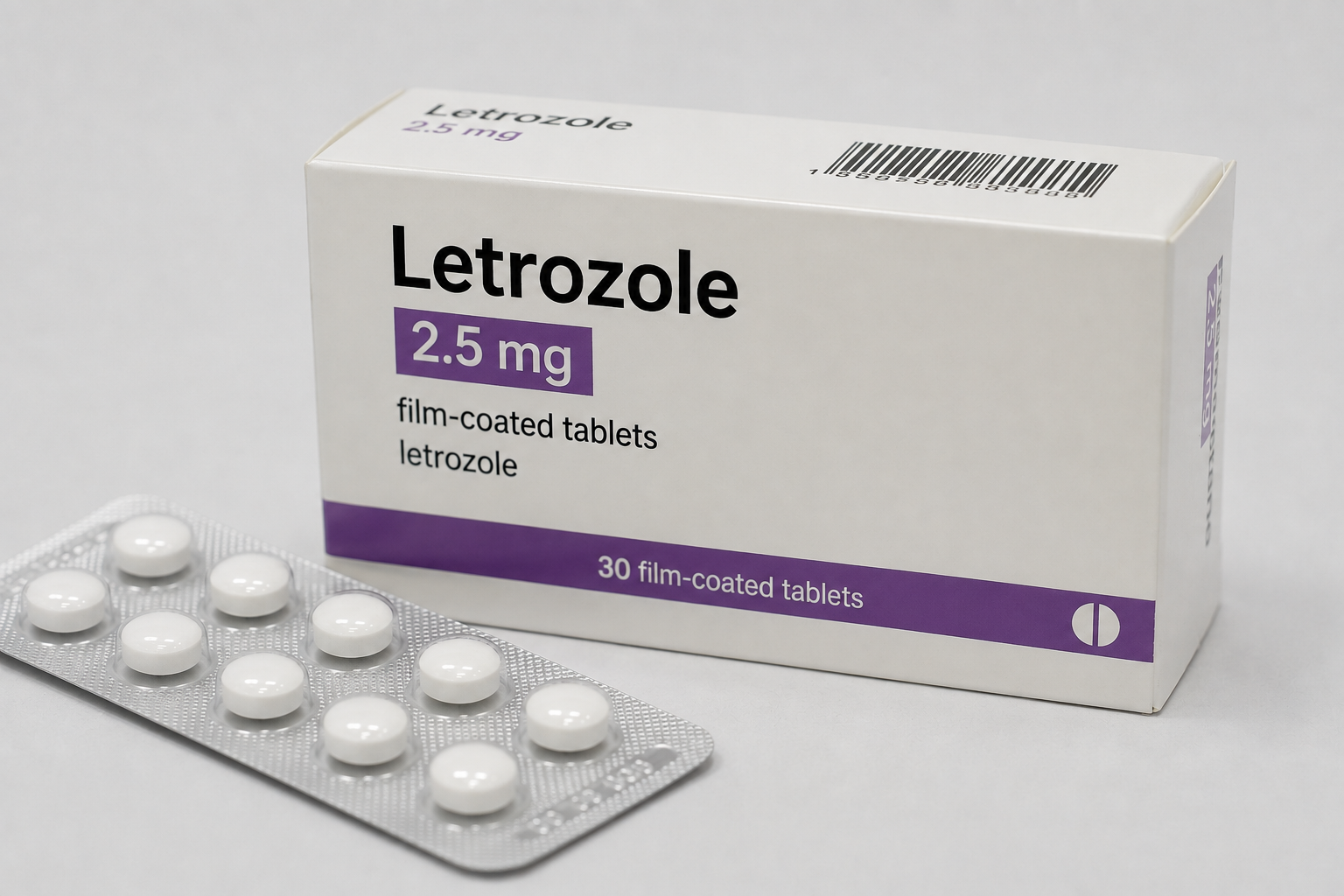
Medications such as anastrozole, exemestane and letrozole reduce oestrogen production by inhibiting this conversion. However, lowering oestradiol is not automatically necessary simply because a blood test shows an elevated result.
Oestradiol has important physiological functions in men. The decision to use an aromatase inhibitor therefore requires considerably more context than simply attempting to keep E2 below a particular number.
Testosterone and oestradiol are connected parts of male endocrine physiology. An increase in oestradiol during TRT can occur as a consequence of increased testosterone availability.
An elevated oestradiol result does not, by itself, establish that treatment with an aromatase inhibitor is required.
Symptoms, testosterone exposure, blood-test timing, treatment protocol and the wider clinical picture all need to be considered before deciding whether intervention is appropriate.
Aromatase is an enzyme involved in the conversion of androgens into oestrogens. In men, this includes the conversion of testosterone into oestradiol.
An aromatase inhibitor — commonly abbreviated to AI — is a medication that inhibits this process and consequently reduces oestrogen production.
This is why aromatase inhibitors sometimes enter discussions about TRT. If testosterone availability increases, more testosterone may be available for aromatisation and oestradiol may also increase.
However, aromatisation is a normal physiological process. The presence of oestradiol during testosterone therapy is not itself a problem that needs correcting.
Testosterone can be converted into oestradiol by aromatase. Increasing testosterone availability during TRT can therefore increase oestradiol concentrations in some men.
This does not automatically represent a complication. Testosterone and oestradiol should be considered together rather than treating oestradiol as an unwanted by-product of testosterone treatment.
Where symptoms or unexpected blood results occur, a clinician may review the overall treatment protocol, testosterone exposure, timing of blood tests and other relevant factors before considering additional medication.
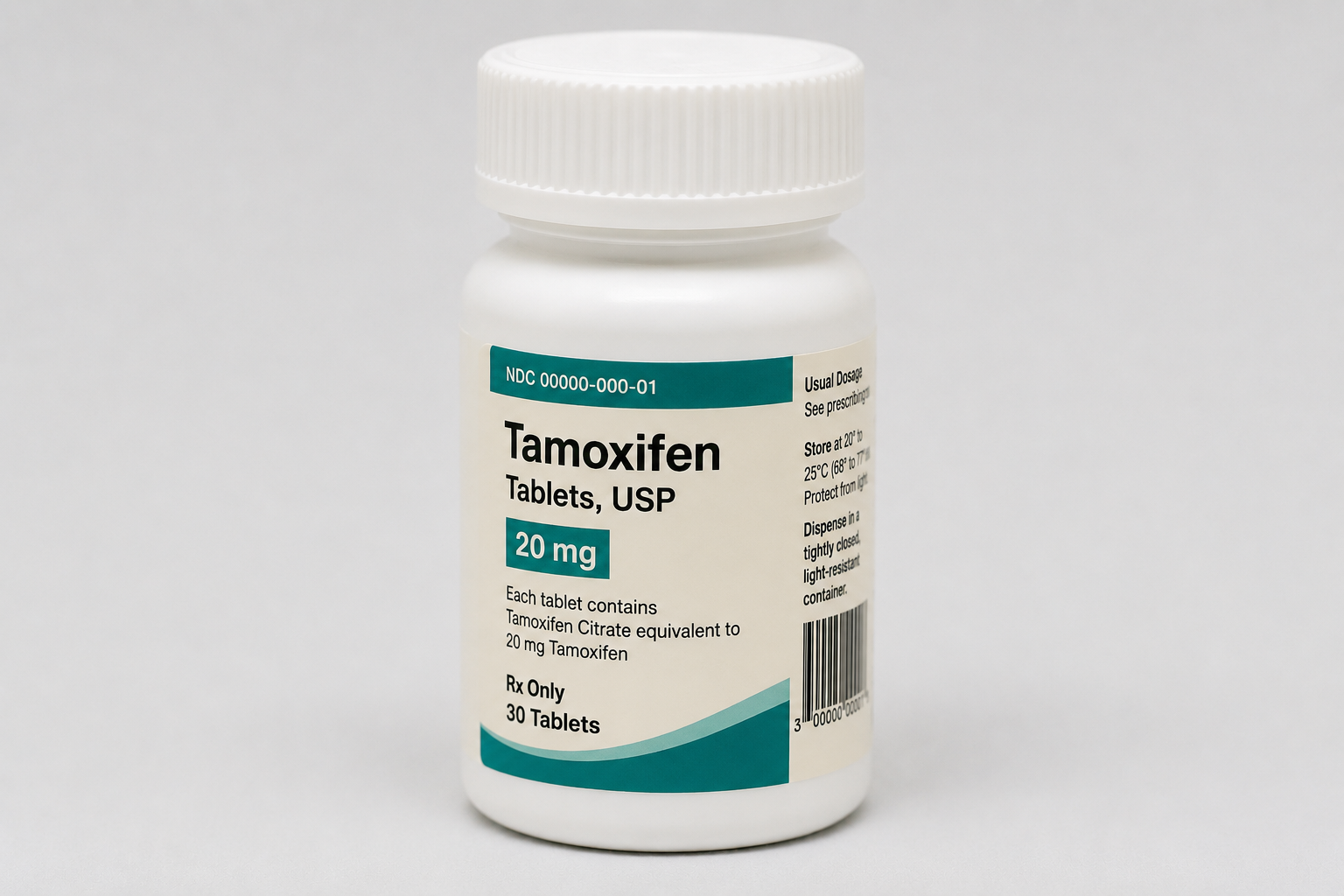
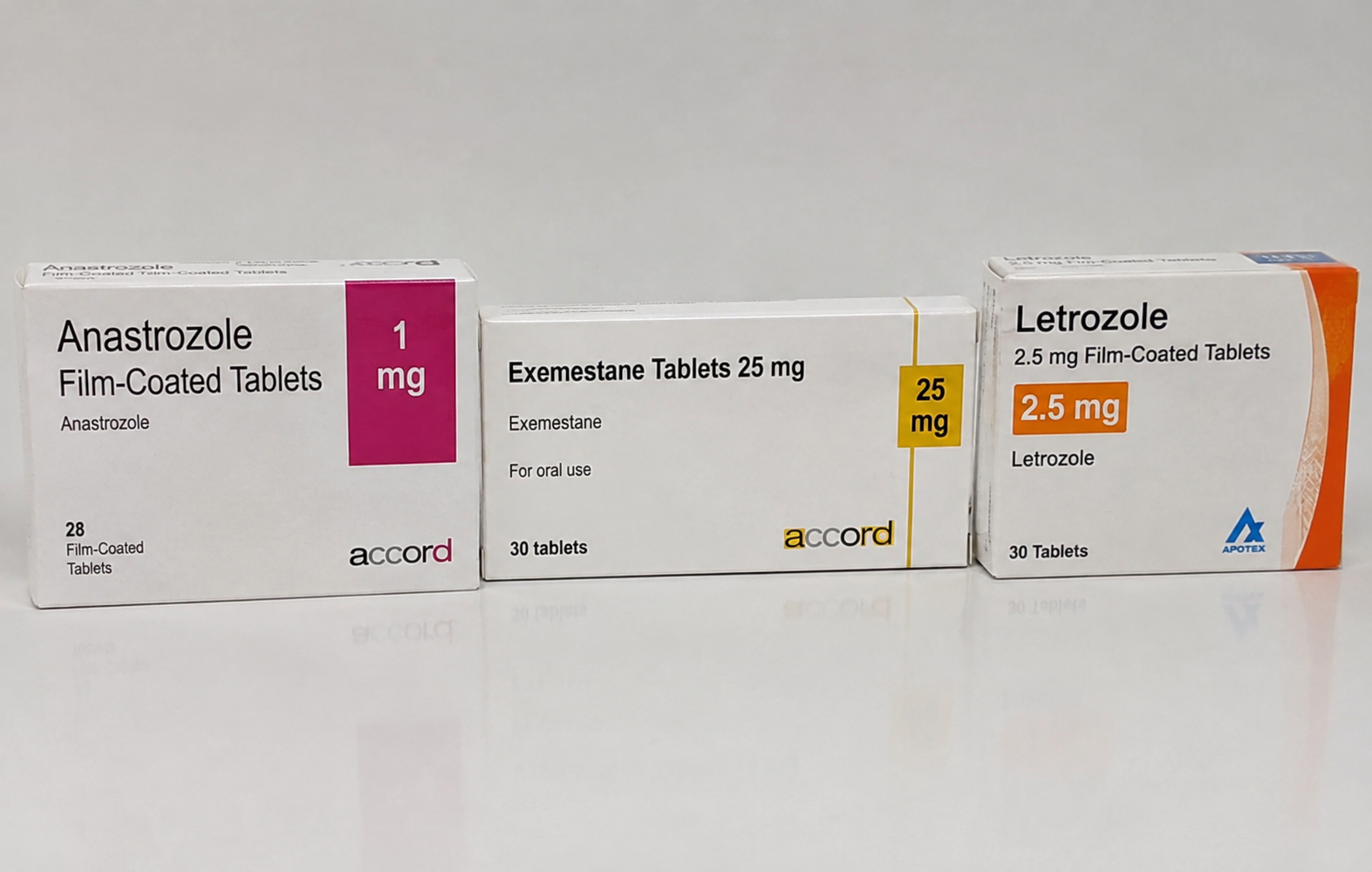
Anastrozole, exemestane and letrozole all inhibit aromatase, but they are not pharmacologically identical. Tamoxifen is included here because it frequently appears in the same discussions, although it belongs to a completely different drug class.
Anastrozole is a non-steroidal, reversible aromatase inhibitor. It reduces oestrogen synthesis by inhibiting aromatase and is one of the AIs frequently discussed in men's hormone and TRT settings.
Exemestane is a steroidal, irreversible aromatase inhibitor. Its mechanism differs from anastrozole, although both ultimately reduce oestrogen synthesis by interfering with aromatase activity.
Letrozole is a non-steroidal aromatase inhibitor capable of substantial oestrogen suppression. Its potency does not mean greater suppression is automatically preferable when managing oestradiol.
Tamoxifen does not inhibit aromatase. It modifies oestrogen receptor activity instead, which is why it may enter discussions around breast symptoms or gynaecomastia rather than simply lowering an oestradiol blood result.
The fact that several medications influence oestrogen physiology does not mean they perform the same job.
Anastrozole and letrozole are non-steroidal aromatase inhibitors, while exemestane is steroidal and inhibits aromatase through a different mechanism. Tamoxifen does not inhibit aromatase at all.
The more important clinical question is therefore not simply “Which one lowers oestrogen?” but whether altering oestrogen synthesis or receptor signalling is appropriate in the first place.
Not necessarily.
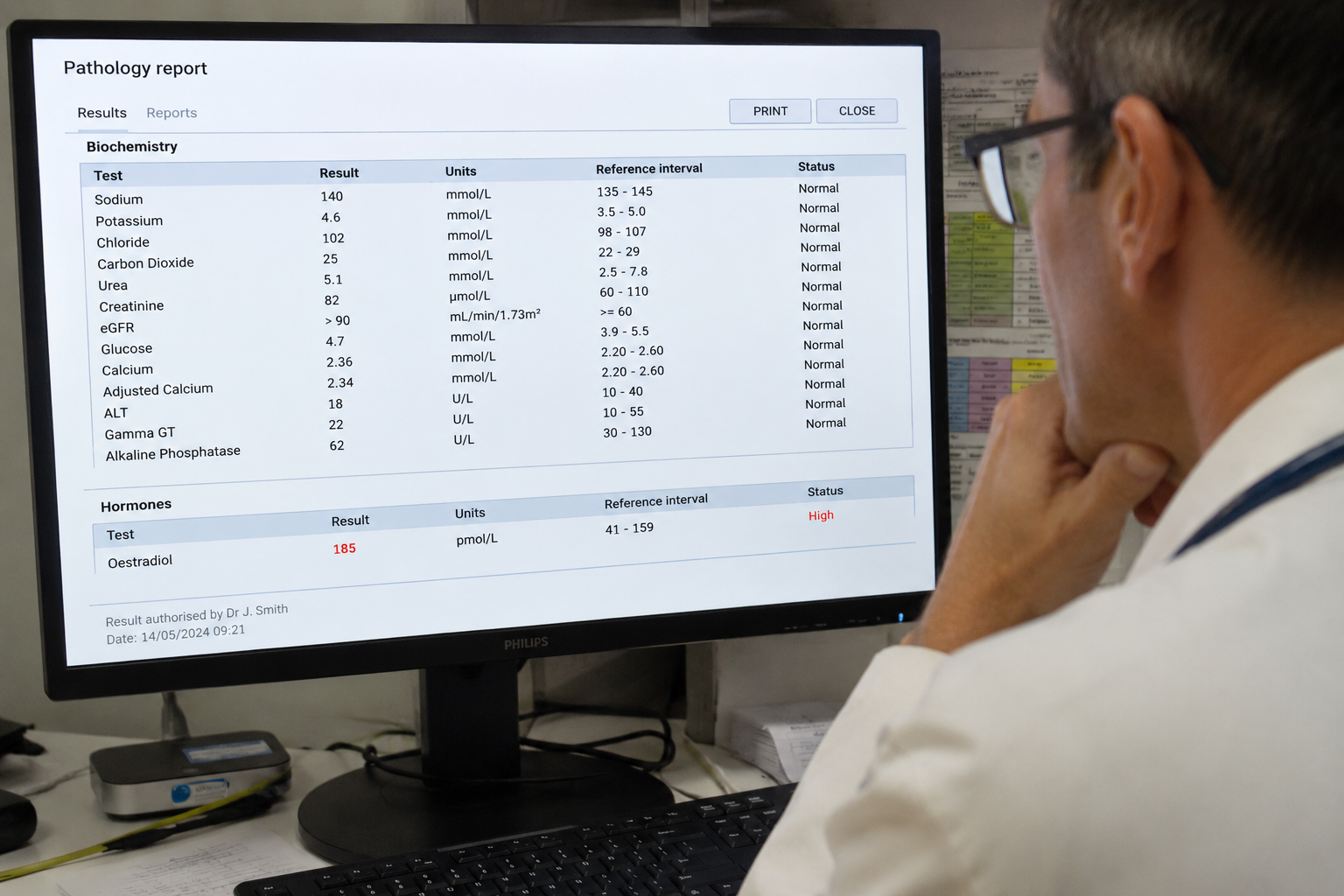
One of the problems with interpreting TRT bloodwork in isolation is that an oestradiol result can appear elevated while testosterone has also increased substantially.
A clinician may consider symptoms, testosterone concentrations, treatment preparation, dosing schedule, timing of the blood sample and previous results before deciding whether the oestradiol result is clinically significant.
Attempting to force every patient's oestradiol into an arbitrary target can overlook the physiological relationship between testosterone and oestradiol.
Aromatase inhibitors do not simply “balance” oestrogen. They reduce its production. Because oestradiol has important physiological roles in men, excessive suppression can potentially produce unwanted effects of its own.
Oestradiol contributes to male sexual function alongside testosterone. Excessive suppression may therefore be associated with reduced sexual desire in some men.
Both testosterone and oestradiol contribute to male sexual physiology. Driving oestradiol very low may contribute to poorer erectile function rather than improving it.
Joint aches, stiffness and musculoskeletal discomfort are recognised complaints during aromatase inhibitor treatment. Persistent symptoms deserve appropriate review.
Oestradiol plays an important role in maintaining the male skeleton. Prolonged oestrogen deficiency may adversely affect bone metabolism and bone mineral density.
Oestradiol contributes to regulation of body fat in men. Excessive suppression may therefore influence metabolic and body composition outcomes as well as sexual symptoms.
Changes in mood or general wellbeing may occur when sex-hormone physiology is altered, although these symptoms are nonspecific and can have many other causes.
Aromatase inhibitors can substantially reduce oestrogen production. That may be clinically useful in specific circumstances, but more suppression is not automatically better.
Oestradiol is not simply an unwanted by-product of testosterone. It is an active hormone involved in sexual function, bone health, body composition and wider male physiology.
The objective should therefore not be to achieve the lowest possible E2 result.
Breast tenderness, nipple sensitivity and gynaecomastia are among the main reasons discussions about oestrogen-lowering medication arise during TRT.
Gynaecomastia is enlargement of glandular male breast tissue. Developing breast symptoms does not automatically prove that oestradiol is excessively high or that an aromatase inhibitor is required.
This is also where the difference between aromatase inhibitors and tamoxifen becomes particularly important. An AI reduces oestrogen synthesis, whereas tamoxifen modifies oestrogen receptor activity.
Those are fundamentally different pharmacological approaches. Treating an oestradiol result and addressing established breast tissue symptoms are therefore not necessarily the same clinical problem.

New or persistent glandular enlargement, a breast lump, unilateral changes, nipple discharge or other concerning breast symptoms should be medically assessed.
Self-treating breast symptoms with an aromatase inhibitor or SERM without establishing what is causing them risks treating the wrong problem.
Anastrozole, exemestane and letrozole are prescription medicines. They should not be added to a TRT protocol simply to chase an oestradiol number.
Hormone results need to be interpreted alongside symptoms, treatment exposure and the wider clinical picture. Inappropriately suppressing oestradiol can create a different set of problems.
Tamoxifen is also a prescription medicine and should not be treated as a substitute for appropriate assessment of male breast symptoms.
Changes to prescribed TRT or additional hormone-modifying medication should be discussed with the clinician responsible for treatment.
An unexpected oestradiol result should be considered within the wider TRT protocol rather than viewed as an isolated problem.
Whether clinically relevant symptoms are actually present matters more than assuming a laboratory number explains how someone feels.
Oestradiol should be interpreted alongside the testosterone concentrations achieved during treatment.
Testosterone preparation, prescribed dose and administration schedule provide important context.
Results need to be interpreted according to when the sample was taken relative to treatment.
Trends can provide more useful information than reacting to one isolated measurement.
Body composition, medications, medical history and other clinical factors may also be relevant.
Aromatase inhibitors can substantially alter the relationship between testosterone and oestradiol. That makes them clinically useful medications in appropriate circumstances, but it does not make them a routine requirement of testosterone replacement therapy.
Anastrozole, exemestane and letrozole all inhibit aromatase, although their pharmacology differs. Tamoxifen belongs to a different drug class and acts through oestrogen receptors rather than inhibiting aromatase.
The important principle is context. Oestradiol is a normal male hormone, and treatment decisions should be based on symptoms, hormone results and appropriate clinical assessment rather than attempting to suppress E2 simply because it has increased during TRT.
Continue into the individual medication guides or learn more about oestradiol and hormone monitoring during TRT.
Common questions about AIs, oestradiol, anastrozole, exemestane, letrozole and tamoxifen during testosterone therapy.
An aromatase inhibitor is a medication that inhibits the aromatase enzyme, reducing the conversion of androgens into oestrogens and consequently lowering oestrogen production.
Not routinely. An increase in oestradiol during TRT does not automatically mean an aromatase inhibitor is required. Treatment decisions depend on symptoms, hormone results and the wider clinical circumstances.
Anastrozole, exemestane and letrozole are three well-known aromatase inhibitors. They all reduce oestrogen synthesis but differ in their pharmacology and mechanism.
Anastrozole is a non-steroidal reversible aromatase inhibitor, whereas exemestane is a steroidal irreversible aromatase inhibitor. Both reduce oestrogen synthesis but do so through different pharmacological mechanisms.
Both are non-steroidal aromatase inhibitors, but they are different medicines with different pharmacological characteristics. Letrozole is capable of substantial oestrogen suppression.
No. Tamoxifen acts through oestrogen receptors and belongs to a different drug class commonly described as SERMs. It does not inhibit aromatase in the same way as anastrozole, exemestane or letrozole.
No. Oestradiol should be interpreted alongside testosterone levels, symptoms, treatment protocol, blood-test timing and previous results rather than treated as an isolated number.
Yes. Aromatase inhibitors reduce oestrogen production and can potentially suppress oestradiol excessively. Oestradiol has important physiological functions in men, so lower is not automatically better.
Excessive oestradiol suppression may be associated with reduced libido, poorer erectile function and musculoskeletal symptoms such as joint aches or stiffness. Mood and wellbeing can also change, although these symptoms are nonspecific.
Oestradiol is important for normal male bone metabolism. Prolonged excessive oestrogen suppression may therefore adversely affect bone mineral density.
Oestradiol contributes to male sexual physiology alongside testosterone. Excessive suppression may contribute to reduced sexual desire or poorer erectile function in some men, although erectile dysfunction has many potential causes.
Tamoxifen has clinical applications involving oestrogen-responsive breast tissue, but male breast symptoms require appropriate assessment and should not be self-treated.
No. Aromatase inhibitors reduce oestrogen synthesis by inhibiting aromatase, whereas tamoxifen modifies oestrogen receptor activity. They are different drug classes with different mechanisms.
Aromatase inhibitors can influence lipid and metabolic markers in some patients. The effects can vary according to the medication, duration of treatment and the individual's wider health profile.
This guide is provided for general educational purposes and does not replace personalised medical advice, diagnosis or treatment. Aromatase inhibitors, SERMs and changes to prescribed testosterone therapy should only be considered with an appropriately qualified healthcare professional.