UNDERSTANDING LOW TESTOSTERONE

Primary vs Secondary Hypogonadism Explained

"Hypogonadism" is the official medical term for low testosterone. When you are diagnosed with this condition, it simply means your body is not producing enough testosterone to function optimally. However, simply knowing your testosterone is low is only half the battle. To treat it effectively, your clinician must figure out why it is low.

The root cause of your low testosterone will fall into one of two main categories: Primary Hypogonadism or Secondary Hypogonadism. Understanding the difference between these two conditions—how the brain communicates with the testes, and where that communication breaks down—is the key to unlocking the right treatment protocol for your specific biology.

Primary vs Secondary: Key Takeaways

The foundational differences between the two main types of low testosterone.

Primary Hypogonadism means the testes themselves are failing to produce testosterone.
Secondary Hypogonadism means the brain is failing to send the signal to produce testosterone.
Doctors diagnose the difference by testing Luteinizing Hormone (LH) alongside testosterone.
Secondary hypogonadism can sometimes be treated with fertility medications like hCG.

How the Body Makes Testosterone

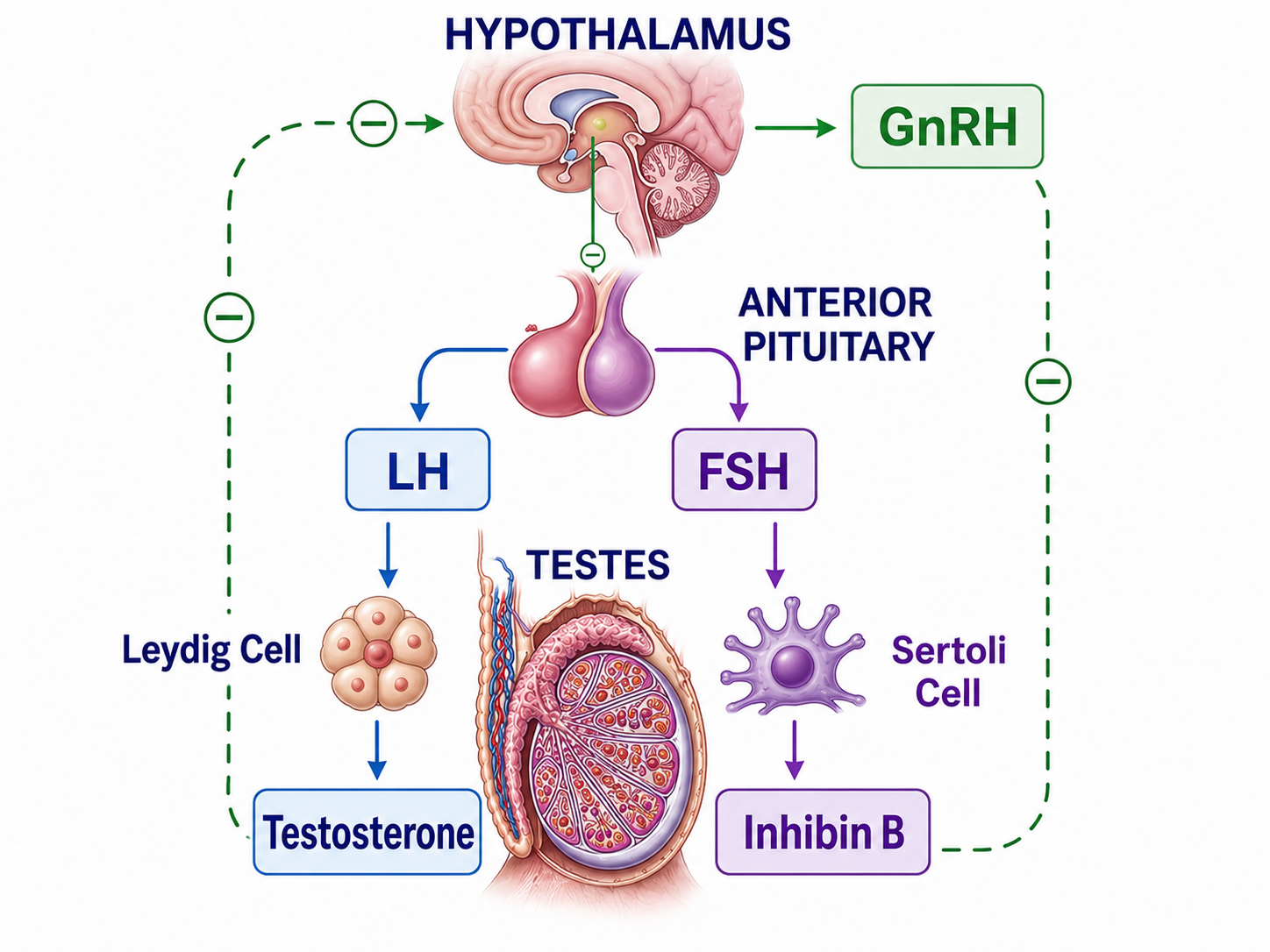
To understand the two types of hypogonadism, you must first understand the Hypothalamic-Pituitary-Testicular Axis (HPTA). Think of this system like a factory.

The Factory Analogy

Testosterone production requires perfect communication between your brain and your testes:

  • The Manager (The Brain): Your hypothalamus and pituitary gland act as the managers. When they sense testosterone is low, they release a signal hormone called Luteinizing Hormone (LH).
  • The Workers (The Testes): The testes receive the LH signal and get to work, manufacturing testosterone to release into your bloodstream.
  • The Breakdown: Hypogonadism occurs when this system breaks. Either the workers are broken and can't do the job (Primary), or the manager is asleep and forgets to send the order (Secondary).

Primary Hypogonadism (Testicular Failure)

In Primary Hypogonadism, the problem lies directly in the testes. Using our analogy, the "workers" are broken. Your brain recognises that your testosterone is low, so it frantically pumps out high amounts of Luteinizing Hormone (LH) to tell the testes to work harder. However, the testes are damaged or failing and cannot respond to the signal.

Bloodwork Profile: Low Testosterone + High LH & FSH.

  • Physical Injury or Trauma: Severe injury to the testicles or loss of a testicle.
  • Infections: Conditions like mumps orchitis during adolescence or adulthood.
  • Genetic Conditions: Such as Klinefelter syndrome (where a male is born with an extra X chromosome).
  • Chemotherapy or Radiation: Cancer treatments that cause direct, permanent cellular damage to the testes.
Medical diagram of male anatomy or blood test

Secondary Hypogonadism (Pituitary Failure)

Secondary Hypogonadism is entirely different. Here, the testes are perfectly healthy and capable of producing testosterone. However, the problem lies in the brain (the hypothalamus or pituitary gland). The "manager" is asleep. The brain fails to produce enough LH, so the testes never receive the signal to start working.

Bloodwork Profile: Low Testosterone + Low (or inappropriately normal) LH & FSH.

  • Lifestyle Factors: Severe obesity, chronic stress, extreme calorie deficits, or sleep apnoea can suppress pituitary function.
  • Medications & Steroids: Previous abuse of anabolic steroids, or long-term use of opioid painkillers, heavily suppresses LH production.
  • Pituitary Tumours: Benign tumours (adenomas) on the pituitary gland can disrupt normal hormone signalling.
  • Head Trauma: Severe concussions or traumatic brain injuries can damage the pituitary gland's function.
Doctor explaining brain scan or hormones to patient

How Treatments Differ

Because the root causes of primary and secondary hypogonadism are fundamentally different, clinicians have different options when designing a treatment protocol, particularly if preserving fertility is a priority.

Treating Primary Hypogonadism: TRT

Because the testes are physically incapable of producing enough testosterone, you cannot simply "stimulate" them to work harder. The only effective treatment for primary hypogonadism is standard Testosterone Replacement Therapy (TRT)—delivering exogenous testosterone via injections or gels to replace what the body cannot make.

Treating Secondary Hypogonadism: TRT or Stimulation

For men with secondary hypogonadism, TRT is still the most common and effective route for symptom relief. However, because their testes are healthy, clinicians have alternative options. If a man wishes to maintain his natural fertility and sperm production, doctors may prescribe hCG (Human Chorionic Gonadotropin) or Enclomiphene. These medications bypass or stimulate the pituitary gland, forcing the healthy testes to turn back on and produce their own natural testosterone.

Medical References & Resources

Disclaimer: The information provided on UKTRT is purely for educational purposes and does not constitute medical advice. We are not doctors. A proper diagnosis of primary vs secondary hypogonadism requires comprehensive blood work (including LH, FSH, Prolactin, and Testosterone) interpreted by a GMC-registered doctor or endocrinologist.

The diagnostic criteria and physiological mechanisms discussed in this article are aligned with guidelines from:

  • British Society for Sexual Medicine (BSSM): Guidelines on the diagnosis and management of adult testosterone deficiency.
  • European Association of Urology (EAU): Clinical guidelines detailing the differentiation and treatment pathways for primary, secondary, and mixed male hypogonadism.
QUESTIONS AND ANSWERS

Frequently Asked Questions

Which type of hypogonadism is more common?

In adult men experiencing late-onset low testosterone, Secondary Hypogonadism is significantly more common. It is frequently driven by lifestyle factors, aging, obesity, stress, or previous medication use that suppresses the pituitary gland.

Can you have both primary and secondary hypogonadism?

Yes. This is medically referred to as Mixed Hypogonadism. It occurs when a man has both declining testicular function (common with older age) and a blunted pituitary response from the brain. It is usually treated similarly to primary hypogonadism with standard TRT.

Does TRT cure secondary hypogonadism?

No, TRT is a treatment, not a cure. Introducing external testosterone will actually further suppress the pituitary gland while you are on therapy. To reverse secondary hypogonadism (if possible), doctors often use lifestyle interventions or medications like Clomid, hCG, or Enclomiphene to stimulate the brain.

Did my past steroid use cause primary or secondary hypogonadism?

Anabolic steroid abuse causes Secondary Hypogonadism (specifically known as Anabolic Steroid-Induced Hypogonadism or ASIH). The high levels of synthetic androgens tell the brain to shut down LH production completely, leaving the natural testes dormant.

How does a doctor test for this?

Through a comprehensive blood test. A doctor will look at your Total and Free Testosterone alongside your Luteinizing Hormone (LH) and Follicle-Stimulating Hormone (FSH). If LH is high, it points to Primary. If LH is low or normal, it points to Secondary.

Can weight loss fix secondary hypogonadism?

In some cases, yes. Severe visceral fat (belly fat) converts testosterone into oestrogen, which heavily suppresses the pituitary gland's LH production. Losing significant weight can sometimes "wake up" the pituitary gland and restore natural testosterone production without lifelong TRT.