Join our community
Quality sleep plays an important role in overall health and wellbeing. For men with testosterone deficiency, fatigue, poor concentration and disrupted sleep may overlap with symptoms caused by other conditions, including Obstructive Sleep Apnoea (OSA).
The relationship between Testosterone Replacement Therapy (TRT) and sleep apnoea is complex. Current evidence does not establish that TRT routinely causes obstructive sleep apnoea, but testosterone therapy may worsen sleep-disordered breathing in some susceptible men. Recognising possible symptoms of OSA is therefore particularly important before and during testosterone treatment.
Key points to understand about sleep-disordered breathing during testosterone therapy.
Obstructive Sleep Apnoea occurs when the upper airway repeatedly narrows or closes during sleep. This can interrupt normal breathing, reduce oxygen levels and cause repeated brief awakenings that disrupt restorative sleep.
Researchers have investigated several possible ways in which testosterone therapy could influence sleep-disordered breathing. The mechanisms are not fully understood, but proposed factors include:
These are proposed mechanisms rather than a certainty. They do not mean that everyone receiving TRT will develop sleep apnoea. OSA is influenced by many factors, including body weight, airway anatomy, age, alcohol use, medications and other medical conditions.
Nasal congestion is a recognised side effect of tadalafil. For some people, a blocked or stuffy nose may make breathing through the nose more difficult at night and could potentially contribute to snoring.
New or worsening snoring should not automatically be attributed to tadalafil, particularly if it is accompanied by choking or gasping, witnessed pauses in breathing, unrefreshing sleep or significant daytime sleepiness.
TRT can increase haemoglobin and haematocrit in some men, which is one reason regular blood monitoring is an important part of testosterone therapy. Obstructive sleep apnoea can also cause repeated periods of reduced oxygen levels during sleep. This intermittent hypoxia may stimulate erythropoietin (EPO), a hormone involved in red blood cell production.
If haematocrit rises during testosterone therapy, the cause should be assessed rather than automatically attributed to either TRT or sleep apnoea.
A raised haematocrit does not prove that someone has sleep apnoea. However, increasing haematocrit alongside symptoms suggestive of OSA is something that should be discussed with the clinician responsible for your treatment.
A diagnosis of obstructive sleep apnoea does not necessarily mean testosterone therapy cannot be used. However, untreated severe OSA is an important consideration when assessing suitability for TRT. Treatment decisions should be individualised and made with an appropriately qualified healthcare professional.
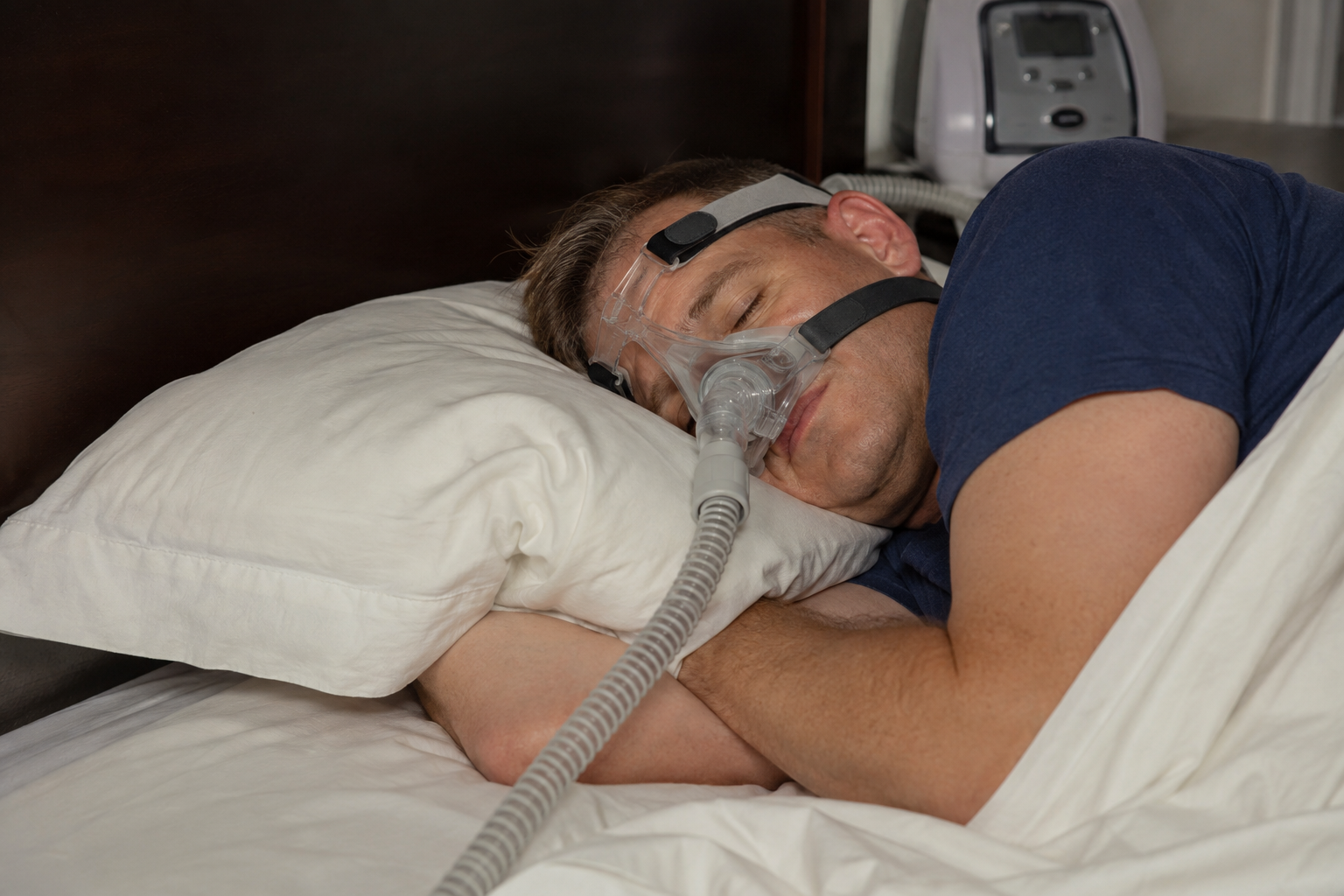
Continuous Positive Airway Pressure (CPAP) is a well-established treatment for OSA and is commonly used for moderate to severe disease. The machine delivers positive airway pressure through a mask while you sleep, helping to prevent the upper airway from collapsing.
Other treatment options may be appropriate depending on the severity and cause of OSA, so treatment should be guided by a sleep or respiratory healthcare professional.
If symptoms suggestive of sleep apnoea develop or become noticeably worse during TRT, speak to the clinician responsible for your testosterone treatment.
They may review your symptoms, testosterone levels, haematocrit, dose and wider risk factors, and may recommend assessment for OSA. Do not alter your prescribed testosterone dose or treatment schedule without medical advice.
Excess body weight is an important risk factor for obstructive sleep apnoea, although OSA can also occur in people who are not overweight. Where appropriate, weight reduction can improve the severity of OSA and forms part of management for many patients.
Other factors such as alcohol consumption, smoking, sedating medications and sleeping position may also be relevant and should be discussed with a healthcare professional where appropriate.
UKTRT provides general educational information and is not a medical service. We are not doctors and the information on this page should not be used as a substitute for individual medical advice, diagnosis or treatment.
If you experience loud habitual snoring, witnessed pauses in breathing, waking up choking or gasping, excessive daytime sleepiness or other symptoms suggestive of sleep apnoea, speak to your GP or an appropriately qualified healthcare professional. Do not start, stop or alter prescribed testosterone, tadalafil or sleep-apnoea treatment without medical advice.
Further clinical information about testosterone therapy and obstructive sleep apnoea is available from organisations including:
It is not established that TRT routinely causes obstructive sleep apnoea. However, research suggests testosterone therapy may worsen sleep-disordered breathing in some susceptible men, particularly those who already have OSA or risk factors for the condition.
Having treated obstructive sleep apnoea does not automatically prevent someone from receiving TRT. Suitability for testosterone therapy depends on your individual circumstances and should be assessed by an appropriately qualified clinician. If CPAP has been prescribed, following your sleep team's treatment advice remains important.
Fatigue has many possible causes. If testosterone levels have improved but you continue to experience excessive daytime sleepiness, unrefreshing sleep, loud snoring or witnessed pauses in breathing, obstructive sleep apnoea is one condition that may need to be investigated. Speak to your GP or clinician rather than assuming testosterone levels are responsible.
Testosterone therapy may worsen sleep-disordered breathing in some susceptible individuals, although the relationship is complex and the evidence is not conclusive for every patient. New or substantially worsening loud snoring, choking or gasping during sleep, or witnessed pauses in breathing should be discussed with a healthcare professional.
Nasal congestion is a recognised side effect of tadalafil. A blocked or stuffy nose may make nasal breathing more difficult and could potentially contribute to snoring in some people. However, new or worsening snoring should not automatically be blamed on tadalafil, particularly when accompanied by choking, gasping, witnessed pauses in breathing or significant daytime sleepiness.
A sleep study is not automatically required for every person considering TRT. However, if you have symptoms or risk factors suggestive of obstructive sleep apnoea, your clinician may recommend further assessment or a sleep study before or during testosterone treatment.
Where excess body weight contributes to obstructive sleep apnoea, weight reduction can reduce its severity and may substantially improve symptoms. However, weight loss does not guarantee that OSA will completely resolve, and prescribed treatments such as CPAP should not be stopped without advice from the healthcare professional managing your sleep apnoea.
Poor sleep and sleep-disordered breathing can be associated with changes in hormone regulation, and some men with obstructive sleep apnoea may also have low testosterone. However, sleep apnoea is not the only possible cause of low testosterone, and hormone levels should be assessed in the context of your wider health and symptoms.