Join our community
If you're starting testosterone replacement therapy (TRT), one of the first questions you'll probably ask is: "How long before I actually feel better?"
The honest answer is that TRT is a gradual process—not an overnight transformation. While testosterone levels begin increasing within days of starting treatment, your body needs time to respond. Libido, mood and energy often begin improving within 2–6 weeks, whereas muscle growth, fat loss and body composition typically develop over 6–12 months.
That difference is important because one of the biggest reasons men become discouraged with TRT is unrealistic expectations. Blood tests can look excellent long before symptoms fully improve, and every part of your body responds to testosterone at a different pace.
In this guide you'll learn exactly what usually happens during the first year of TRT, why some improvements happen earlier than others, what the medical research shows and what to do if your treatment doesn't seem to be working as expected.
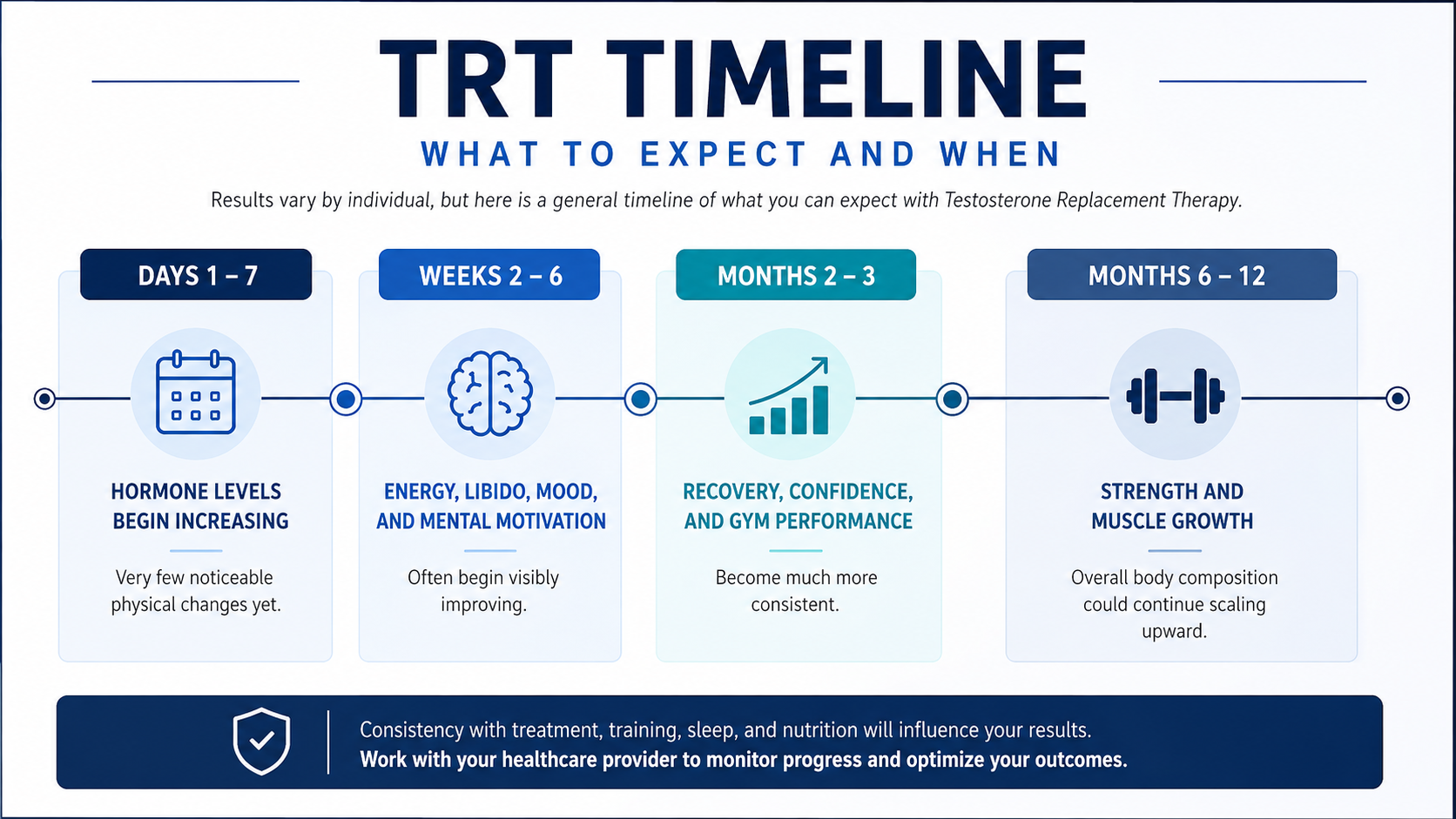
A quick-reference milestone breakdown of your first year on testosterone therapy.
Most men begin noticing the first benefits of TRT within two to six weeks. Libido, mood, mental clarity and energy are usually the earliest symptoms to improve. More significant physical changes—including increased muscle mass, improved body composition and greater strength—generally develop over six to twelve months of consistent treatment.
It's also completely normal for blood tests to improve before you feel dramatically different. Testosterone levels often reach a healthy therapeutic range relatively quickly, but your brain, muscles, metabolism and cardiovascular system all require time to adapt.
Rather than thinking of TRT as something that "kicks in", it's better to think of it as gradually restoring the hormonal environment your body needs to function normally again.
Many people assume testosterone replacement therapy works like caffeine—you take it, testosterone rises and you immediately feel better. Human biology simply doesn't work that way.
While testosterone levels begin increasing soon after treatment starts, the benefits you're hoping to experience depend on far more than the hormone itself. Your nervous system, muscle tissue, metabolism, blood vessels and even your brain all need time to respond to those restored hormone levels.
This is why some symptoms improve quickly while others take months. Sexual desire may return relatively early, whereas improvements in body composition or strength require weeks of consistent training and recovery before they become obvious.
It's common for testosterone levels to reach the target range before symptoms fully improve. That's why clinicians assess both your blood results and how you're actually feeling during follow-up appointments.
One of the biggest misconceptions about testosterone replacement therapy is that every benefit appears at the same time. In reality, your body adapts in distinct progressive stages.
Hormone levels rise toward therapeutic ranges. Early improvements commonly include increased libido, better morning function, and the initial lifting of daily fatigue.
Good days become your stable baseline. Mental clarity, workout recovery, and confidence solidify. Your first clinical review and follow-up blood tests take place.
Long-term optimisation kicks in. Progressive strength gains, sustained energy, and noticeable improvements in body composition and fat loss develop through months 6 to 12.
Every symptom follows its own biological timeline from earliest to latest development.
By six months, treatment moves past acute symptom remediation into long-term stability. The priority shifts from chasing elevated metrics to maintaining steady clinical markers and a bulletproof routine.
For men adhering to a proper training plan, visible changes in body composition peak around this window. Successful TRT isn't a quick sprint; it's a series of sustainable lifestyle adjustments that compound over months.

No two patients respond identically. Starting hormone baselines, underlying metabolic health, sleep quality, stress management, and precise dosing protocols all dictate your personal speed of recovery. Avoid measuring your personal journey against online forum anecdotes.
Sleep & Nutrition:
Inadequate rest or poor dietary choices can bottleneck recovery speed regardless of optimal testosterone levels.
Dose Optimisation:
Finding your ideal injection frequency and volume during the initial titration phase requires patience and medical feedback.
Underlying Health:
Conditions like sleep apnoea or thyroid imbalances can mask TRT progress until treated simultaneously.
Peer-reviewed endocrinology studies consistently prove that testosterone replacement therapy follows a predictable physiological curve. Sexual parameters respond quickly within 30 days, whereas hematopoietic systems, insulin sensitivity, and musculoskeletal adaptations require up to a year of sustained exposure.
Clinical guidelines emphasize evaluating holistic patient outcomes over single-number lab targets, ensuring that safety markers (like haematocrit and PSA) remain balanced while efficacy peaks.
Regular monitoring is the cornerstone of safe, successful treatment. While early protocol adjustments are standard, you should flag specific red flags with your medical provider immediately rather than attempting DIY adjustments.
If zero symptom relief occurs after 3 to 6 months, or if anomalous side effects emerge, a comprehensive clinical review is required to isolate underlying barriers.
Explore our comprehensive library of educational guides, covering everything from managing side effects to optimising your treatment protocol.
View All TRT GuidesDirect answers to common patient questions regarding the speed and progression of testosterone therapy.
Most men notice the first improvements between two and six weeks after starting TRT. Libido, mood and energy are usually the earliest symptoms to improve, while muscle growth, body composition and strength continue developing over six to twelve months.
Testosterone levels rise shortly after your first dose, but most men won't notice significant symptom improvements immediately. The body requires time to adapt to restored hormone levels, so meaningful benefits generally develop over several weeks.
Libido is often one of the earliest symptoms to improve. Many men notice increased sexual desire within three to six weeks, although the exact timeline varies between individuals.
Visible muscle growth normally takes several months. TRT provides a healthier hormonal environment for building muscle, but progressive resistance training, adequate protein intake and consistent recovery remain essential.
Blood tests are only one part of successful TRT. Sleep quality, stress, thyroid function, nutrition, exercise and other medical conditions can all influence how you feel. Clinicians assess symptoms alongside blood results rather than relying on laboratory values alone.
There are many possible reasons, including unrealistic expectations, insufficient time on treatment, inconsistent medication use, poor sleep, inadequate exercise, nutrition or another underlying medical condition. If symptoms haven't improved after several months, arrange a review with your TRT clinician.
Yes. Chronic stress can negatively affect sleep, recovery, motivation and overall wellbeing. Managing stress alongside TRT can help maximise the benefits of treatment.
Higher body fat can influence hormone metabolism and may make physical changes take longer to notice. Combining TRT with regular exercise and a healthy diet usually provides the best long-term results.
The information provided on UKTRT is strictly for educational and informational purposes only and does not constitute formal medical advice, diagnosis, or treatment planning. We are not doctors. Testosterone Replacement Therapy (TRT) is a prescription-only medication. If you suspect you have low testosterone or are considering starting, adjusting, or stopping treatment, you must consult a qualified, GMC-registered medical practitioner or endocrinologist.