Join our community
Testosterone Replacement Therapy (TRT) can improve symptoms in men with clinically confirmed testosterone deficiency, but treatment can also cause side effects and changes in blood markers that need to be monitored.
Some effects are relatively minor, such as oily skin or acne. Others, including increased haematocrit, fertility suppression and changes in prostate markers, are important reasons why properly prescribed TRT involves regular blood tests and clinical review.
This guide provides an overview of the main TRT side effects, why they can happen, what is commonly monitored during treatment, and when a change should be discussed with the clinician responsible for your care.
Experiencing a possible side effect does not automatically mean TRT needs to be stopped. The significance of a change depends on the symptom, blood results, testosterone preparation, prescribed dose, medical history and individual response.
Equally, symptoms that develop while receiving TRT are not necessarily caused by testosterone. Other medications, health conditions and lifestyle factors may also need to be considered.
Testosterone affects far more than libido and muscle mass. It also influences red blood cell production, skin and sebaceous glands, reproductive signalling, prostate tissue, hair follicles and fluid balance.
This means TRT can produce changes across several systems in the body. Some are noticeable to the patient, while others may only become apparent through blood testing.
This is one reason TRT should be viewed as an ongoing medical treatment rather than simply a prescription. Appropriate monitoring helps determine whether treatment remains effective and suitable.
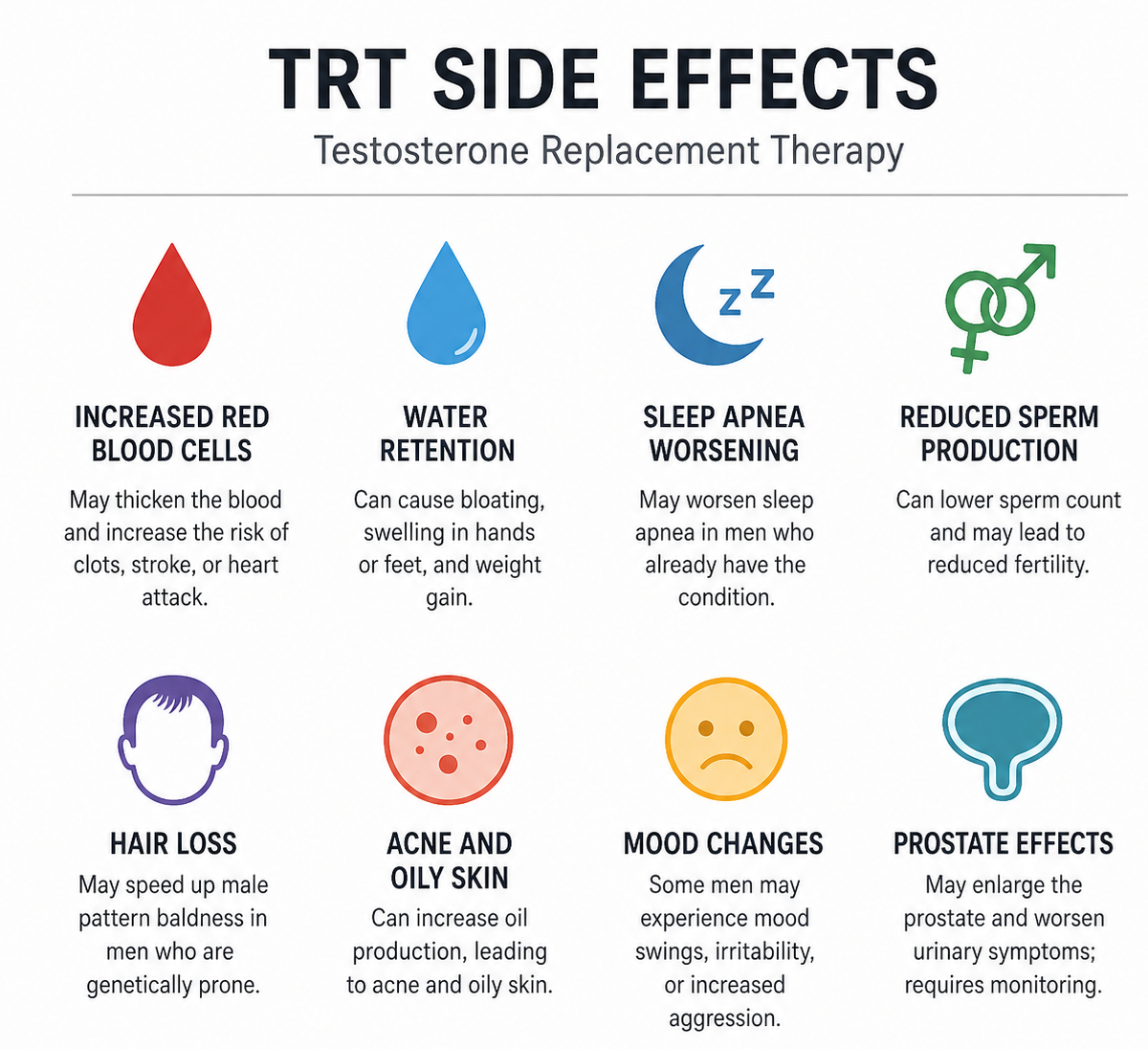
These are some of the main changes discussed or monitored during testosterone treatment. Not every patient will experience them, and their clinical importance varies considerably.
Testosterone can increase sebaceous gland activity in susceptible people, potentially contributing to oily skin and acne on the face, shoulders, chest or back.
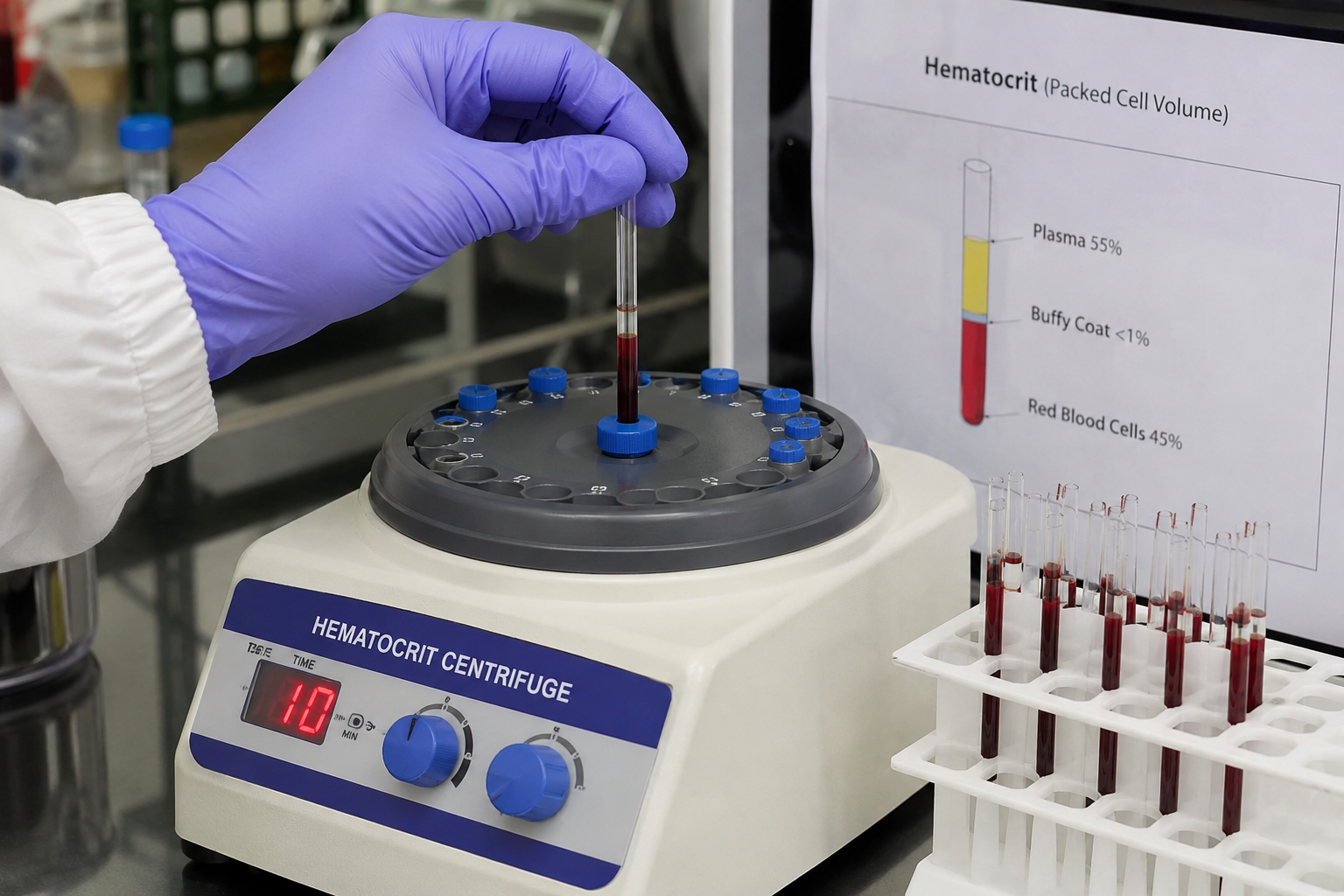
Read Guide BLOODTestosterone stimulates erythropoiesis and can increase red blood cell production. Haematocrit is therefore one of the most important blood markers monitored during TRT.
Read Guide FERTILITYExternal testosterone suppresses LH and FSH signalling, which can substantially reduce natural sperm production and affect male fertility.
Read GuideSuppression of natural gonadotropin signalling can reduce intratesticular testosterone production and may result in a reduction in testicular volume.
Detailed Guide Coming SoonSome testosterone is naturally converted into oestradiol through aromatisation. Levels can therefore change during treatment and need to be interpreted alongside symptoms and the wider clinical picture.
Detailed Guide Coming SoonHormonal changes may occasionally coincide with breast tenderness or enlargement of glandular breast tissue in men.
Detailed Guide Coming SoonSome patients notice temporary fluid retention or changes in body weight after beginning treatment or following adjustments to their TRT protocol.
Detailed Guide Coming SoonAndrogen-sensitive hair follicles can be affected by testosterone and DHT. Men genetically susceptible to male-pattern hair loss may notice progression.
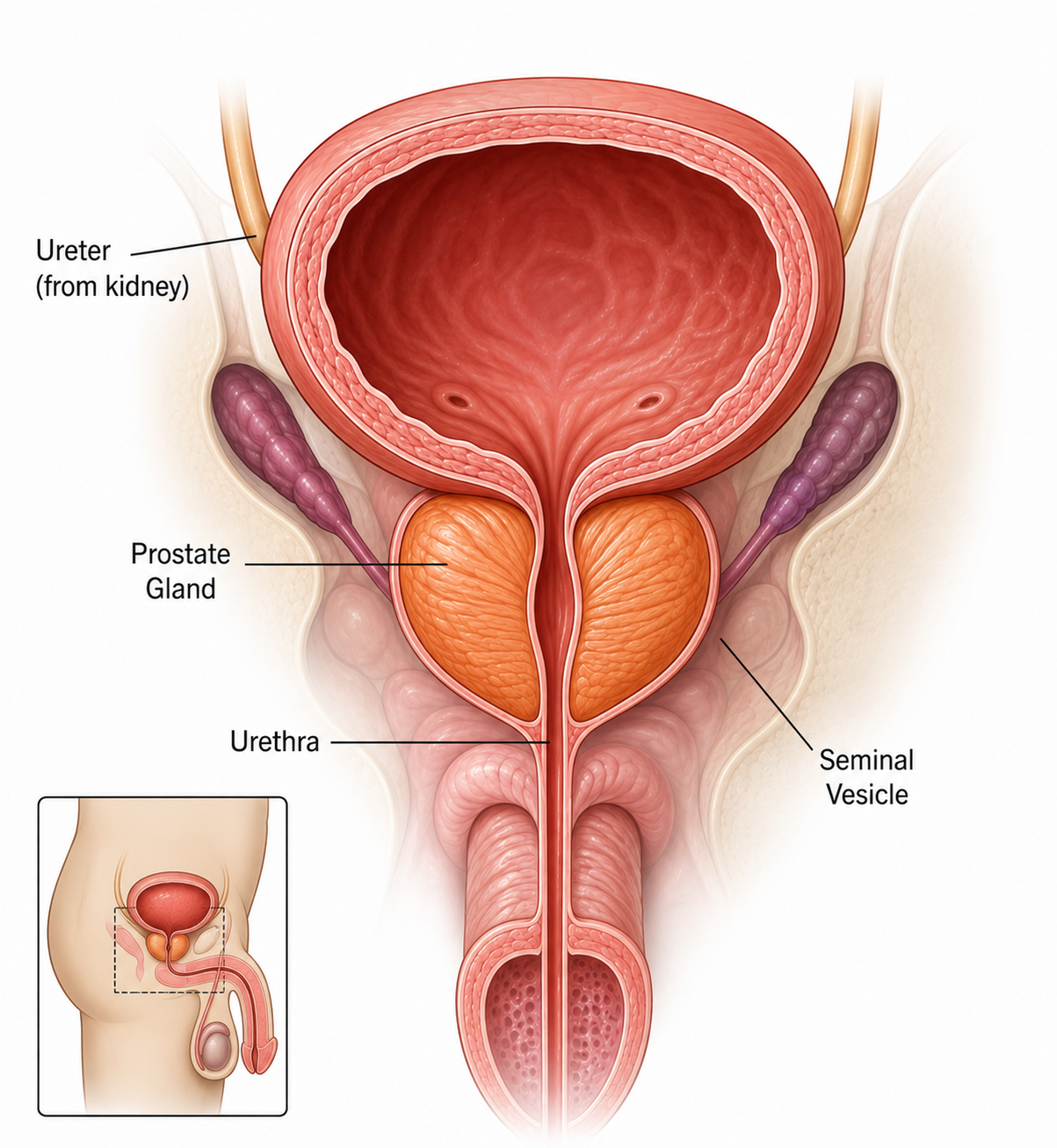
Read Guide PROSTATETestosterone influences prostate tissue, which is why PSA and prostate health may form part of baseline assessment and ongoing monitoring where clinically appropriate.
Read Guide CARDIOVASCULARBlood pressure forms part of wider cardiovascular health and may need attention during TRT, particularly where other risk factors or fluid changes are present.
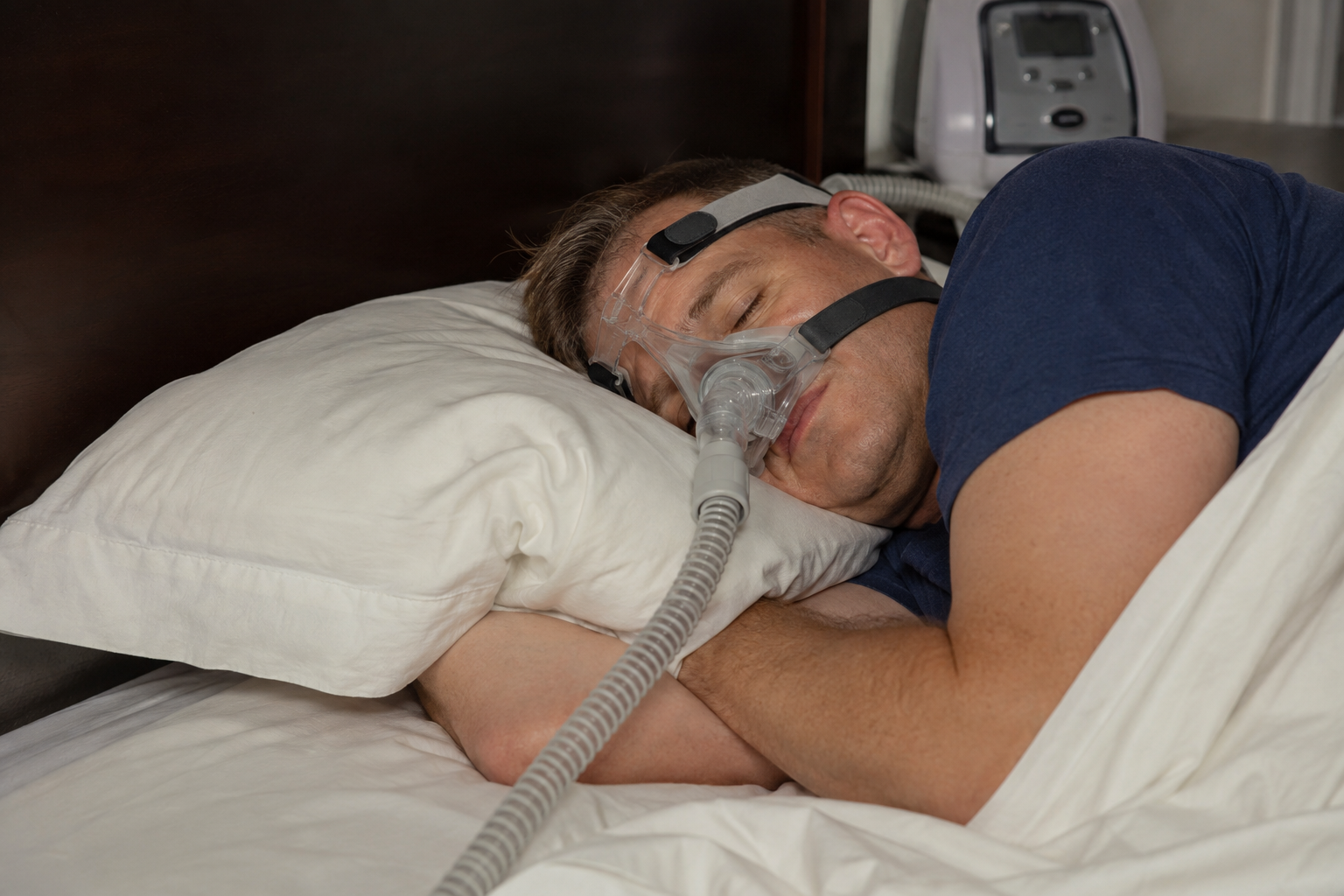
Read Guide SLEEPThe relationship between testosterone treatment and sleep apnoea is complex. Suspected or worsening sleep-disordered breathing should be assessed rather than automatically attributed to TRT.
Read Guide TREATMENTInjectable TRT can occasionally cause temporary soreness, irritation, bruising or swelling around the injection site.
Syringe GuideOne of testosterone's recognised physiological effects is stimulation of red blood cell production. Testosterone influences erythropoiesis, and haemoglobin and haematocrit may therefore increase after treatment begins.
Haematocrit represents the proportion of blood volume occupied by red blood cells. A rising value does not automatically mean something dangerous is happening, but a persistent or excessive increase needs clinical attention.
Hydration also matters when interpreting a result. Dehydration can reduce plasma volume and temporarily make haematocrit appear more concentrated, but deliberately overhydrating before a blood test in an attempt to produce a lower number is not appropriate monitoring.
A persistently raised haematocrit may prompt review of testosterone exposure as well as other possible contributors such as smoking, hypoxia, sleep-disordered breathing, medications or other medical conditions.
Fertility is one of the most important issues to understand before starting TRT.
When testosterone is supplied externally, the hypothalamic-pituitary-gonadal axis reduces the signals that normally stimulate the testes. LH and FSH can fall substantially, which can suppress sperm production.
Men who currently want children, or may want children in the future, should discuss fertility with an appropriately qualified healthcare professional before beginning testosterone therapy.
Acne is one of the more visible changes associated with testosterone treatment.
Androgens can stimulate sebaceous glands and increase oil production. In men who are already susceptible to acne, this can contribute to breakouts, particularly across the face, shoulders, chest and back.
Acne does not necessarily mean testosterone treatment has to be stopped. Its timing, severity and possible contributing factors should be considered before assuming TRT is the sole cause.

Men naturally produce oestradiol, and some testosterone is converted into oestradiol through an enzyme called aromatase.
Increasing testosterone availability can therefore increase oestradiol in some patients. However, oestradiol is not simply a “bad” hormone in men and has important physiological functions.
For that reason, a blood result should not be viewed in isolation. Symptoms, testosterone levels, treatment protocol and the wider clinical picture all matter.
Some possible treatment effects are noticed directly rather than identified through a blood test.
Prostate health is another reason appropriate baseline assessment and follow-up are important during testosterone treatment.
PSA — Prostate-Specific Antigen — may be measured before treatment and monitored afterwards depending on age, individual risk and clinical circumstances.
A change in PSA does not by itself diagnose prostate cancer. However, an unexpected or significant change may require further assessment, which is why trends are interpreted in clinical context.
Good TRT monitoring is not simply about checking whether testosterone has increased. Follow-up looks at treatment response alongside safety markers and symptoms.
Total testosterone, and where appropriate free testosterone, helps assess how a patient is responding to prescribed treatment.
Haemoglobin, haematocrit and red blood cell measurements help identify excessive increases in red blood cell production.
PSA may be monitored according to age, risk profile and clinical circumstances to identify changes requiring further assessment.
Oestradiol may be assessed where clinically appropriate, particularly where symptoms or hormonal changes warrant investigation.
Blood pressure and wider cardiovascular risk factors form part of sensible long-term health monitoring.
Blood results are only part of the picture. Clinical review also considers symptom improvement and whether unwanted effects have developed.
Some clinically important changes associated with TRT cannot be reliably judged by how you feel.
You cannot accurately estimate your haematocrit, testosterone concentration or PSA from symptoms alone. Blood testing provides objective information that can be compared with previous results.
If something changes unexpectedly, the clinician responsible for treatment can investigate the cause and decide whether anything needs to be adjusted.
TRT blood results need to be interpreted together rather than treating every result as an isolated number.
Patients should not independently change prescribed testosterone doses or add prescription medication simply because one hormone marker appears higher or lower than expected.
If you develop a possible side effect or receive an unexpected blood result, discuss it with the clinician responsible for your treatment.
You do not necessarily need to wait for your next routine blood test if something concerning changes during treatment.
Explore individual TRT side effects in more detail, including acne, fertility, raised haematocrit, prostate health, sleep apnoea and blood pressure.
Testosterone is a powerful hormone, so changing testosterone levels can produce physiological effects beyond simply improving symptoms of deficiency.
Some TRT side effects are visible, such as acne or oily skin. Others, including changes in haematocrit or PSA, demonstrate why blood testing and clinical follow-up remain important.
The aim of monitoring is not to assume every change is dangerous. It is to identify changes, understand them in context and allow the clinician responsible for treatment to decide whether anything needs to change.
Common questions about testosterone side effects, blood testing and monitoring.
Possible effects include acne or oily skin, increased red blood cell production, fluid retention, changes in oestradiol, reduced sperm production, testicular shrinkage and treatment-related effects such as injection-site irritation. Individual responses vary.
Yes. Testosterone stimulates erythropoiesis and can increase haematocrit in some patients. This is one reason Full Blood Count testing forms an important part of TRT monitoring. Persistent or excessive increases should be reviewed clinically rather than self-managed.
Testosterone can increase sebaceous gland activity and oil production, which may contribute to acne in susceptible people. Acne can have several causes, so developing it while on TRT does not automatically mean testosterone is solely responsible.
External testosterone can suppress LH and FSH signalling and substantially reduce sperm production. Men who want children should discuss fertility before beginning TRT.
Testosterone and DHT can influence androgen-sensitive hair follicles. Men genetically susceptible to male-pattern baldness may notice progression, although TRT does not produce identical hair changes in everyone.
Monitoring commonly includes testosterone levels and a Full Blood Count including haemoglobin and haematocrit. PSA, metabolic markers and other hormone or health markers may also be assessed according to age, symptoms, treatment and individual clinical circumstances.
Not necessarily. The appropriate response depends on the side effect, its severity, blood results and individual circumstances. Treatment changes should be discussed with the prescribing clinician rather than made independently.
Monitoring frequency depends on the treatment, stage of therapy and individual risk factors. Follow-up is generally more frequent after starting or changing treatment and may become less frequent once a patient is stable.
This guide is provided for general educational purposes and does not replace personalised medical advice, diagnosis or treatment. TRT side effects, blood results and treatment decisions should be assessed by an appropriately qualified healthcare professional.