Join our community
Human chorionic gonadotrophin, usually shortened to hCG, is frequently discussed alongside testosterone replacement therapy because external testosterone suppresses the hormonal signals that normally stimulate the testes.
During natural testosterone production, luteinising hormone (LH) travels from the pituitary gland to the testes and stimulates the Leydig cells to produce testosterone. hCG can activate the same LH receptor, which is why it has an established role in male reproductive medicine.
When TRT suppresses LH and FSH, testosterone inside the testes can fall dramatically even though testosterone in the bloodstream is restored. This matters because high local concentrations of intratesticular testosterone are important for normal sperm production.
hCG may therefore be relevant when fertility, testicular function or preservation of testicular volume remains important. However, adding hCG to TRT does not guarantee fertility, and its use alongside TRT should be distinguished from established gonadotrophin treatment for men with hypogonadotrophic hypogonadism.
This guide explains the physiology, available evidence, UK treatment context, fertility considerations, possible drawbacks and monitoring involved when hCG is discussed alongside testosterone therapy.
Human chorionic gonadotrophin is best known as a hormone associated with pregnancy, but it also has an important application in male reproductive medicine.
hCG binds to the same luteinising hormone/choriogonadotrophin receptor activated by LH. In men, this receptor is found on Leydig cells within the testes.
Activating those receptors stimulates Leydig cells to produce testosterone. This means hCG can provide an LH-like signal even when natural pituitary LH secretion has been suppressed.
That distinction becomes particularly relevant during TRT because external testosterone can restore serum testosterone while at the same time suppressing the natural hormonal signalling to the testes.
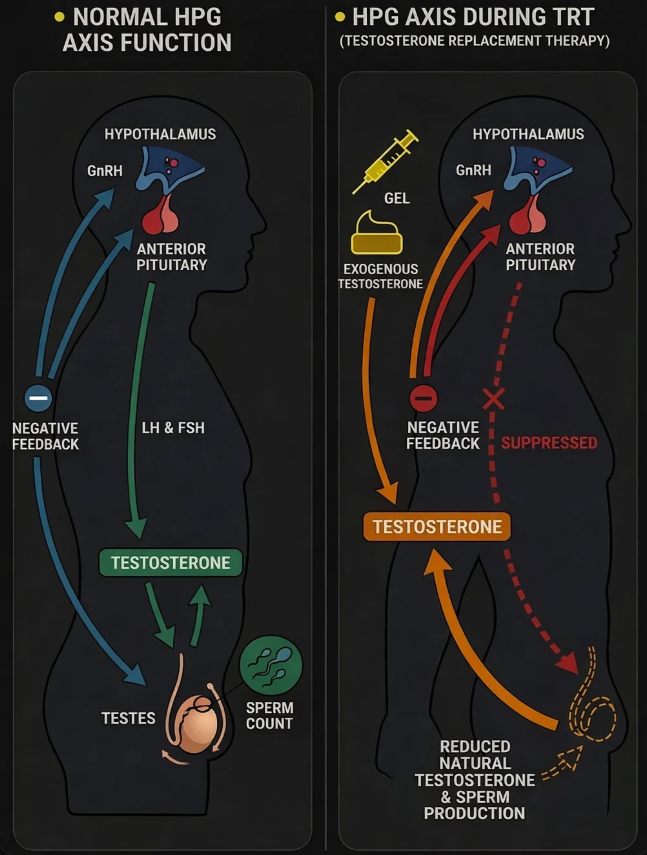
Testosterone production depends on communication between the brain, pituitary gland and testes through the hypothalamic-pituitary-gonadal axis.
The hypothalamus releases gonadotrophin-releasing hormone, or GnRH, which signals the pituitary gland.
GnRH stimulates the pituitary to release luteinising hormone and follicle-stimulating hormone.
LH acts primarily on Leydig cells, stimulating testosterone production inside the testes.
FSH acts primarily on Sertoli cells and contributes to the environment required for normal spermatogenesis.
Testosterone replacement introduces testosterone from outside the body's normal HPG-axis signalling pathway.
Through negative feedback, the hypothalamus and pituitary reduce GnRH, LH and FSH signalling. This is a normal physiological response to external testosterone rather than evidence that TRT has "damaged" the pituitary gland.
The important consequence is that the testes receive much less stimulation. Testosterone concentrations inside the testes can fall dramatically despite normal or increased testosterone levels in the bloodstream.
Sperm production can consequently fall substantially, and some men become oligospermic or azoospermic while receiving testosterone. Testicular volume can also decrease during prolonged suppression.
hCG does not prevent TRT from suppressing the hypothalamus and pituitary. Instead, it acts further downstream by directly stimulating LH receptors within the testes.
In other words, natural LH may remain suppressed while hCG provides an alternative signal to the Leydig cells.
This can help maintain intratesticular testosterone despite continued treatment with external testosterone.
External testosterone increases circulating testosterone without requiring the testes to produce it.
Negative feedback reduces pituitary gonadotrophin signalling and therefore decreases natural testicular stimulation.
hCG activates LH receptors on Leydig cells and can support local testosterone production inside the testes.
Fertility is one of the main reasons hCG enters the conversation around testosterone therapy.
Spermatogenesis requires far higher testosterone concentrations inside the testes than are normally present in the bloodstream. Suppressing LH therefore creates a problem that cannot necessarily be identified simply by looking at a serum testosterone result.
Research has shown that hCG can maintain intratesticular testosterone despite testosterone-induced gonadotrophin suppression. Small observational studies have also reported preservation of semen parameters in men receiving TRT with concomitant hCG.
However, this should not be interpreted as a guarantee that hCG preserves fertility for every man. Semen analysis remains the direct way to assess sperm production, and men with near-term fertility plans may require specialist reproductive assessment rather than assuming that hCG has protected fertility.
One of the most useful distinctions when understanding hCG and fertility is that hCG mainly replaces LH-like stimulation. It does not directly replace FSH.
Produced by the pituitary and responsible primarily for stimulating Leydig cells to produce testosterone.
Activates the LH receptor and can therefore reproduce much of the testicular testosterone-stimulating effect of LH.
Acts primarily on Sertoli cells and plays an important role in supporting sperm development.
In established hypogonadotrophic hypogonadism, fertility treatment may involve hCG together with FSH-containing gonadotrophin therapy. Fertility management is therefore more complex than simply adding hCG to testosterone.
Reduced testicular volume is a recognised consequence of prolonged gonadotrophin suppression in some men receiving testosterone.
Without meaningful LH stimulation, Leydig-cell activity falls and the testes no longer need to maintain the same degree of endogenous hormone production.
hCG stimulates the testes despite suppressed pituitary LH and may therefore help maintain testicular activity and volume.
Some men value this independently of fertility. However, treatment decisions should still be based on clinical priorities rather than assuming that every person receiving TRT needs additional medication.
The UK treatment context requires an important distinction between established fertility treatment and the use of hCG as an adjunct to testosterone replacement therapy.
Gonadotrophin therapy has an established place in male reproductive medicine, particularly for men with hypogonadotrophic hypogonadism where the testes are not receiving adequate LH and FSH stimulation.
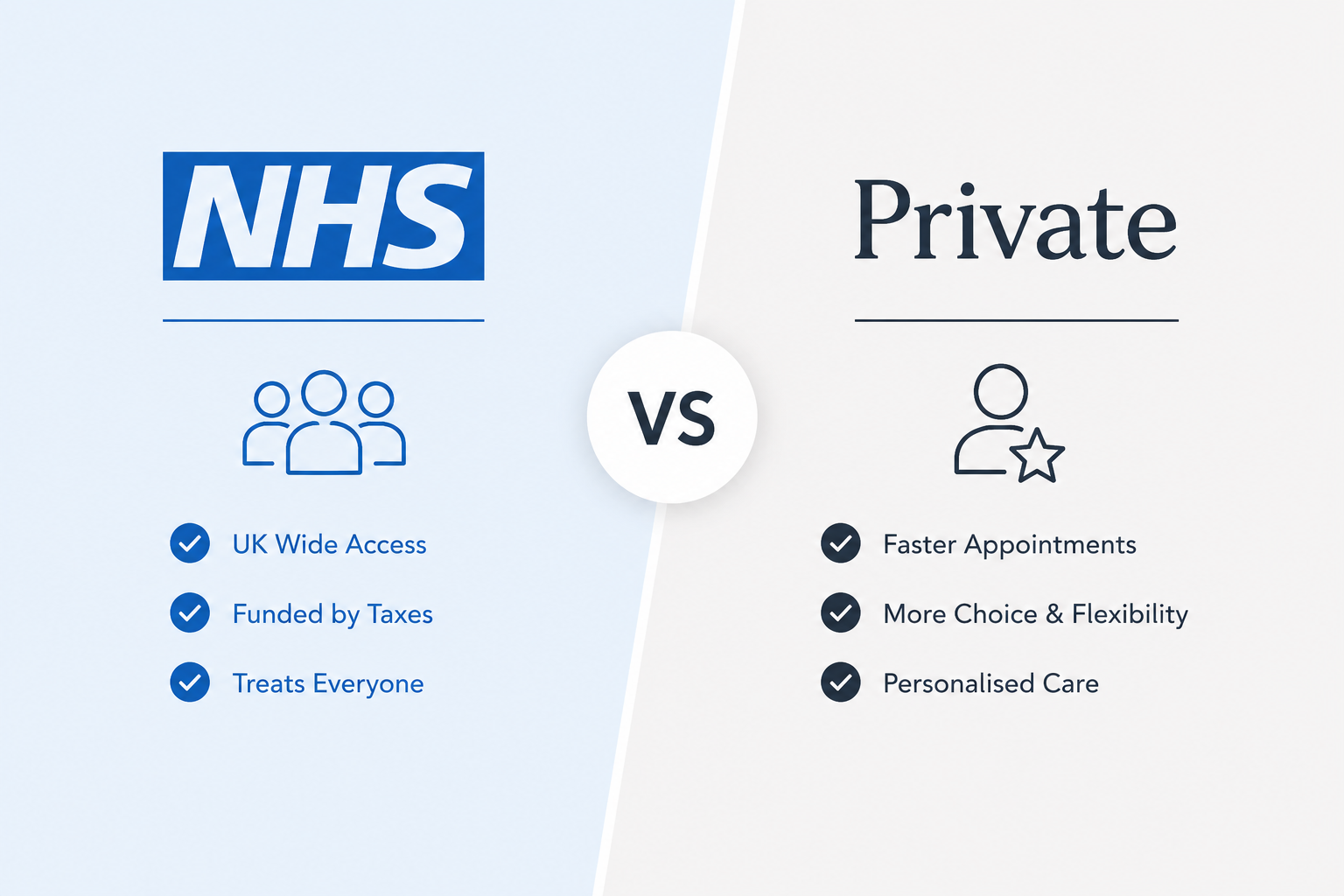
In contrast, routinely adding hCG to conventional TRT solely to preserve fertility or testicular volume is not a standard NHS TRT pathway.
In private UK TRT practice, hCG may be discussed where fertility or continued testicular function is a specific treatment priority. Availability, prescribing policy and the clinical circumstances in which it is offered differ between providers.
Men actively trying to conceive may require a different fertility strategy altogether. Continuing testosterone with hCG is not automatically the correct approach for every fertility case.
These are different treatment strategies intended to solve different clinical problems.
Testosterone is used to restore circulating testosterone where TRT is clinically indicated.
External testosterone restores systemic levels while hCG provides LH-receptor stimulation to the testes.
Men whose clinical goal is to stimulate endogenous testicular function or fertility may require a gonadotrophin-focused strategy rather than conventional TRT.
The biological rationale for hCG is strong, but it is useful to separate evidence about intratesticular testosterone from evidence about real-world fertility outcomes.
In healthy men given testosterone enanthate to suppress gonadotrophins, intratesticular testosterone fell markedly without hCG. Relatively low doses of hCG maintained intratesticular testosterone in a dose-dependent manner.
View StudyFurther experimental work demonstrated that even very low hCG exposure can increase intratesticular testosterone in gonadotrophin-suppressed men.
View StudyA small retrospective study of 26 hypogonadal men reported maintained semen parameters during concomitant TRT and low-dose hCG. The study is clinically interesting but should not be treated as proof that fertility is guaranteed.
View StudyFertility depends on semen parameters, both partners' reproductive health and numerous other factors. A normal serum testosterone result or the use of hCG does not by itself establish that a man remains fertile.
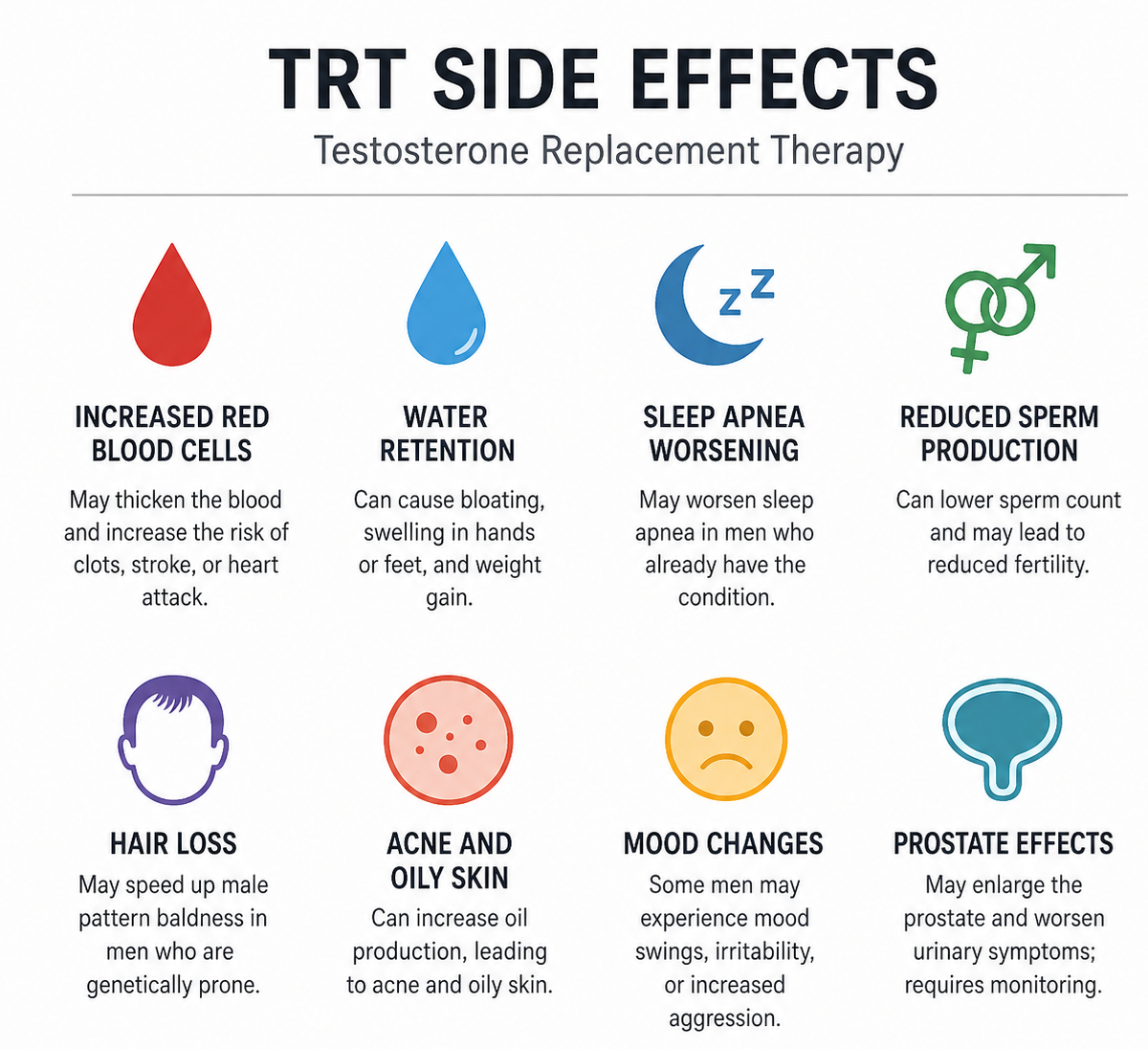
Adding another hormone-active medication can alter the overall response to treatment and should not be treated as a harmless accessory to TRT.
Stimulating Leydig cells can add endogenous testosterone production on top of testosterone supplied through TRT.
Increased testosterone production can also provide additional substrate for aromatisation into oestradiol.
Breast tenderness or gynaecomastia-related symptoms can require clinical review rather than automatic treatment with another drug.
Changes in androgen and oestradiol exposure can contribute to fluid retention in susceptible individuals.
Adding hCG means another injectable medication, additional storage considerations and another part of the treatment routine.
Testosterone, symptoms, oestradiol and reproductive goals may all need to be considered together when reviewing treatment.
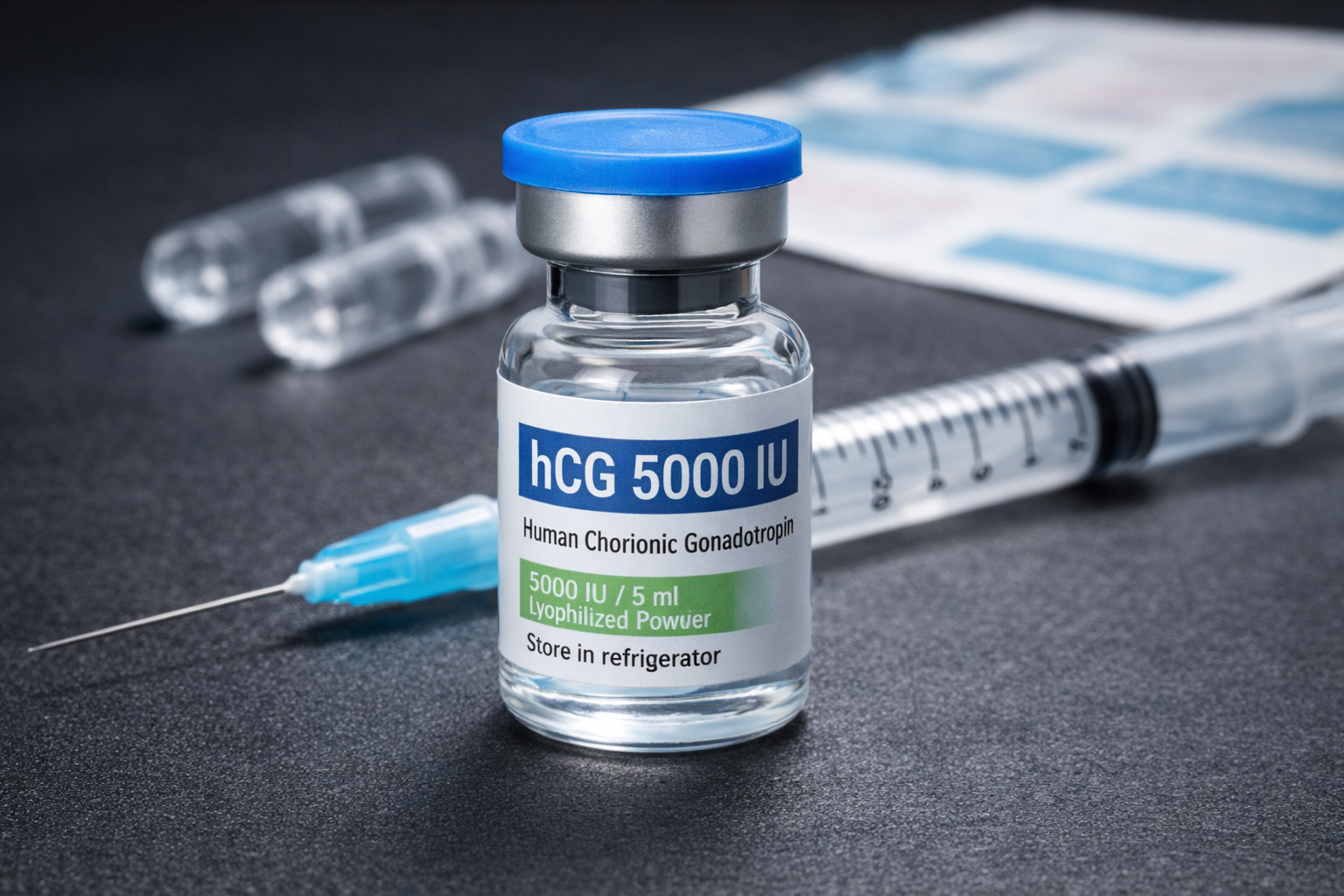
hCG may be supplied as a powder that requires reconstitution before use. The amount of diluent added changes the resulting concentration and therefore changes the liquid volume corresponding to a prescribed number of IU.
Our calculator converts vial strength, diluent volume and prescribed IU into concentration, millilitres and U-100 syringe markings.
It is a mathematical tool only. The vial strength, diluent, preparation method and dose must come from the medication instructions and prescribing healthcare professional.
Open hCG Reconstitution CalculatorhCG addresses one of the important physiological consequences of testosterone therapy: suppression of LH-dependent testicular stimulation.
Its ability to activate LH receptors means that testicular testosterone production can be supported even while the broader HPG axis remains suppressed by external testosterone.
That makes hCG particularly relevant when fertility or maintenance of testicular function matters. It does not, however, guarantee preserved fertility and it does not replace every component of normal reproductive signalling.
The best approach depends on the actual goal. A man requiring testosterone replacement, a man trying to preserve future fertility and a man actively trying to conceive may each require a different treatment strategy.
Explore fertility, hormone monitoring and the wider decisions that can arise before and during testosterone treatment.
Common questions about hCG, testosterone therapy, fertility and testicular function.
hCG activates the same testicular receptor as luteinising hormone. It can therefore stimulate Leydig cells and support intratesticular testosterone production even while natural LH is suppressed by TRT.
No. hCG is not an automatic requirement for testosterone replacement. Its relevance depends particularly on fertility goals, testicular function and the individual's treatment plan.
hCG can maintain intratesticular testosterone and small clinical studies have reported preserved semen parameters during concomitant TRT and hCG. However, it cannot guarantee fertility for every man.
TRT suppresses LH and FSH and can substantially reduce sperm production. Some men can become azoospermic, although the degree of suppression and recovery after treatment vary between individuals.
hCG provides LH-receptor stimulation to the testes and may help maintain testicular activity and volume during testosterone therapy. Individual responses vary.
It can. hCG stimulates testicular testosterone production, and some of that testosterone can be converted into oestradiol. Results should be interpreted alongside symptoms and the wider treatment context.
No. hCG principally provides LH-like stimulation. FSH has a separate role in Sertoli-cell function and spermatogenesis, which is why specialist fertility treatment can sometimes involve both hCG and an FSH-containing gonadotrophin.
hCG is not a routine add-on to standard NHS testosterone replacement. Gonadotrophin treatment does have established uses in male fertility care, particularly hypogonadotrophic hypogonadism, but that is a different clinical pathway.
No. The calculator performs concentration and volume conversions from values that have already been provided. It does not determine an appropriate hCG dose or replace prescribing instructions.
Men who want children in the future should discuss fertility before starting testosterone. Depending on the circumstances, semen analysis, sperm banking or specialist reproductive advice may be appropriate before treatment begins.
This guide is provided for general educational purposes and does not replace personalised medical advice, diagnosis or treatment. hCG and testosterone are prescription medicines. Fertility and testosterone treatment should be assessed and managed by appropriately qualified healthcare professionals.