Join our community
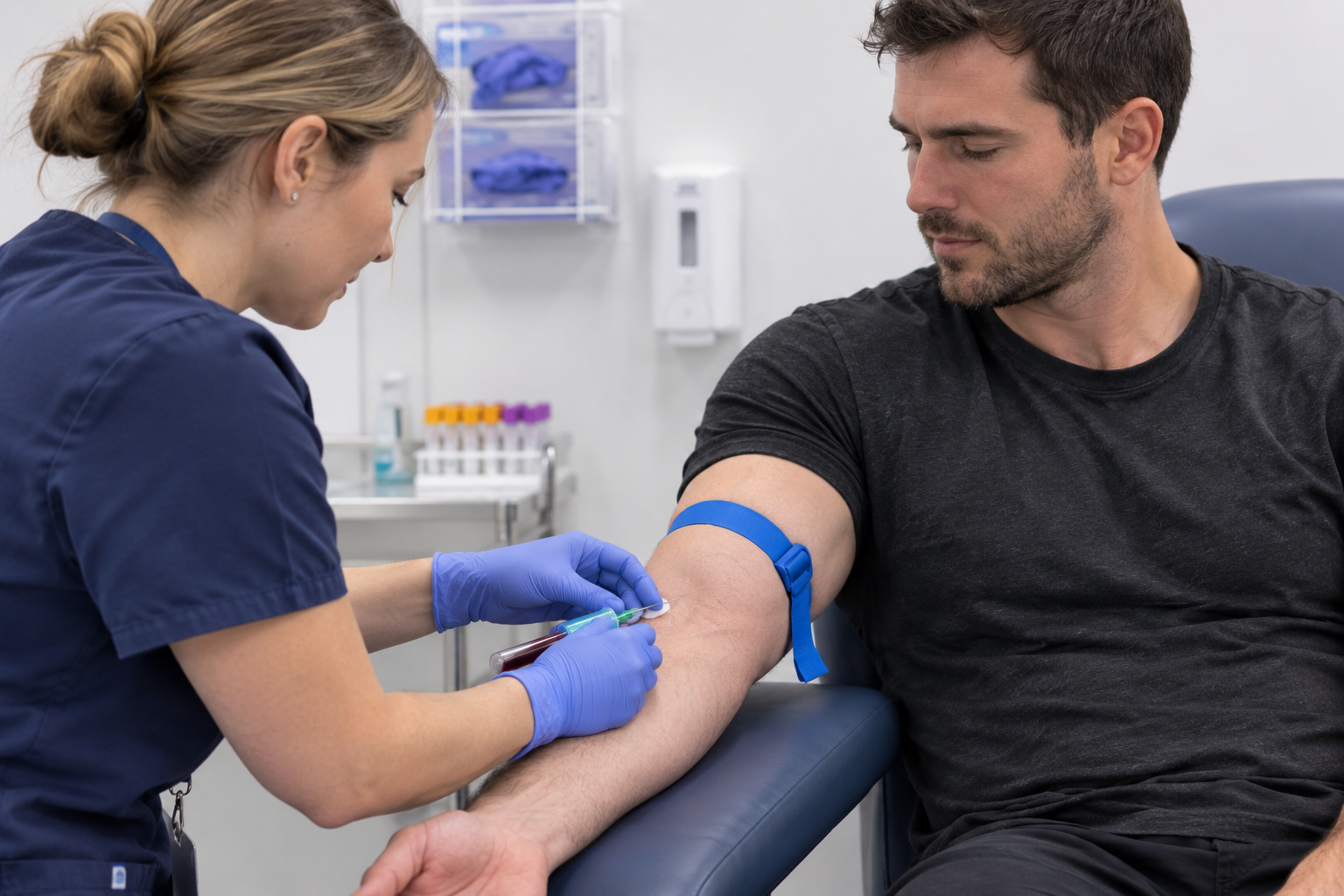
Blood testing is an essential part of investigating possible testosterone deficiency and monitoring Testosterone Replacement Therapy (TRT). Tests performed before treatment help establish whether testosterone is genuinely low, investigate possible causes and provide important baseline health information.
This UK-focused guide explains the difference between an initial testosterone test and a more comprehensive blood panel, which markers are commonly assessed, and why regular monitoring remains important once TRT has started.
Some men begin with a smaller testosterone panel before paying for a more extensive set of blood tests. This can provide an initial indication of whether testosterone appears low and whether further clinical investigation may be appropriate.
Testosterone levels naturally vary, which is why a diagnosis should not normally be based on one isolated result. Low testosterone is generally confirmed using symptoms together with appropriately timed low testosterone measurements on separate occasions before treatment is considered.
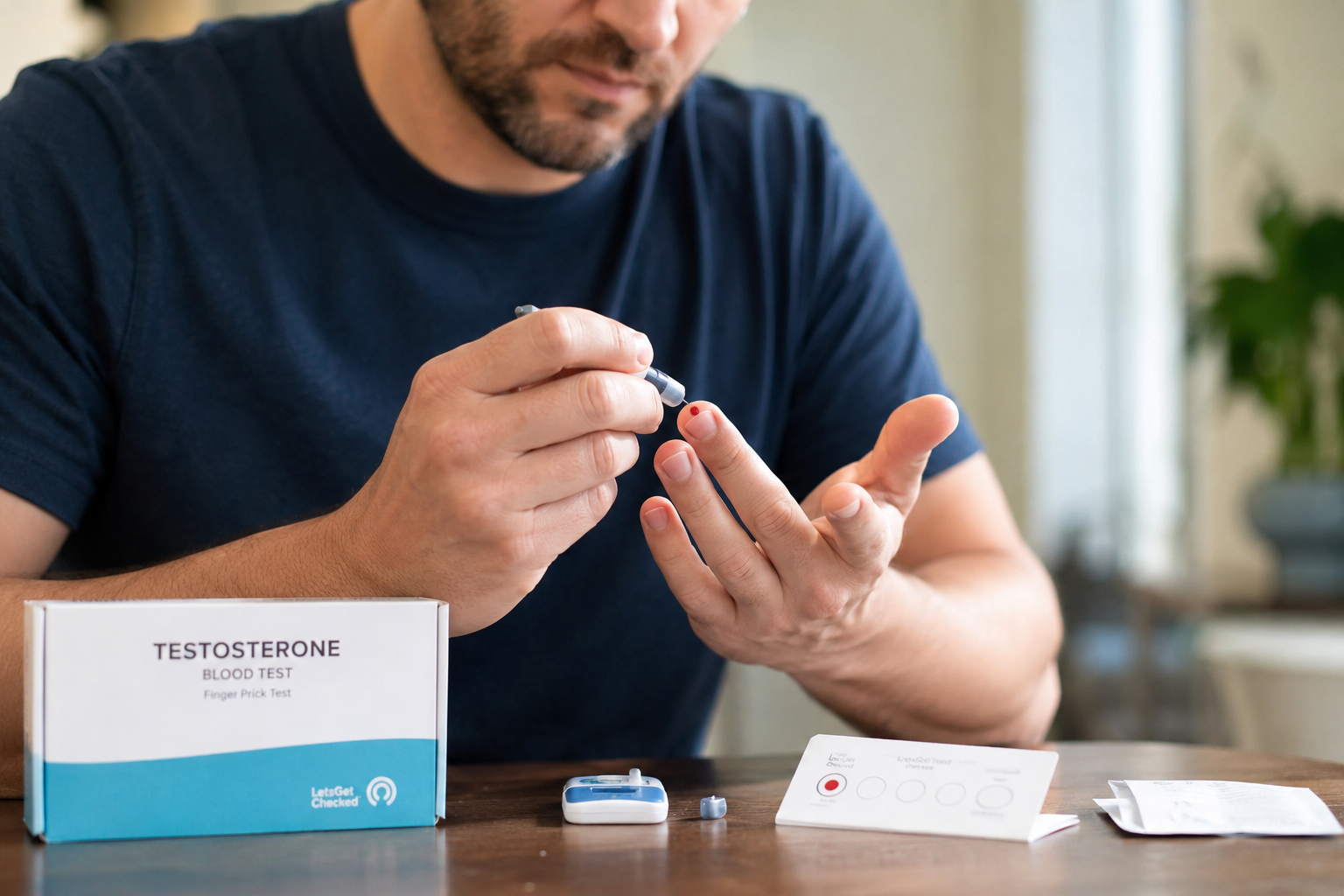
Some services also offer home finger-prick tests as an initial screening option. However, the clinician responsible for diagnosis may require formal venous laboratory testing, so a home result should not automatically be assumed to satisfy their diagnostic requirements.
A smaller hormone panel may include the following markers before a broader clinical assessment is arranged.
Total Testosterone does not always tell the whole story. Our Free Testosterone and SHBG guide explains how these markers fit together.
If testosterone appears low, a broader assessment can help confirm the hormone results, investigate why testosterone may be reduced and assess relevant health markers before TRT is considered.
This commonly involves a venous blood sample because a more comprehensive panel requires considerably more information than a basic screening test.
The exact tests required depend on factors such as your symptoms, age, medical history and the clinician assessing you, but a wider TRT assessment may include the following groups of markers.
Want to understand what the individual numbers actually mean? Read our complete UK TRT bloodwork guide .
Depending on your symptoms and medical history, additional tests such as Vitamin D, Vitamin B12 and Folate may also be useful.
Nutrient deficiencies can contribute to fatigue, poor concentration, low mood and reduced wellbeing — symptoms that can overlap with those commonly associated with testosterone deficiency.
Testing these markers can sometimes help provide a broader picture rather than assuming that every symptom is being caused by testosterone alone. Whether they are necessary should be decided according to your individual circumstances and clinical assessment.
Blood monitoring continues after testosterone treatment begins. Follow-up testing allows the clinician to assess how you are responding to treatment while monitoring markers that may change during TRT.
Depending on individual circumstances, this may include Testosterone, Full Blood Count, haemoglobin, haematocrit, Oestradiol where relevant, metabolic markers and PSA where appropriate.
Not every marker used during the original diagnostic investigation necessarily needs to be repeated at every follow-up. The exact blood panel and timing should be determined by the clinician responsible for treatment.
For a broader overview of follow-up care, see our guide to how TRT monitoring works .

Follow-up blood testing is an important part of TRT monitoring, although the exact schedule varies according to the testosterone preparation, clinician and individual circumstances.
Some providers arrange an early review several weeks after treatment begins, followed by further monitoring during the first year. Testing can usually become less frequent once treatment and relevant health markers are stable.
Some UK TRT providers arrange an initial follow-up at around six weeks. Depending on the treatment protocol, this may involve a more focused set of blood markers before a broader review later in the first year.
Once TRT has been established, follow-up testing focuses on whether treatment is producing an appropriate response while also monitoring markers that may change during therapy.
The exact panel and frequency vary between patients and treatment pathways, but the following markers are commonly relevant.
Explore our free educational calculators and practical guides for understanding testosterone blood results, laboratory units and prescribed treatment measurements.
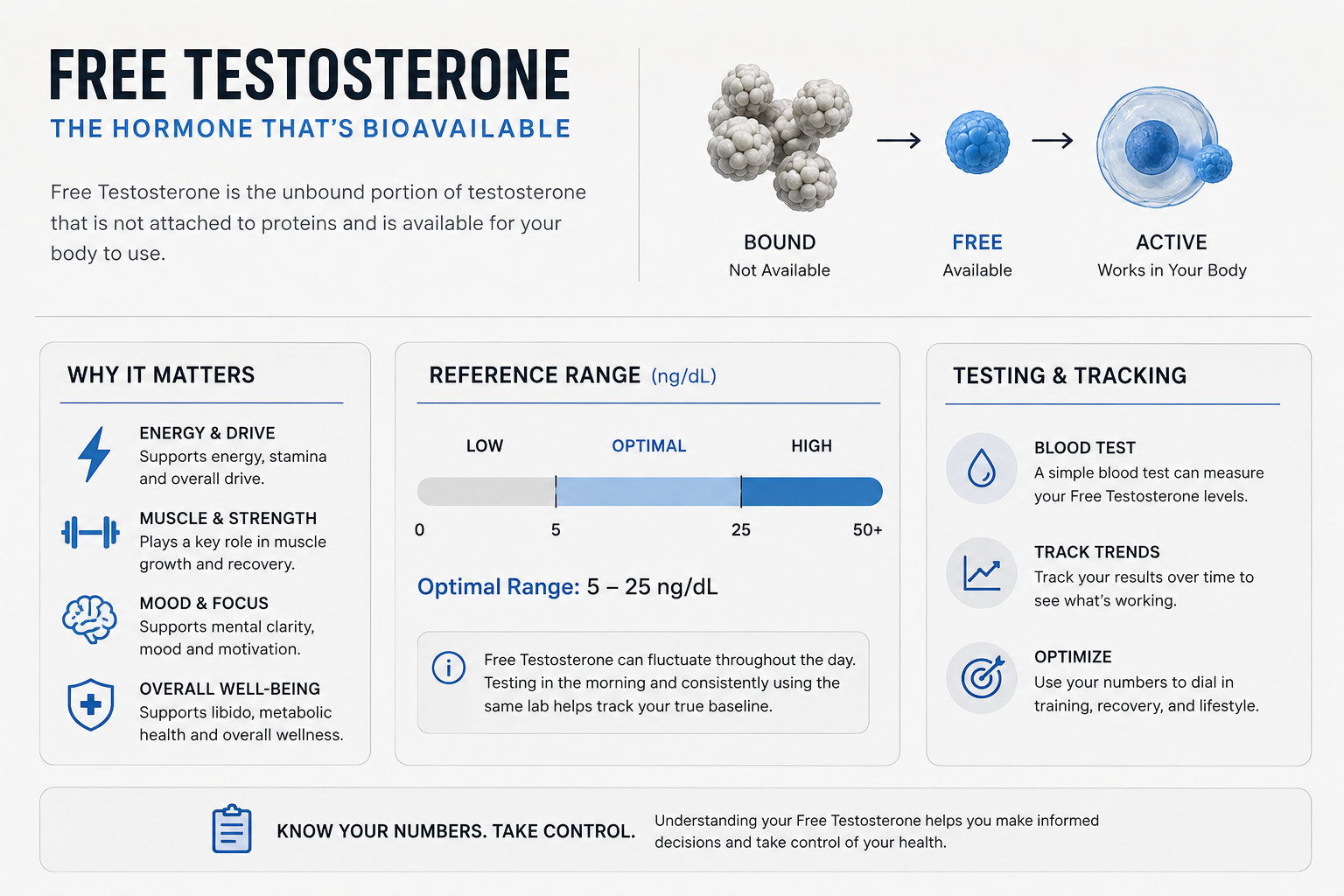
Estimate calculated Free Testosterone using your Total Testosterone, SHBG and Albumin results.
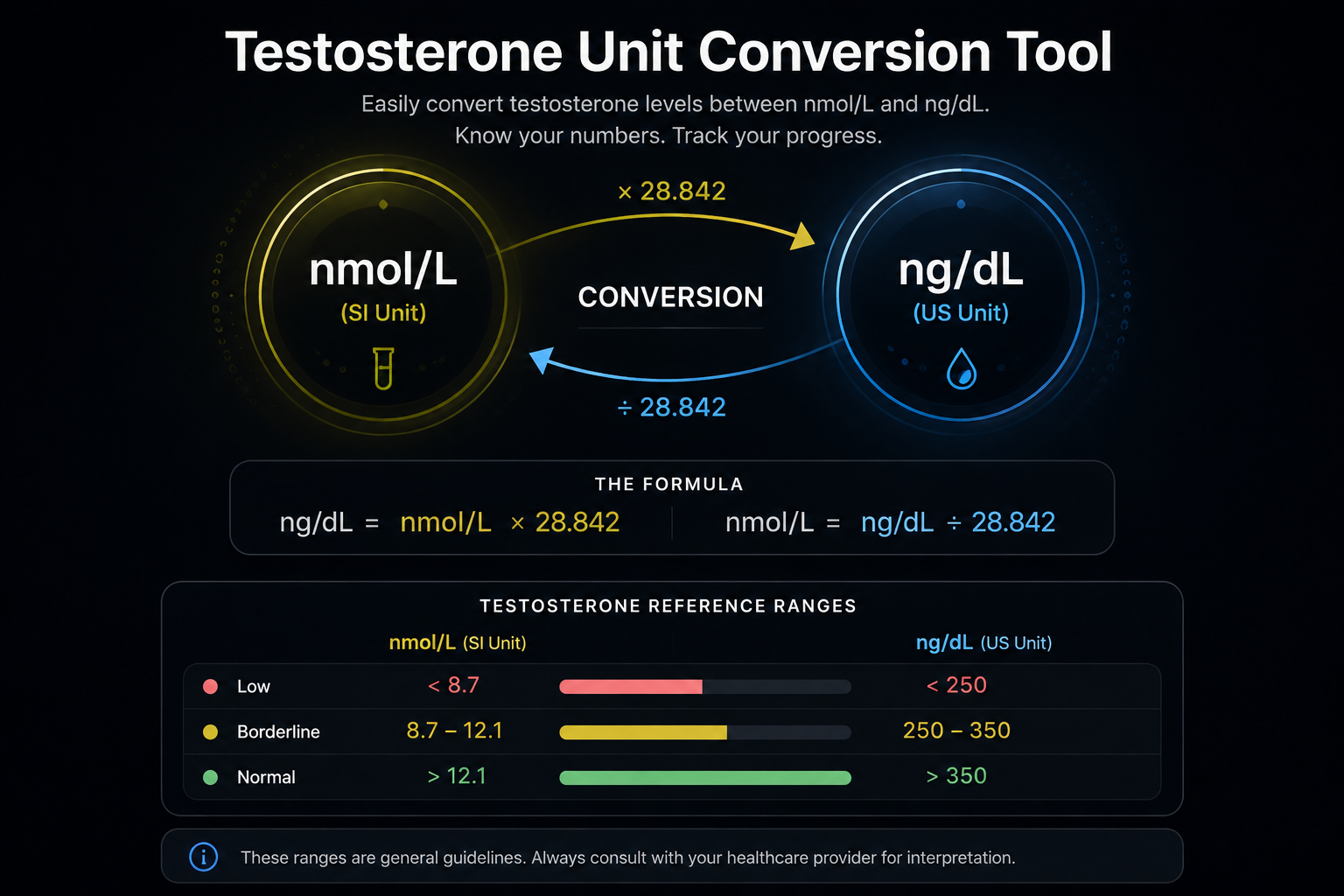
Convert testosterone laboratory results between commonly used units including nmol/L and ng/dL.
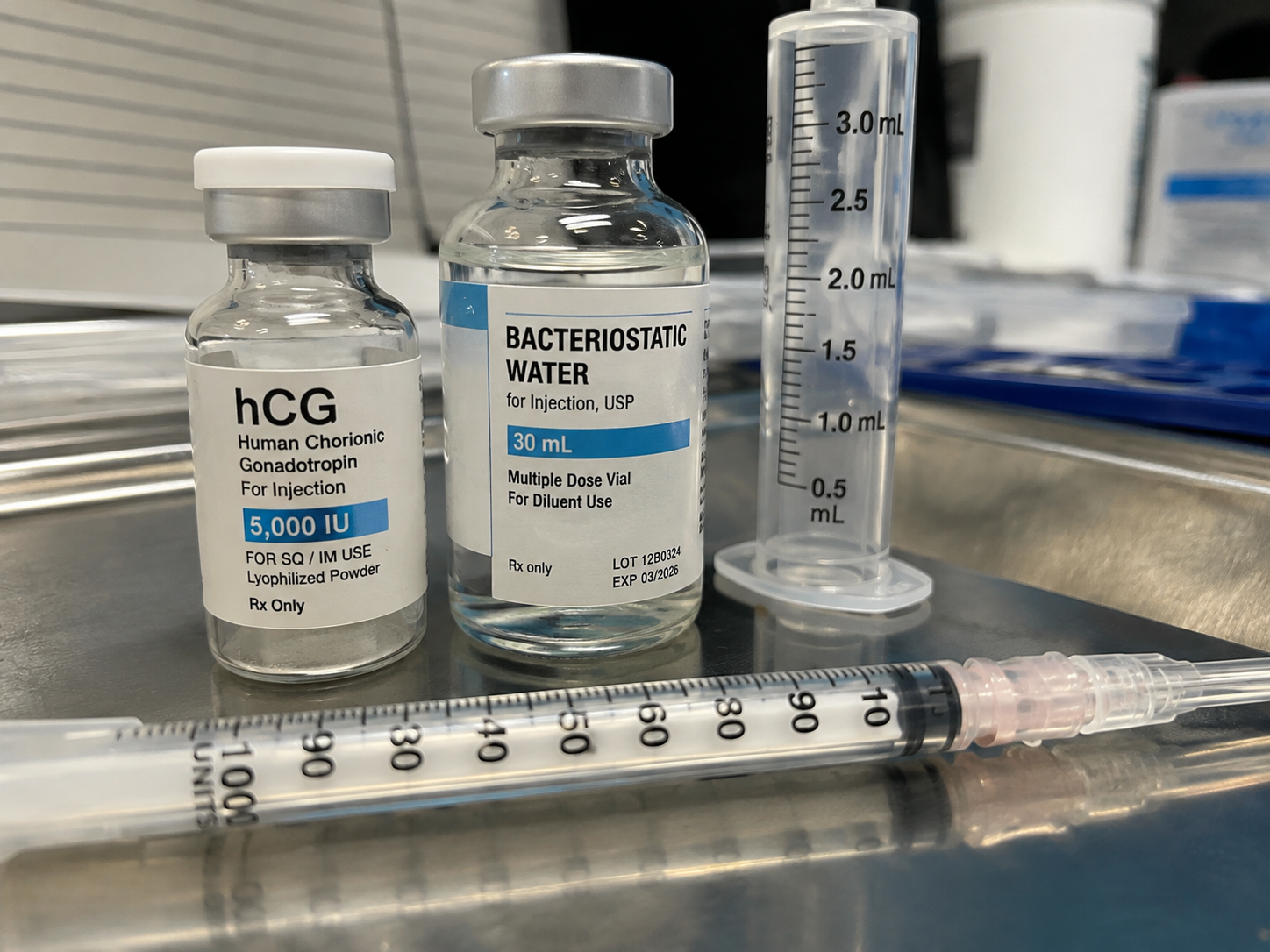
Understand concentrations and syringe measurements for prescribed hCG after reconstitution.
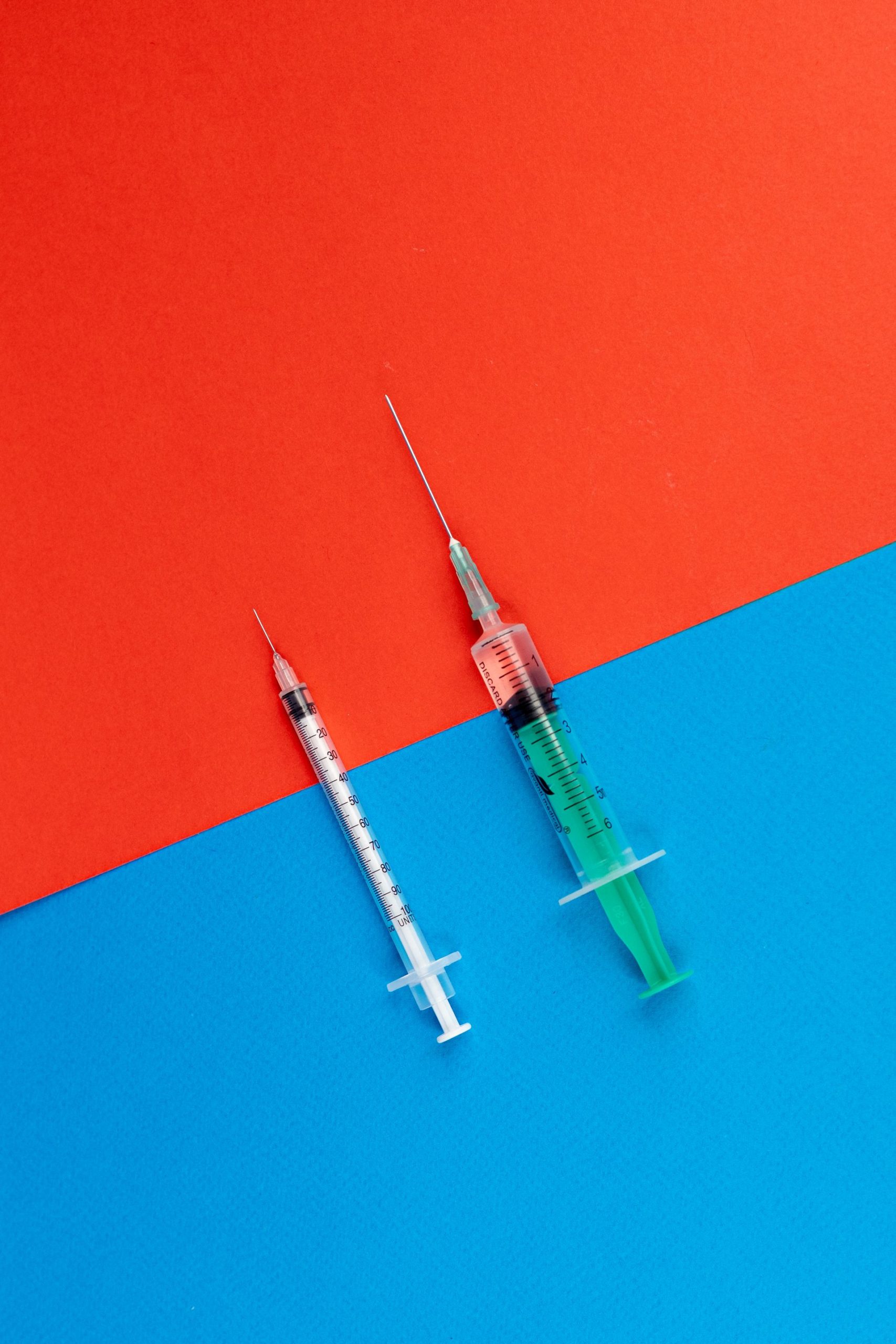
Understand common syringe sizes, measurements and equipment used with prescribed injectable testosterone.
Blood testing can help establish whether testosterone appears low and provide the wider health information needed for an appropriate clinical assessment.
Answers to common questions about diagnostic and monitoring blood tests for Testosterone Replacement Therapy.
Testosterone levels vary naturally and can be influenced by factors including time of day, illness and other physiological influences. Diagnosis is therefore generally based on compatible symptoms together with appropriately timed low testosterone measurements on separate occasions rather than a single isolated result.
A smaller initial panel may include Total Testosterone together with SHBG and Albumin, which can be used to calculate Free Testosterone. The exact test depends on the laboratory or clinical service being used.
A Full Blood Count provides baseline haemoglobin and haematocrit, which are important because testosterone can increase red blood cell production. PSA may also be assessed where appropriate as part of baseline prostate evaluation, depending on age, symptoms, risk and clinical circumstances.
Cortisol is not necessarily required for every patient. It may be tested when symptoms or clinical circumstances suggest that adrenal function should be investigated. Whether it is repeated during TRT depends on the clinician and the reason it was originally tested.
These tests may be useful when symptoms or medical history suggest a possible deficiency. Deficiencies can contribute to fatigue, concentration problems and other symptoms that overlap with testosterone deficiency, but they are not mandatory components of every TRT blood panel.
Monitoring frequency varies according to the testosterone preparation, treatment stage, previous results and clinician. Testing is generally more frequent after treatment begins or when treatment is being adjusted, with periodic monitoring continuing once treatment is stable.
Medical disclaimer: UKTRT provides general educational information and is not a medical service. We are not doctors. This guide does not replace personalised medical advice, diagnosis or treatment. Blood test interpretation and prescribing decisions should be made by an appropriately qualified healthcare professional.