Join our community
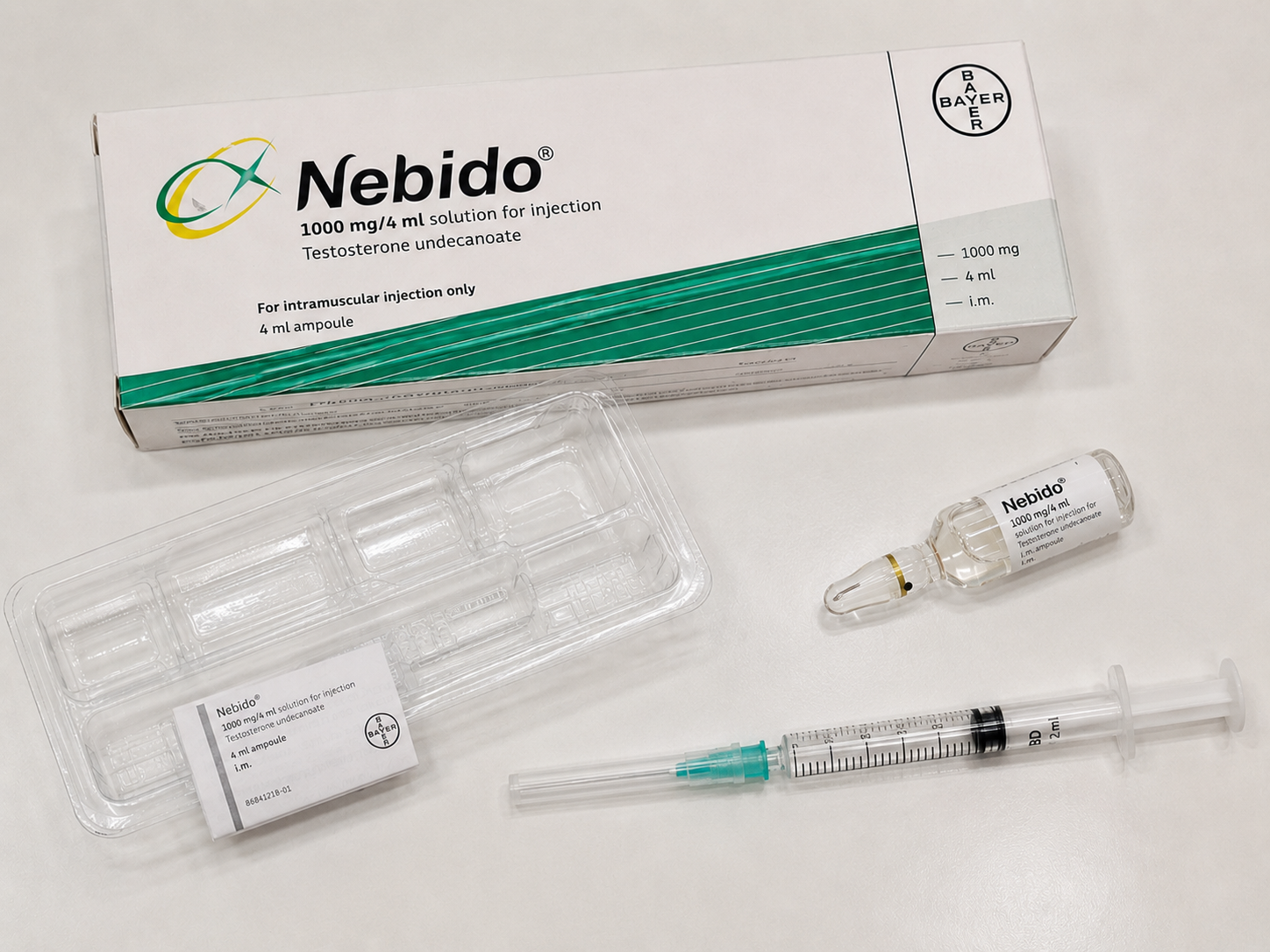
Nebido is a long-acting testosterone injection used to treat men with confirmed testosterone deficiency. It contains testosterone undecanoate and is designed to release testosterone gradually following a deep intramuscular injection.
In the UK, Nebido is commonly prescribed through the NHS, although Sustanon 250 is also used in some cases. While the long interval between Nebido injections can be convenient, patient experiences vary and some men report preferring shorter-acting testosterone preparations.
This guide explains how Nebido works, typical dosing and monitoring, why it is used within NHS care, how it compares with Sustanon, and why some patients find one form of TRT suits them better than another.
The main points to understand about Nebido and testosterone treatment in the UK.
Nebido is the brand name for an injectable preparation containing testosterone undecanoate.
Each 4 ml ampoule or vial contains 1000 mg of testosterone undecanoate. It is administered as a slow, deep intramuscular injection, usually into the gluteal muscle.
Testosterone undecanoate is a long-acting testosterone ester. After injection, the medication forms a depot within the muscle and is gradually released and converted into active testosterone over an extended period.
Nebido should only be used for confirmed testosterone deficiency. UK prescribing information specifies testosterone replacement for male hypogonadism where deficiency has been confirmed by clinical features and biochemical testing.
There is no single NHS testosterone protocol used identically across the whole UK. Local formularies, endocrinology services and prescribing pathways can differ.
However, Nebido appears widely across NHS formularies and guidance, and some NHS pathways specifically identify it as the preferred injectable testosterone option.
Nebido is not universally the NHS first choice everywhere. Local NHS formularies differ. For example, some pathways prefer Nebido when injections are chosen, while others also list Sustanon, testosterone gels or other formulations.
Nebido is different from shorter-acting testosterone injections because one injection is designed to cover a much longer period.
Treatment begins with a 1000 mg intramuscular injection of testosterone undecanoate.
UK prescribing information allows the interval between the first and second injection to be shortened to a minimum of six weeks, depending on testosterone levels and clinical symptoms.
Once established, injections are generally given every 10–14 weeks.
Testosterone should be measured near the end of the injection interval. If levels are too low, a clinician may consider shortening the interval. If levels remain relatively high, the interval may be extended.
The 10–14 week interval is a range, not a rule that every man must follow identically. Nebido's UK prescribing information specifically states that serum testosterone levels and clinical symptoms should be considered when individualising the interval.
Patient experiences of TRT vary significantly. Online forums, social media groups and TRT communities contain both positive and negative accounts of Nebido treatment.
These experiences can be useful for understanding what other patients notice, but they are anecdotal and should not be treated as evidence that Nebido is ineffective or unsuitable for everyone.
In our experience working around UK TRT services, dissatisfaction with Nebido is a recurring theme among some patients, particularly around long injection intervals and symptoms they feel return towards the end of the cycle. However, this is observational and anecdotal rather than formal clinical evidence, and many patients may still do well on Nebido.
Some patients report that energy, libido, mood or general wellbeing appears to decline before the next scheduled injection.
Because Nebido is a large long-acting depot injection, adjustments cannot be made as rapidly as they can with shorter-acting testosterone preparations.
Some men prefer smaller, more frequent testosterone doses because they feel this gives them greater control over their treatment and makes it easier to respond to changes in symptoms or blood results.
Men differ in absorption, metabolism, SHBG levels, symptoms and response to testosterone treatment. A regimen that works very well for one patient may feel less suitable for another.
Social-media experiences should be kept in perspective. People experiencing problems may be more likely to post online than people who are stable and satisfied with treatment. Personal accounts therefore cannot tell us how frequently dissatisfaction occurs across NHS Nebido patients as a whole.
The fact that some patients prefer another testosterone preparation does not mean the NHS is using an inappropriate medicine.
Nebido is an established treatment for male hypogonadism and its long dosing interval has practical advantages for both patients and healthcare services. NHS prescribing choices also need to consider clinical evidence, licensing, safety, monitoring, administration and the practical delivery of care at population level.
At the same time, testosterone treatment should still take account of individual response. A patient who experiences persistent symptoms despite appropriate monitoring should discuss this with the clinician responsible for treatment rather than simply accepting that all testosterone preparations will feel identical.
Nebido and Sustanon are both injectable testosterone medicines used within UK testosterone replacement pathways, but they work over very different timeframes.
Typical interval Every 10–14 weeks once established.
Injection volume 4 ml.
Administration Deep intramuscular injection administered slowly.
Potential advantage Very infrequent dosing.
Potential limitation Changes to treatment take longer to have an effect because the medicine remains in the body for an extended period.
Typical NHS schedules Often every 3–4 weeks, although prescribing and monitoring can vary.
Injection volume 1 ml.
Administration Traditionally given intramuscularly.
Potential advantage Shorter duration makes treatment easier to adjust.
Potential limitation Wider peaks and troughs can occur when injections are spaced further apart.
All injectable testosterone preparations change testosterone levels over time. The important question is how large those changes are and whether they produce symptoms.
Nebido was developed specifically as a long-acting preparation and UK guidance describes relatively stable testosterone concentrations as one of its advantages.
Nevertheless, individual patients may still experience symptoms before their next injection, particularly if the interval is too long for their individual pharmacokinetic response.
This is one reason trough testosterone testing is important. Measuring testosterone close to the next injection helps the clinician determine whether the current interval remains appropriate.

Nebido still requires proper TRT monitoring. Its long dosing interval does not remove the need for blood testing or clinical review.
Trough testosterone is generally checked near the end of the injection interval so that the clinician can assess whether the interval is appropriate.
Testosterone therapy can increase red blood cell production, so haemoglobin and haematocrit form an important part of ongoing monitoring.
Prostate monitoring may include PSA testing according to age, baseline risk and the clinical circumstances of the patient.
Blood results should not be considered in isolation. Energy, sexual function, mood, adverse effects and general wellbeing also matter when reviewing testosterone treatment.
Like other testosterone medicines, Nebido can cause adverse effects and requires appropriate medical monitoring.
Nebido must be injected very slowly and deeply into the muscle. The UK SmPC specifies administration over approximately two minutes and includes particular precautions to avoid intravascular injection.
There is no testosterone preparation that is objectively best for every patient.
If Nebido is working well for you, there is no reason to dislike it simply because somebody online prefers another preparation. Equally, persistent symptoms should not automatically be dismissed because Nebido works well for many other patients. Treatment needs to be assessed individually.
UKTRT provides general educational information and is not a medical service. We are not doctors. The information on this page should not be used as a substitute for individual medical advice, diagnosis or treatment.
Do not change the timing, dose or preparation of prescribed testosterone without discussing it with the clinician responsible for your treatment.
Further UK clinical information about testosterone undecanoate and TRT is available from:
Nebido is a long-acting injectable testosterone medicine containing testosterone undecanoate. It is licensed in the UK for testosterone replacement in men with confirmed hypogonadism.
Yes. Nebido is used within NHS testosterone treatment pathways and appears on numerous local NHS formularies. The exact preferred testosterone preparation varies between NHS areas.
After the initiation phase, UK prescribing information recommends Nebido every 10–14 weeks. The interval can be individualised according to trough testosterone levels and clinical symptoms.
Some men report that they notice symptoms returning towards the end of a long injection interval or prefer the flexibility of shorter-acting testosterone. These reports are individual experiences and do not mean Nebido works poorly for everyone.
Neither preparation is automatically better for every patient. Nebido offers much less frequent injections, while Sustanon has a shorter duration and may allow quicker treatment adjustments. Suitability depends on individual response and clinical assessment.
Individual responses vary. If symptoms appear consistently before the next injection, trough testosterone testing and clinical review can help determine whether the injection interval remains appropriate.
Testosterone preparations can sometimes be changed when clinically appropriate, but this should be planned by the clinician managing treatment because Nebido remains in the body for an extended period.
Yes. Testosterone therapy requires ongoing monitoring. Depending on the individual, this may include testosterone levels, full blood count and haematocrit, PSA and other health markers.