
Join our community
TRT and haematocrit are closely linked because testosterone can stimulate red blood cell production. For men using Testosterone Replacement Therapy, monitoring haematocrit is therefore an important part of routine blood testing and long-term treatment safety.
A modest increase does not automatically mean something is wrong. However, a persistent or excessive rise needs proper clinical assessment because a higher red blood cell concentration can increase blood viscosity and may become clinically significant.
This guide explains what haematocrit actually measures, why testosterone can raise it, the difference between true erythrocytosis and a temporarily concentrated result from dehydration, how haematocrit is monitored during TRT, and why deliberately overhydrating before a blood test is not a sensible way to manage the number.
Blood contains red blood cells, white blood cells and platelets suspended within a liquid component called plasma.
Haematocrit (Hct) describes the proportion of your total blood volume that consists of red blood cells. For example, a haematocrit of 0.48 means approximately 48% of the measured blood volume is occupied by red cells.
Haematocrit is closely related to haemoglobin and red blood cell count, but the three measurements are not identical. They are normally reported together as part of a Full Blood Count (FBC).
This is why clinicians look at the wider blood count rather than reacting to one number in isolation.
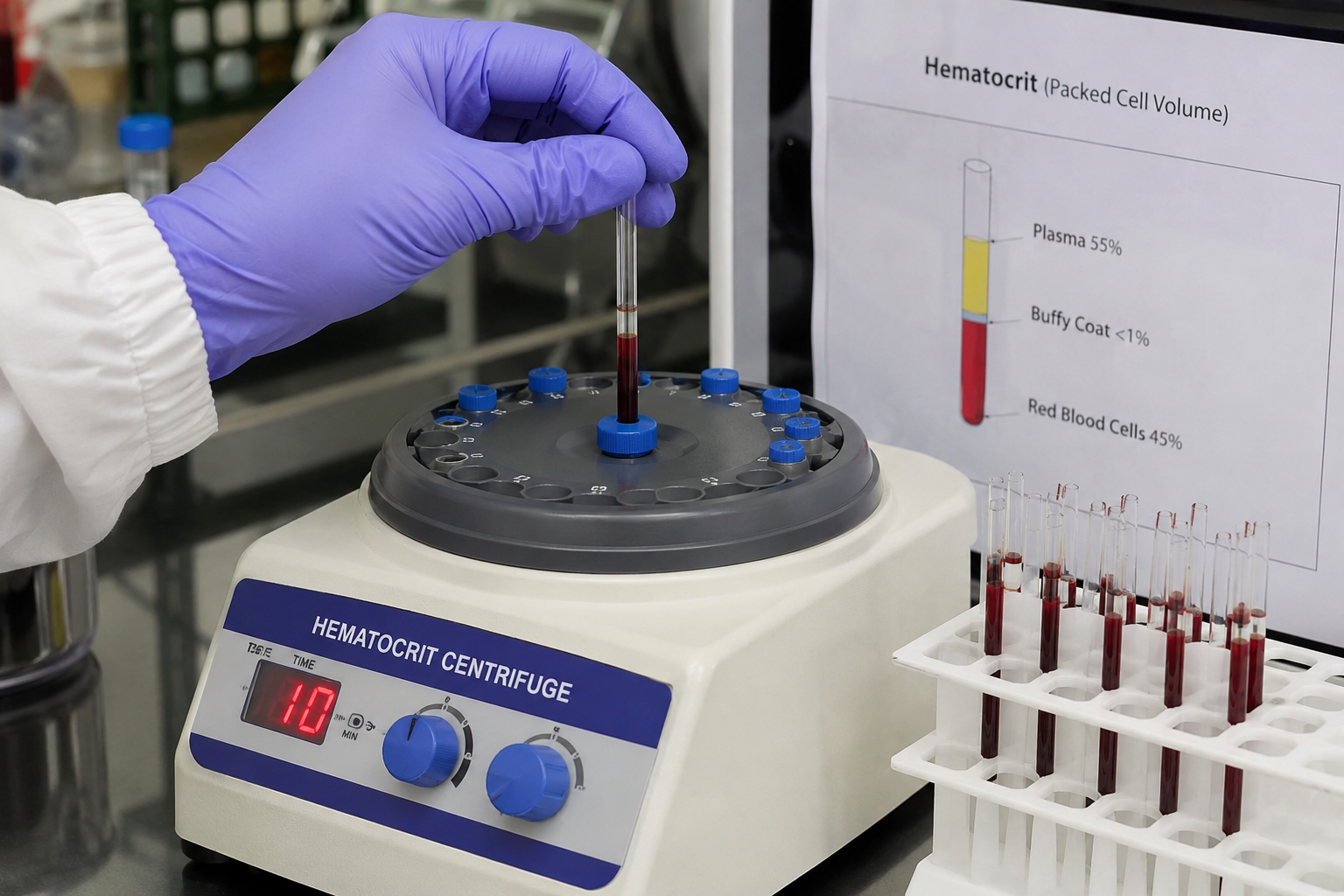
Testosterone has a genuine physiological effect on erythropoiesis — the process through which new red blood cells are produced.
Erythropoietin, usually shortened to EPO, is a hormone produced primarily by the kidneys. It signals the bone marrow to increase red blood cell production.
Research suggests testosterone can alter the relationship between EPO and haemoglobin, effectively supporting a higher level of erythropoiesis.
Hepcidin is an important hormone involved in controlling iron availability. Higher hepcidin reduces the amount of iron available for red blood cell production.
Testosterone has been shown to suppress hepcidin. This can increase the availability and utilisation of iron for haemoglobin synthesis and erythropoiesis.
The combination of erythropoietic signalling and increased iron availability can lead to increased red blood cell mass.
As red blood cell production increases, haemoglobin and haematocrit can rise.
Testosterone increasing red blood cell production is a known physiological effect of treatment. A small increase from a low or mid-range baseline is not the same thing as clinically significant erythrocytosis.
What matters is the actual value, the direction of travel, how quickly it has changed, whether the increase is persistent and whether other factors may be contributing.
Erythrocytosis refers to an increased concentration or mass of red blood cells. Testosterone therapy can cause secondary erythrocytosis in some patients.
This is different from primary blood disorders such as polycythaemia vera, where abnormal bone marrow activity causes excessive blood cell production.
It is therefore important not to assume that every high haematocrit in someone receiving TRT is simply “because of testosterone”.
Hydration can influence the concentration of blood components, which is particularly relevant when a morning blood test is being used to make treatment decisions.
If you are dehydrated, the liquid plasma component of your blood is reduced relative to the cellular component.
This haemoconcentration can make haemoglobin, haematocrit and red blood cell concentration appear higher than they might under normal hydration conditions.
For routine monitoring, the objective is to obtain a blood result that reflects your usual physiological state.
Being sensibly hydrated — particularly first thing in the morning after several hours without drinking — helps reduce avoidable haemoconcentration.
Drinking an unusually large quantity of water immediately before a test in an attempt to produce a lower haematocrit is not appropriate monitoring.
The purpose of the blood test is to establish what your body is actually doing under normal conditions — not to manufacture a more favourable number.
Follow any fasting or preparation instructions provided by the clinic performing your blood test. If you have a medical condition requiring fluid restriction, follow your clinician's advice rather than general hydration guidance.
TRT blood tests are often performed in the morning. By that point, many people have gone several hours overnight without drinking, and factors such as a warm bedroom, sweating, alcohol consumption the previous evening or simply low fluid intake can contribute to mild dehydration.
Arriving significantly dehydrated can make a concentration-based blood measurement less representative of your normal state.
The sensible approach is not to “flush” yourself with litres of water immediately before the test. It is to maintain ordinary hydration beforehand and follow the instructions provided by your testing service.
The proportion of total blood volume occupied by red blood cells. It is usually expressed as a decimal such as 0.48 or as a percentage such as 48%.
The oxygen-carrying protein contained inside red blood cells. Haemoglobin concentration usually rises alongside haematocrit when erythropoiesis increases.
The number of circulating red blood cells within a given volume of blood. It provides another piece of the Full Blood Count picture.
As the proportion of red blood cells increases, blood viscosity can also increase. In simple terms, blood with a very high red-cell fraction behaves differently from blood within a normal physiological range.
In erythrocytosis more broadly, increased blood viscosity is one reason clinicians take persistently elevated haematocrit seriously.
The exact relationship between testosterone-induced erythrocytosis and cardiovascular or thrombotic events is more complicated than saying that one elevated result automatically causes a clot. The evidence does not justify treating every rise as an emergency.
Nevertheless, it is a recognised adverse effect of testosterone treatment and one that established clinical guidelines specifically require clinicians to monitor.
Major testosterone-treatment guidelines use a haematocrit of around 54% (0.54 L/L) as an important threshold at which treatment requires intervention or reassessment.
This does not mean that every result below 0.54 can simply be ignored, nor does it mean that every result above it has the same cause. Baseline values, trends, symptoms, treatment type and other medical factors still matter.
If your haematocrit reaches or exceeds this level, speak to the clinician responsible for your TRT rather than attempting to correct the number yourself.
A single Full Blood Count provides a snapshot. Sequential tests show how the blood is responding over time.
Establishing the patient's pre-treatment haematocrit provides context for future results.
A rise may represent an expected physiological response depending on the wider clinical picture.
Continued upward movement may deserve closer review even before a formal intervention threshold is reached.
Established testosterone guidelines treat this as an important threshold requiring clinical action.
Example values above are shown only to demonstrate the importance of trends and should not be interpreted as individual treatment targets.
The likelihood and magnitude of haematocrit increases can vary with testosterone exposure, dose, circulating concentrations and treatment formulation.
Research has often found erythrocytosis to be more frequent with some injectable testosterone preparations than with transdermal therapy. Peak testosterone concentrations and overall androgen exposure may contribute to this difference.
This does not mean injectable TRT is inherently unsafe. It means the prescribed preparation and protocol are part of the clinical picture when haematocrit is increasing.
Management depends on the individual. A clinician may investigate why the result is rising before deciding what, if anything, should change.
Was the patient normally hydrated? Is the result consistent with previous Full Blood Counts? Does it need confirming?
Testosterone levels, prescribed dose, preparation and dosing schedule may be reviewed.
Symptoms of sleep-disordered breathing or other causes of reduced oxygen availability may need consideration.
Smoking can contribute to secondary erythrocytosis and may form part of the wider assessment.
Diuretics, respiratory conditions, renal problems or other causes of erythrocytosis may need to be considered.
Depending on the findings, the clinician may consider alterations to testosterone treatment or other appropriate management.
Blood removal reduces circulating red blood cell mass and can lower haematocrit. However, it should not automatically become a routine DIY solution every time haematocrit rises.
A high result first needs context. Repeated blood donation without addressing the reason for excessive erythropoiesis may also affect iron stores and ferritin.
Where blood donation or therapeutic venesection is appropriate, the decision should sit within a wider clinical plan rather than replace proper TRT monitoring.
Deliberately overhydrating, repeatedly donating blood without proper review, changing your testosterone dose yourself or otherwise trying to force haematocrit downward can obscure the reason the marker is increasing.
Monitoring only works when the results accurately represent what is happening physiologically.
If your haematocrit is persistently elevated, the appropriate next step is clinical assessment.
Haematocrit is important, but it is only one part of a properly monitored TRT blood panel.
Testosterone can increase red blood cell production through genuine biological mechanisms involving erythropoietin, iron regulation and erythropoiesis.
For most patients, this is something to monitor rather than fear. The important distinction is between a physiological increase and a persistent elevation that requires clinical attention.
Hydration matters because dehydration can concentrate a blood sample, but the aim should always be to test under normal conditions. A blood test is there to reveal what your body is doing — not to provide a number that has been artificially pushed in either direction.
If haematocrit is rising during TRT, the safest approach is to review the trend with the healthcare professional responsible for treatment and investigate the reason before deciding how it should be managed.
Testosterone stimulates erythropoiesis. Research suggests this involves effects on erythropoietin and suppression of hepcidin, increasing iron availability and supporting increased red blood cell production.
Haematocrit measures the proportion of total blood volume occupied by red blood cells. A haematocrit of 0.48, for example, represents approximately 48% of the measured blood volume.
Yes. Dehydration can reduce plasma volume and concentrate the cellular components of blood, potentially producing a higher haemoglobin or haematocrit measurement without an equivalent increase in total red blood cell mass.
The goal is normal hydration, not deliberate overhydration. Arriving significantly dehydrated can affect concentration-based blood results, but drinking excessive water specifically to lower haematocrit defeats the purpose of accurate monitoring. Follow your testing provider's preparation instructions.
Major testosterone-treatment guidelines use approximately 0.54 (54%) as an important threshold requiring clinical intervention or reassessment. Results should nevertheless be interpreted alongside baseline values, trends and the individual's circumstances.
Not automatically. Blood removal can reduce haematocrit, but the reason for the elevation should first be assessed. Management may involve reviewing TRT as well as dehydration, smoking, hypoxia, sleep apnoea or other medical factors.
Sleep-disordered breathing can cause intermittent reductions in oxygen levels. Hypoxia can stimulate erythropoietin and may contribute to secondary erythrocytosis in some people, although sleep apnoea does not inevitably produce a high haematocrit.
Do not independently change prescribed testosterone because of one blood result. A clinician may review the result, trend, hydration, testosterone exposure and other possible causes before deciding whether treatment needs to be altered.
This article is provided for general educational purposes only. UKTRT is not a medical service and this information does not replace individual medical advice, diagnosis or treatment. Haematocrit, erythrocytosis and TRT blood results should be interpreted by an appropriately qualified healthcare professional.