Join our community
Oestrogen is often discussed as though it is exclusively a female hormone. It is not. Men naturally produce oestrogen too, and oestradiol — the main biologically active form — has important physiological functions in the male body.
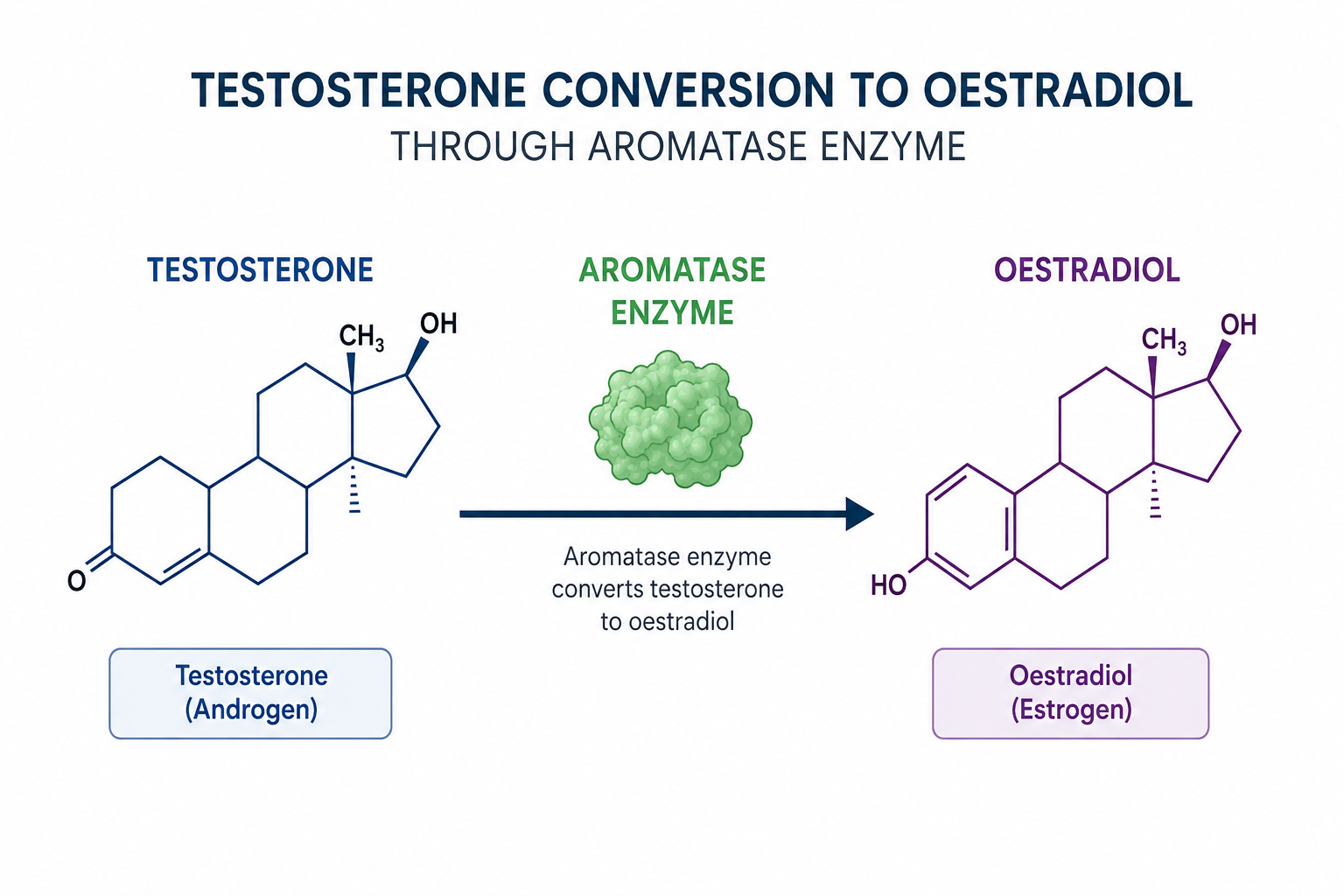
During Testosterone Replacement Therapy (TRT), some testosterone is converted into oestradiol through an enzyme called aromatase. As testosterone availability increases, oestradiol may therefore rise as well.
The important question is not simply whether oestradiol is “high” or “low”. Blood results, symptoms, testosterone levels, body composition, treatment protocol and the wider clinical picture all need to be considered together.
Oestradiol is part of normal male physiology. The objective of TRT is not to maximise testosterone while driving oestradiol as low as possible.
An oestradiol result should be interpreted in context. A laboratory value outside a reference range does not automatically establish that oestradiol is causing a patient's symptoms or that additional medication is required.
Oestrogens are a family of steroid hormones. Oestradiol, often abbreviated to E2, is the form most commonly discussed when assessing oestrogen activity in men.
Men produce oestradiol partly through the conversion of androgens. The enzyme responsible for this conversion is called aromatase.
Aromatase is present in several tissues, including adipose tissue. It converts testosterone into oestradiol, meaning testosterone and oestradiol physiology are directly connected rather than operating as completely separate hormonal systems.
Consequently, increasing testosterone availability during TRT can also increase the amount of substrate available for aromatisation.
Oestradiol has physiological roles in men, which is one reason aggressively suppressing it without a clear clinical indication can be problematic.
The conversion of testosterone into oestradiol is known as aromatisation.
This happens through the aromatase enzyme. Because testosterone is the substrate for this process, increasing testosterone availability can result in increased oestradiol production in some men.
This is a normal biochemical pathway. Aromatisation itself is not a TRT complication and does not automatically need to be prevented.
What matters clinically is whether the patient's hormone results, symptoms and treatment response indicate that further assessment is necessary.
There is rarely one number or one factor that explains every oestradiol result. Several variables can influence the amount of oestradiol produced or measured.
Increasing circulating testosterone provides more substrate that can potentially be converted into oestradiol.
Adipose tissue expresses aromatase. Body composition and metabolic health can therefore be relevant when considering testosterone and oestradiol physiology.
Men do not all convert testosterone into oestradiol to exactly the same degree. Individual responses to TRT vary.
Testosterone concentration and exposure can influence the amount available for aromatisation.
Different testosterone preparations and dosing schedules produce different pharmacokinetic profiles, which can affect hormone measurements.
A hormone result needs to be interpreted in relation to the TRT preparation, dosing schedule and when the blood sample was taken.
This is where TRT discussions can become oversimplified.
A higher oestradiol concentration during testosterone therapy does not automatically mean that something has gone wrong. If testosterone has increased, some increase in oestradiol may occur because the two hormones are physiologically connected.
The result needs to be interpreted alongside testosterone levels, symptoms, treatment timing, previous results and the clinical circumstances of the individual patient.
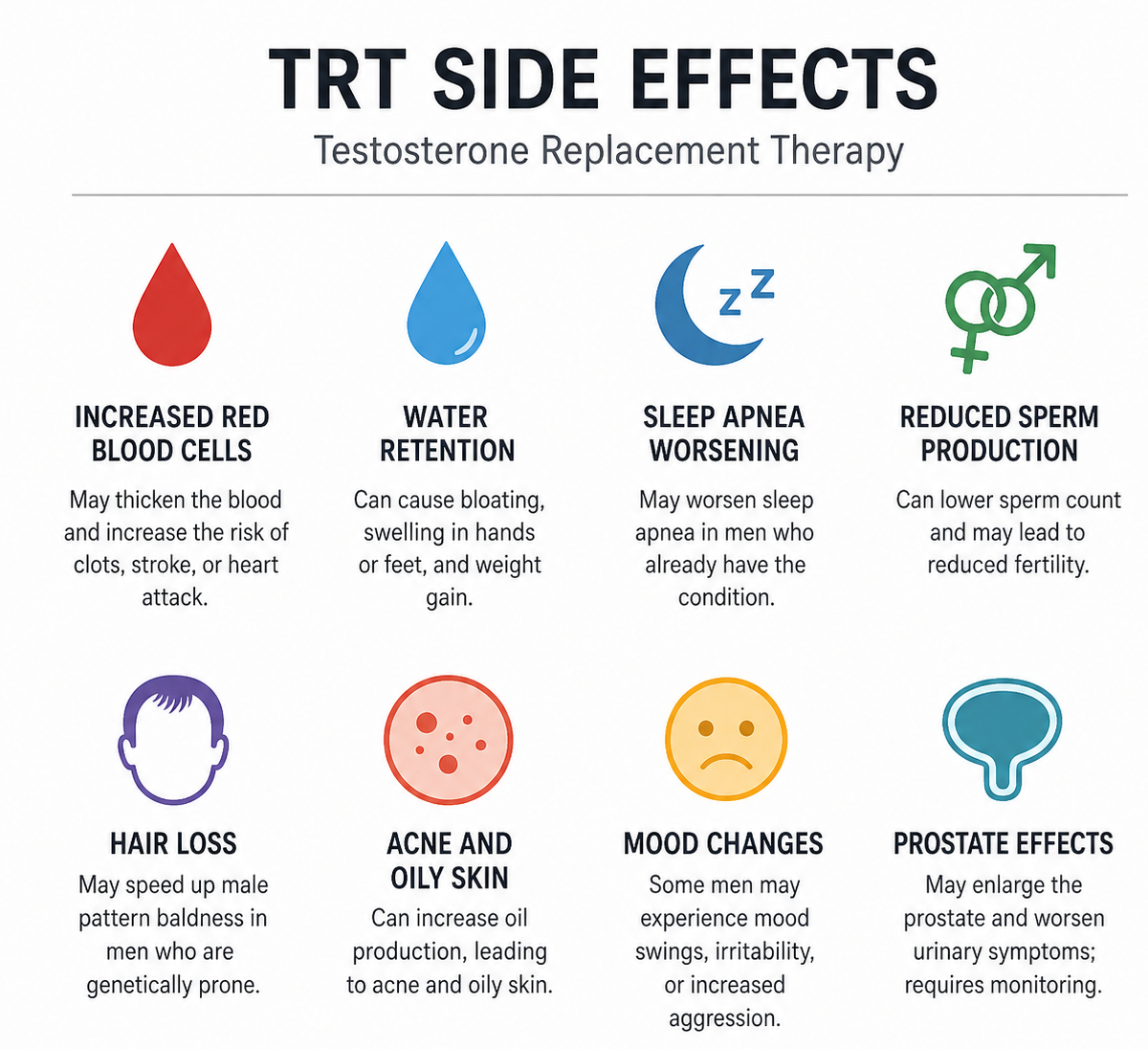
It is particularly important not to assume that every nonspecific symptom occurring during TRT — such as mood changes or fluid retention — proves that oestradiol is the cause.
Several symptoms are commonly blamed on “high oestrogen” in TRT discussions. The problem is that many of them are nonspecific and can have multiple possible causes.
Gynaecomastia is frequently mentioned when discussing oestradiol and testosterone, but breast symptoms should not automatically be self-diagnosed as “high oestrogen”.
Oestradiol may increase during testosterone therapy, and measuring it can be clinically relevant where new breast symptoms or gynaecomastia develop.
New or persistent breast changes still deserve proper assessment because male breast enlargement or breast masses can have causes unrelated to TRT or oestradiol.
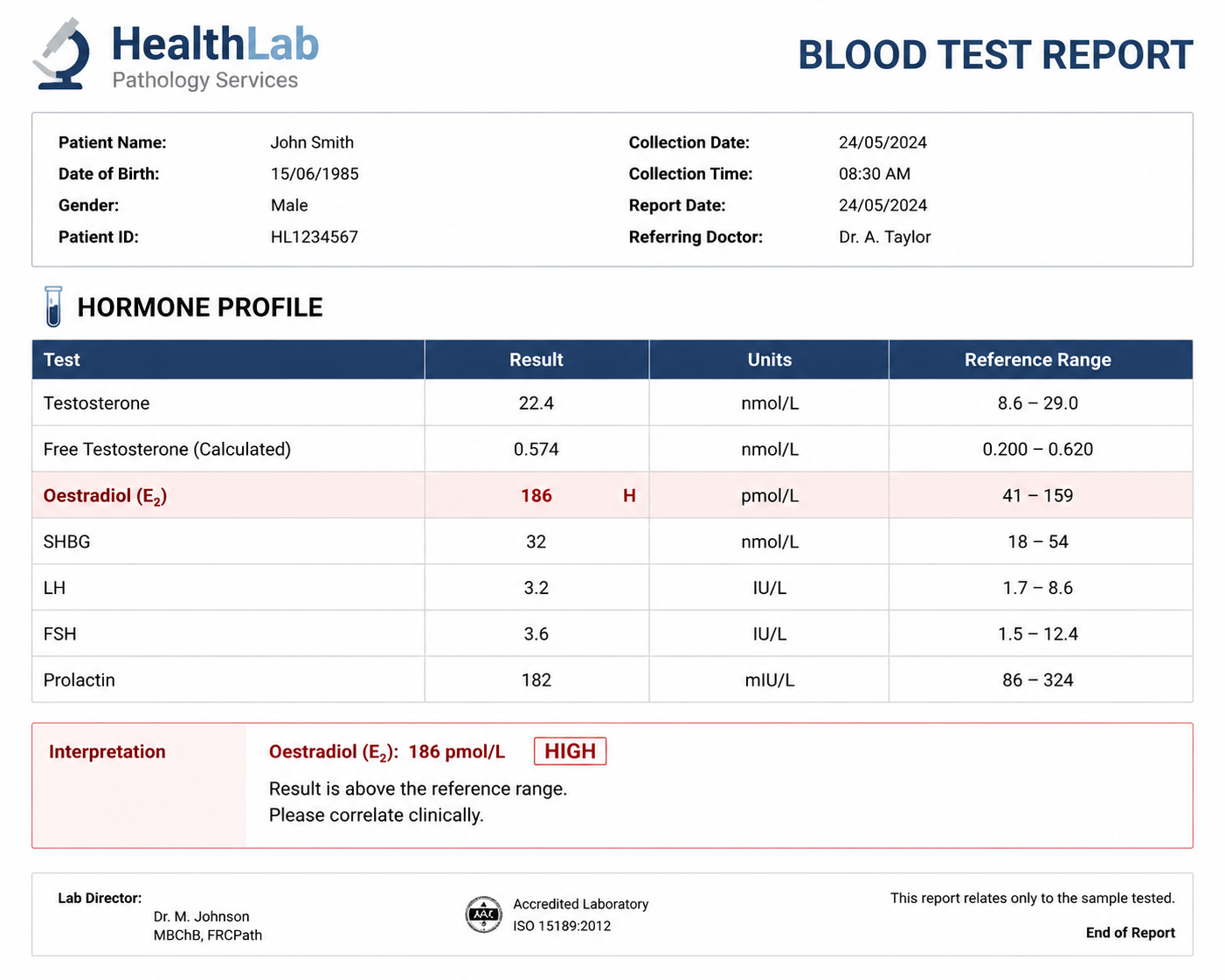
If oestradiol is measured during TRT, the result should not be interpreted completely separately from testosterone.
Total Testosterone, Free Testosterone or SHBG where appropriate, symptoms, medication, dose timing and previous blood results can all provide useful context.
Laboratory methods also matter. Measuring relatively low concentrations of oestradiol in men can be more analytically challenging than measuring the substantially higher concentrations commonly encountered in many women.
Discussion around TRT often focuses almost entirely on preventing oestradiol from becoming “too high”. That can obscure the fact that oestradiol performs normal physiological functions in men.
Excessive suppression is therefore not a neutral intervention. Oestradiol is involved in male bone physiology and sexual function, among other processes.
The aim should not be to achieve the lowest possible oestradiol number. Hormone results need to be interpreted in the context of the patient rather than treated as a competition to minimise E2.
No. An aromatase inhibitor — often shortened to AI — reduces oestrogen production by inhibiting the aromatase enzyme responsible for converting androgens such as testosterone into oestradiol.
That does not mean an AI should automatically be added whenever an oestradiol result exceeds a laboratory reference range.
Oestradiol has important physiological functions in men. Reducing it too aggressively may therefore create a different problem rather than solving the original one.
Whether additional prescription medication is appropriate depends on the patient's symptoms, testosterone exposure, blood results, medical history and the judgement of the clinician responsible for treatment.
Several medicines are frequently mentioned in TRT discussions about oestradiol. They do not all work in the same way and should not be treated as interchangeable.
Aromatase inhibitors reduce oestrogen synthesis by inhibiting the aromatase pathway. Selective Oestrogen Receptor Modulators — SERMs — act differently by modifying oestrogen receptor activity in particular tissues.
These are prescription medicines with their own indications, potential adverse effects and clinical considerations. Their presence in TRT discussions does not mean they are routinely required alongside testosterone treatment.
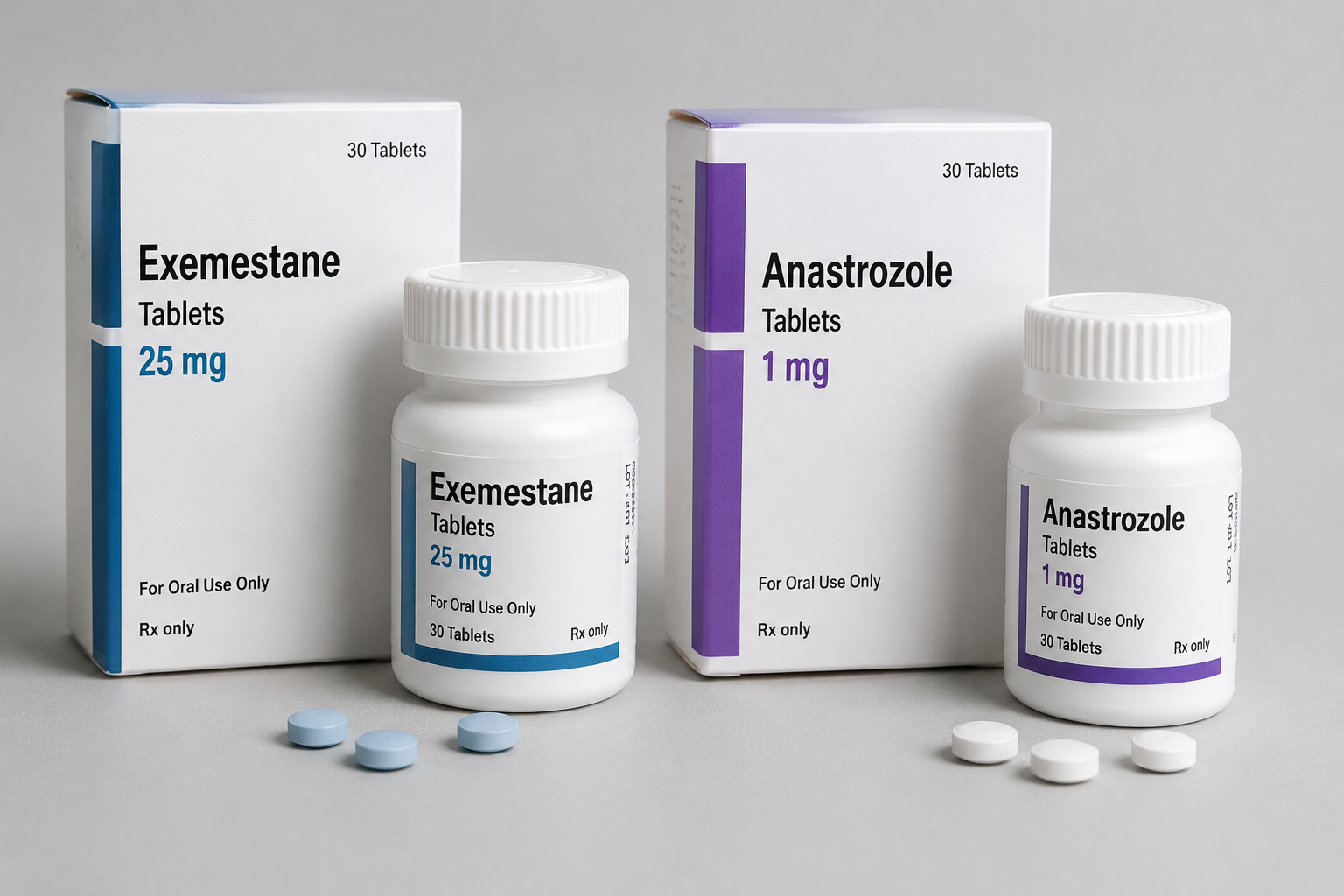
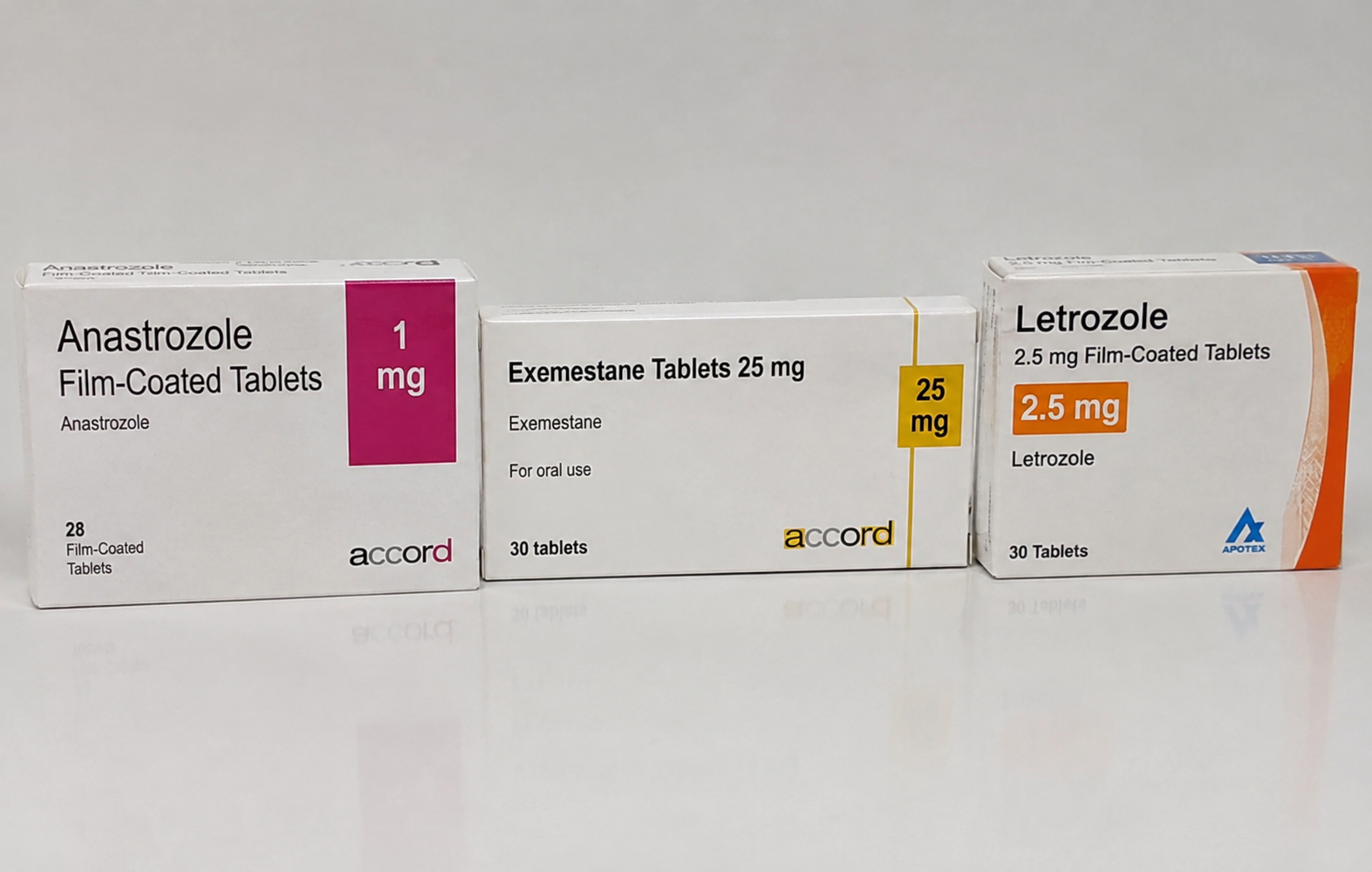
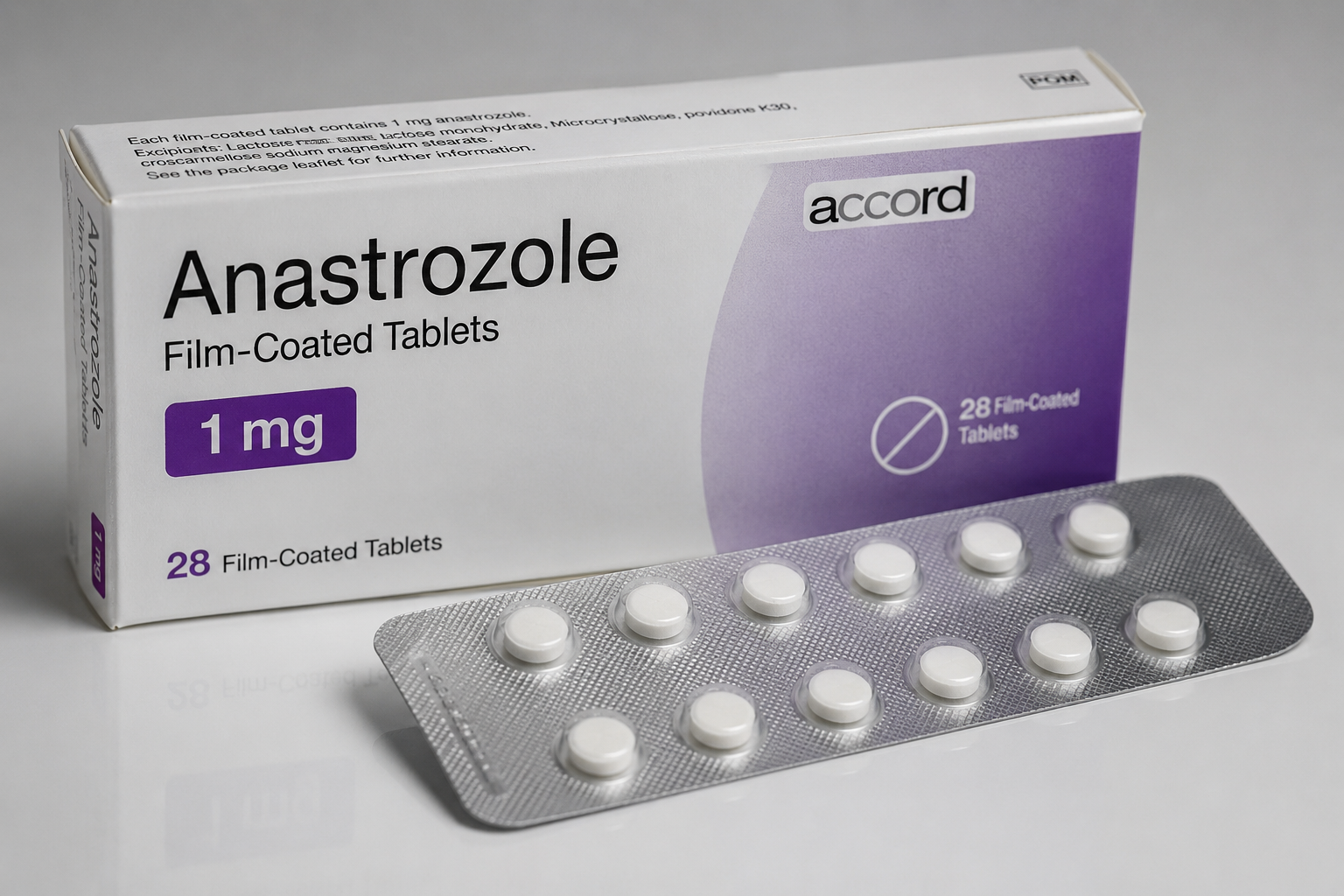
Anastrozole is a non-steroidal, reversible aromatase inhibitor. It reduces oestrogen synthesis by inhibiting aromatase and is one of the AIs frequently discussed in men's hormone and TRT settings.
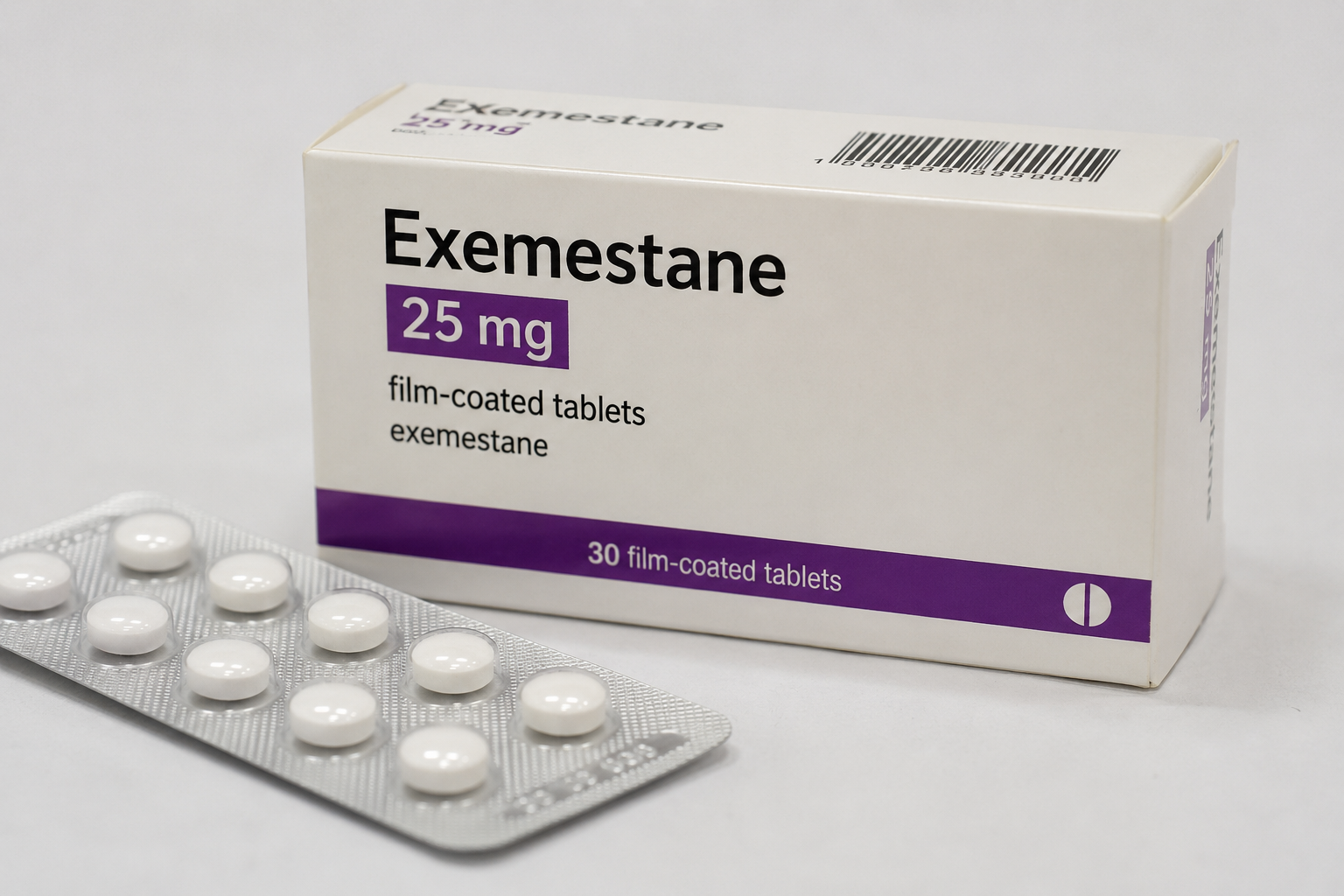
Exemestane is a steroidal, irreversible aromatase inhibitor. Its mechanism differs from anastrozole, although both reduce oestrogen synthesis and may be encountered in discussions around TRT.
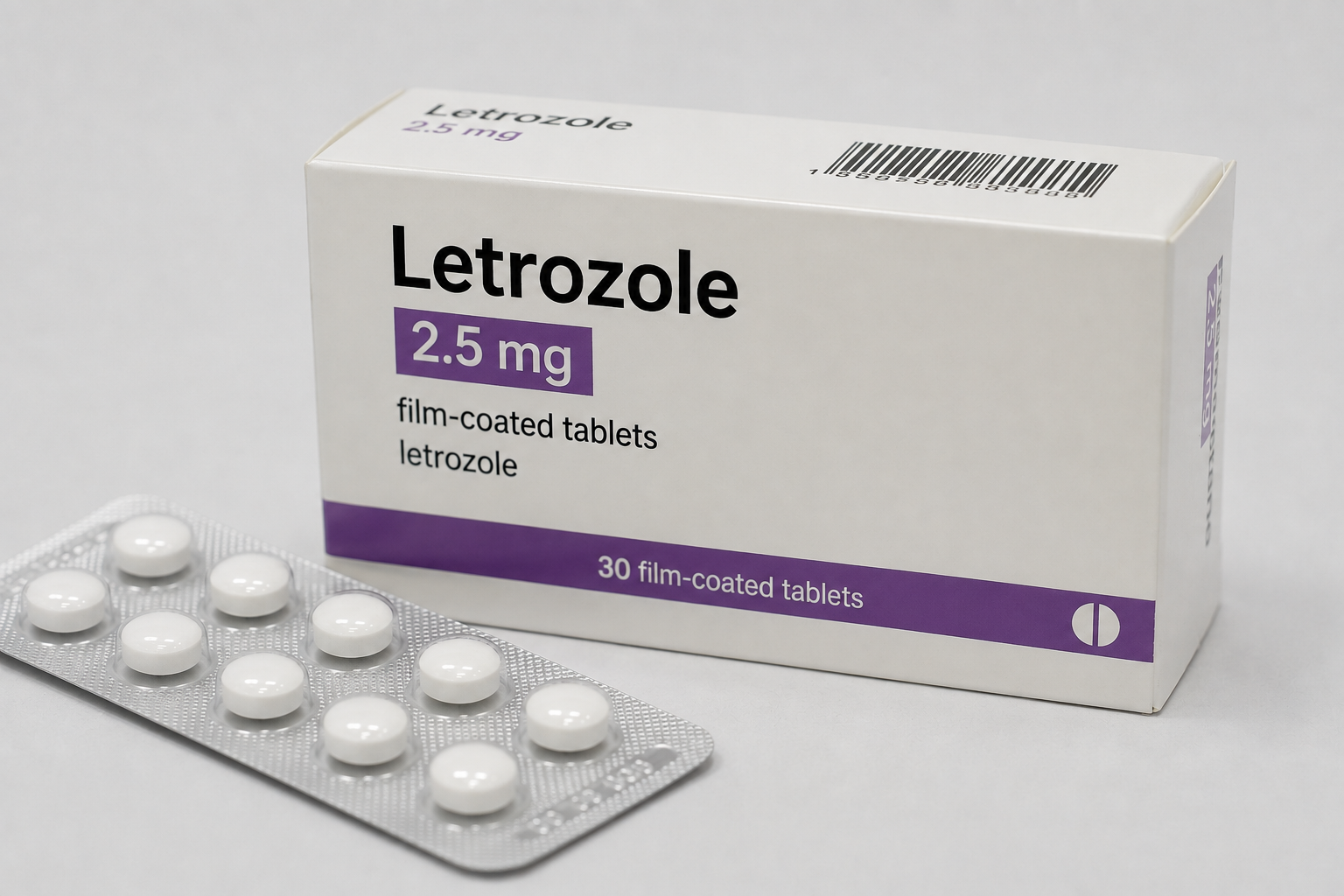
Letrozole is a non-steroidal aromatase inhibitor capable of substantial oestrogen suppression. Its potency does not mean greater suppression is automatically preferable when managing oestradiol during TRT.
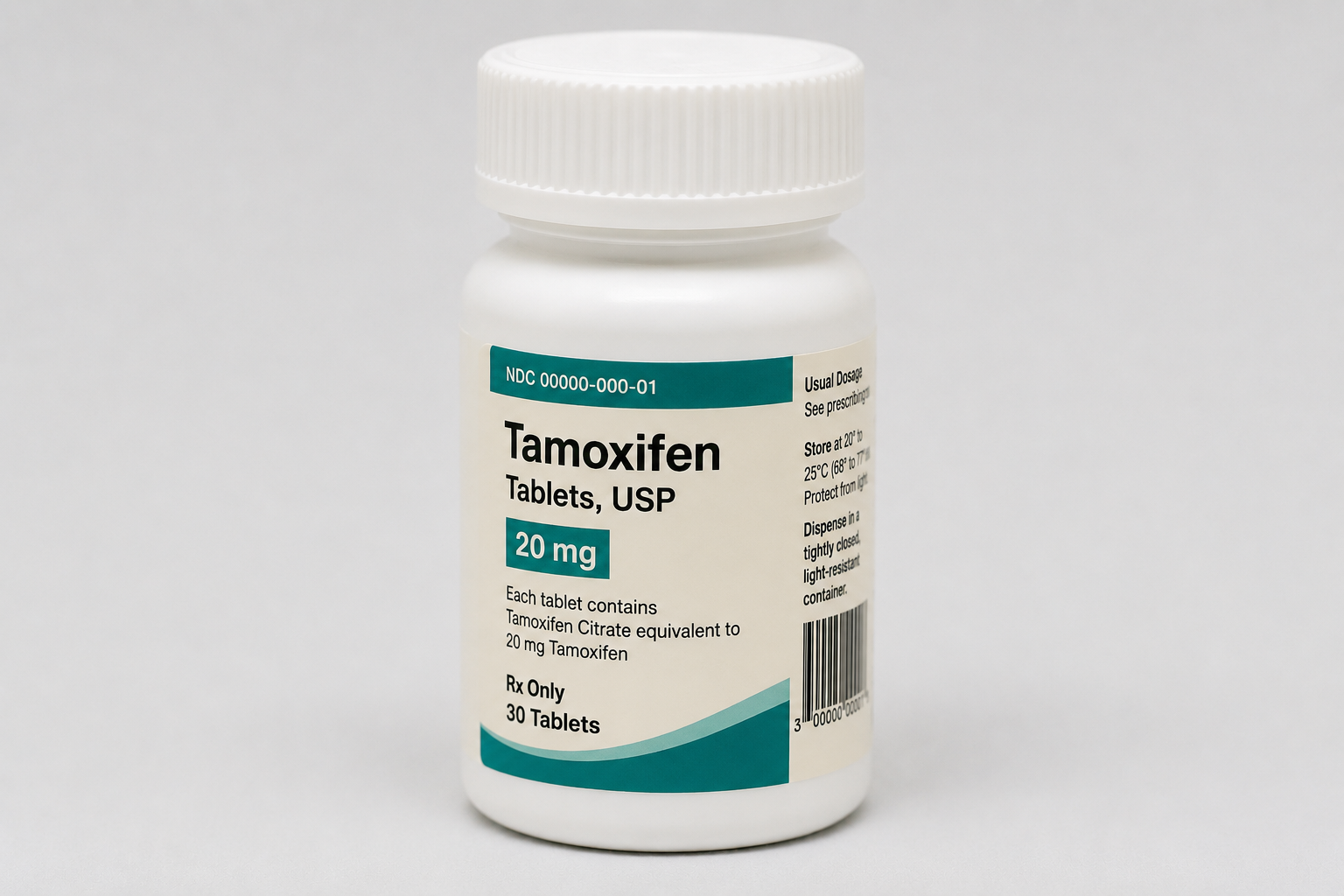
Tamoxifen is a SERM rather than an aromatase inhibitor. It modifies oestrogen receptor activity instead of reducing oestrogen synthesis, making the distinction particularly relevant when discussing breast symptoms or gynaecomastia.
Our main aromatase inhibitor guide compares anastrozole, exemestane and letrozole, explains how aromatase inhibition affects oestradiol, and shows why tamoxifen belongs to a different drug class.
Read the Aromatase Inhibitors GuideIf you are trying to understand why oestradiol changes during TRT, this page is the starting point.
If you want to understand the medications themselves, the aromatase inhibitor guide explains the drug class first, while the individual medication guides explore anastrozole, exemestane and letrozole separately.
Tamoxifen has its own guide because it is not an aromatase inhibitor. Its mechanism and the clinical questions surrounding it are different.
A laboratory result is information. It is not, by itself, a diagnosis or a treatment plan.
If oestradiol rises during TRT, the first question should not automatically be “How do I lower it?”. The more useful question is whether the result is clinically significant when considered alongside symptoms, testosterone exposure and the rest of the patient's health.
Aromatase inhibitors and SERMs are prescription medicines and should not be introduced, stopped or adjusted without appropriate clinical assessment.
Unexpected symptoms or hormone results are best interpreted as part of the overall TRT review rather than managed independently.
Testosterone and oestradiol are connected parts of male endocrine physiology. When testosterone increases during TRT, some increase in oestradiol may occur through normal aromatisation.
That does not mean every elevated result should be ignored, but it also does not mean every elevated result needs to be suppressed.
Symptoms, hormone levels, treatment exposure, previous results and individual clinical circumstances all matter. The objective is not to eliminate oestrogen from the male body, but to manage testosterone therapy safely and appropriately.
Continue into the individual medication guides or explore the wider side effects and blood monitoring involved in TRT.
Common questions about oestradiol, aromatisation, aromatase inhibitors and testosterone replacement therapy.
It can. Testosterone can be converted into oestradiol by the aromatase enzyme, so increasing testosterone availability may also increase oestradiol in some men.
No. Men naturally produce oestrogen, and oestradiol has important physiological functions including roles in bone and sexual health. The goal is not to eliminate oestradiol.
Aromatisation is the enzymatic conversion of androgens such as testosterone into oestrogens. The enzyme responsible is called aromatase.
Not automatically. An oestradiol result should be considered alongside symptoms, testosterone levels, treatment exposure and the wider clinical picture. Aromatase inhibitors should not be added simply to chase a laboratory number.
Anastrozole, exemestane and letrozole are three aromatase inhibitors commonly encountered in discussions about oestradiol. They are different medicines and should not be regarded as interchangeable simply because they belong to the same broad drug class.
Aromatase inhibitors reduce oestrogen synthesis by inhibiting aromatase. Tamoxifen is different: it acts through oestrogen receptors and belongs to the SERM drug class.
Breast tenderness or gynaecomastia can occur in some men, although new breast symptoms should not automatically be assumed to result from high oestradiol. Persistent breast changes should be assessed appropriately.
Yes. Oestradiol performs normal physiological functions in men, so excessive suppression is not necessarily desirable and may have consequences.
Whether oestradiol needs measuring routinely depends on the clinical circumstances and local practice. Testing may be particularly relevant where symptoms such as breast tenderness or gynaecomastia require investigation.
Adipose tissue expresses the aromatase enzyme, which converts androgens into oestrogens. Body composition and metabolic health can therefore be relevant to male testosterone and oestradiol physiology.
No. Tamoxifen is a SERM rather than an aromatase inhibitor. Aromatase inhibitors reduce oestrogen synthesis, whereas tamoxifen modifies oestrogen receptor activity.
No. A rise in oestradiol can occur alongside increased testosterone availability. Whether a result is clinically important depends on symptoms, hormone levels, treatment exposure and the wider clinical circumstances rather than the number alone.
This guide is provided for general educational purposes and does not replace personalised medical advice, diagnosis or treatment. Hormone results, symptoms and changes to prescribed TRT or other medication should be discussed with an appropriately qualified healthcare professional.