Join our community
TRT and muscle gain are closely linked in discussions around Testosterone Replacement Therapy, especially for men who train regularly or want to improve their body composition.
Testosterone plays an important role in maintaining muscle mass, strength, bone health and normal physical function. In men with clinically low testosterone, appropriate testosterone replacement may improve lean body mass and support better physical performance over time.
However, TRT is not the same as using anabolic steroids for bodybuilding. Medically supervised TRT is intended to correct testosterone deficiency and restore hormone levels towards an appropriate physiological range — not to produce extreme muscle gain.
The key points to understand about testosterone, muscle gain and gym performance while receiving TRT.
Testosterone Replacement Therapy is a medical treatment for men with testosterone deficiency. Its purpose is to replace testosterone when the body is not producing an adequate amount naturally.
Testosterone has effects throughout the body. Among other roles, it contributes to sexual function, bone health, red blood cell production, muscle protein metabolism and the maintenance of muscle mass.
A man with genuinely low testosterone may therefore notice changes in body composition, physical performance or strength after testosterone is restored towards an appropriate physiological range.
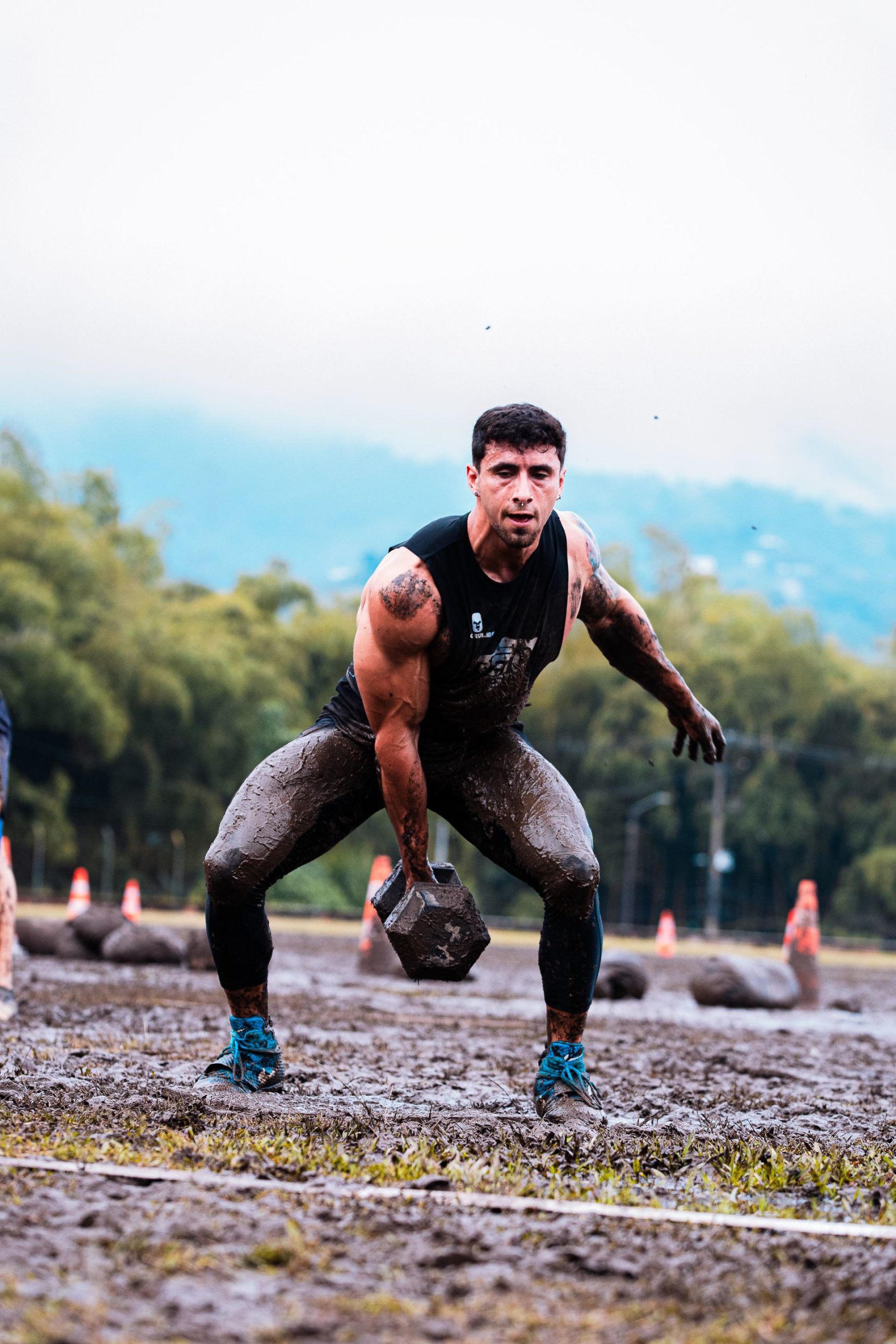
In men with testosterone deficiency, testosterone replacement can increase lean body mass. This is one reason changes in body composition may occur after treatment begins.
That does not mean TRT automatically produces a dramatic muscular transformation.
The effect depends partly on where you started. A man with significantly low testosterone who has levels restored to an appropriate physiological range may notice more of a difference than someone whose testosterone was already normal.
Training still matters. Progressive resistance training, adequate protein intake, overall calorie intake, sleep, age, genetics and consistency all influence how much muscle someone can build.
TRT is not a substitute for training. Restoring testosterone may improve the hormonal environment of a genuinely testosterone-deficient man, but muscle still requires an appropriate training stimulus and adequate nutrition to develop.
Low testosterone can present differently between men. Reduced muscle mass or physical performance can occur, but these symptoms are not specific enough to diagnose testosterone deficiency by themselves.
Some men with low testosterone report difficulties involving energy, motivation, recovery, libido or maintaining muscle mass. Similar symptoms can also occur because of poor sleep, inadequate nutrition, stress, excessive training and many other health or lifestyle factors.
Struggling to make progress in the gym therefore does not automatically mean that someone needs TRT.
If you are concerned about possible testosterone deficiency, read our guide to signs of low testosterone in men and our TRT blood testing guide .
This distinction is especially important when discussing TRT, muscle gain and the gym.
Testosterone itself is an anabolic-androgenic hormone. Medically prescribed testosterone can therefore have genuine anabolic effects, including effects on muscle tissue.
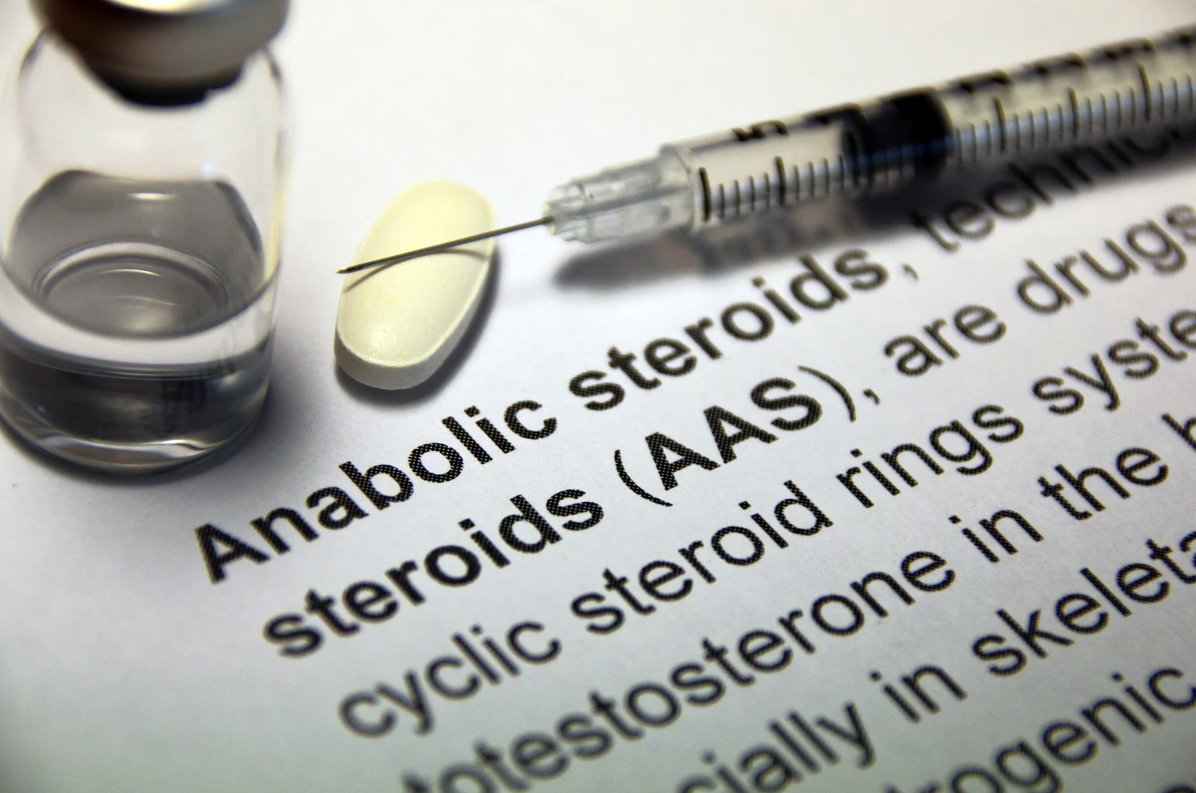
But medically supervised TRT and a bodybuilding steroid cycle are not the same thing.
The aim of TRT is generally to correct testosterone deficiency and maintain testosterone within an appropriate physiological range under clinical supervision.
Non-medical anabolic steroid use may involve testosterone or other anabolic-androgenic drugs being used at exposures intended to exceed normal physiological hormone levels. That changes both the expected effects and the potential health risks.
Testosterone replacement is prescribed to treat testosterone deficiency. Treatment is guided by symptoms, blood results, response to therapy and ongoing medical monitoring.
Non-medical anabolic steroid use is commonly associated with physique or performance enhancement rather than replacing a documented hormone deficiency. It may expose the body to hormone levels and compounds outside normal physiological replacement.
Medically prescribed TRT can have genuine anabolic effects and may improve lean body mass in men with testosterone deficiency. However, replacement therapy is intended to restore testosterone towards an appropriate physiological range — not to produce the supraphysiological exposure associated with non-medical anabolic steroid use.
UKTRT does not encourage or condone the non-medical use of anabolic steroids. Increasing a prescribed testosterone dose or using additional anabolic drugs to pursue bodybuilding results can increase health risks and should not be treated as part of legitimate TRT.
We cover this distinction in more detail in our Anabolic Steroids vs TRT guide .
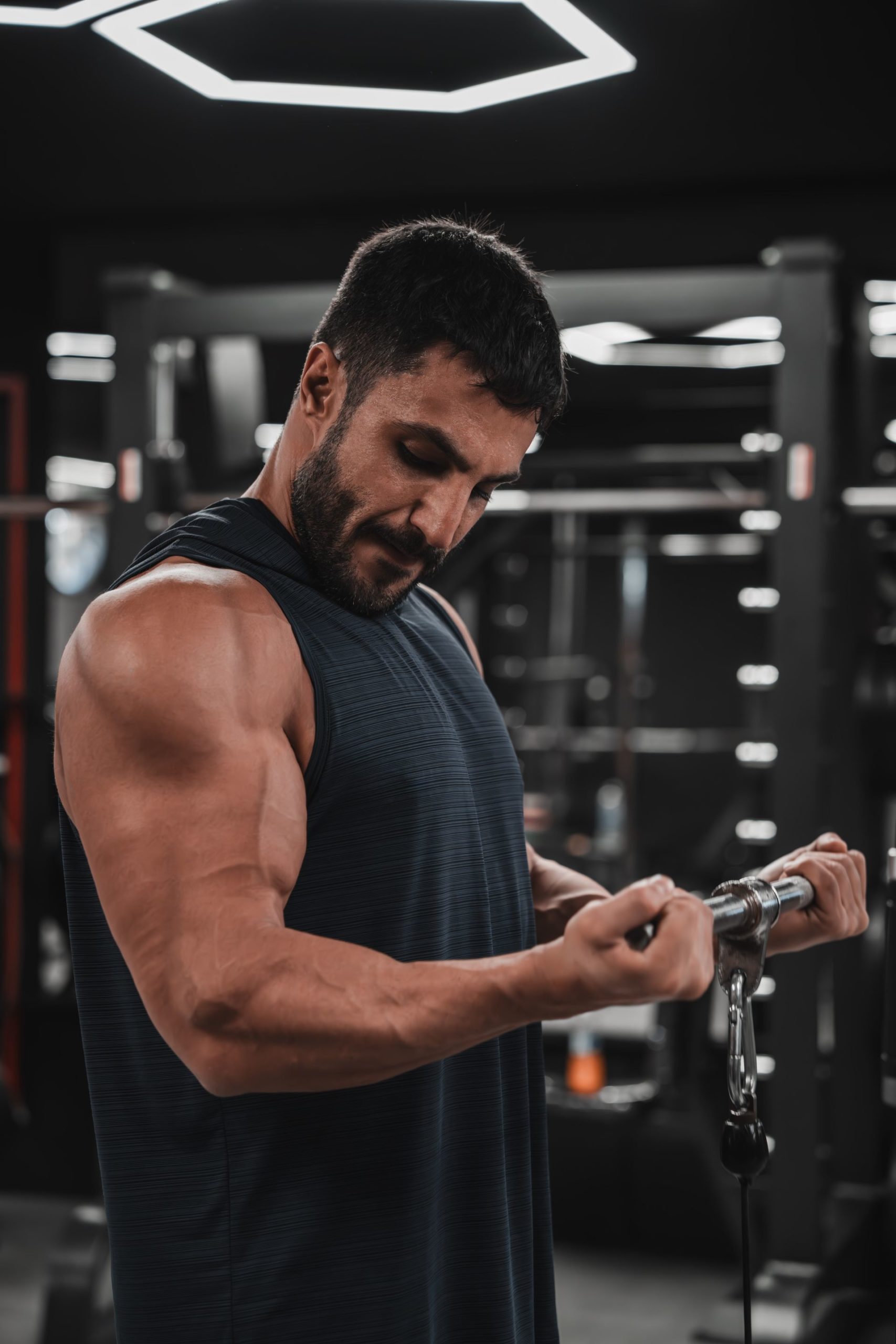
There is no reliable number of kilograms of muscle that every man should expect to gain after starting TRT.
Responses vary because treatment does not happen in isolation. Baseline testosterone, age, previous training experience, genetics, diet, sleep, activity levels and the severity of the original deficiency can all influence the outcome.
Someone returning to resistance training after a long period of inactivity may also experience normal training adaptations at the same time as testosterone deficiency is being treated.
It is therefore difficult to attribute every improvement in physique or gym performance directly to TRT.
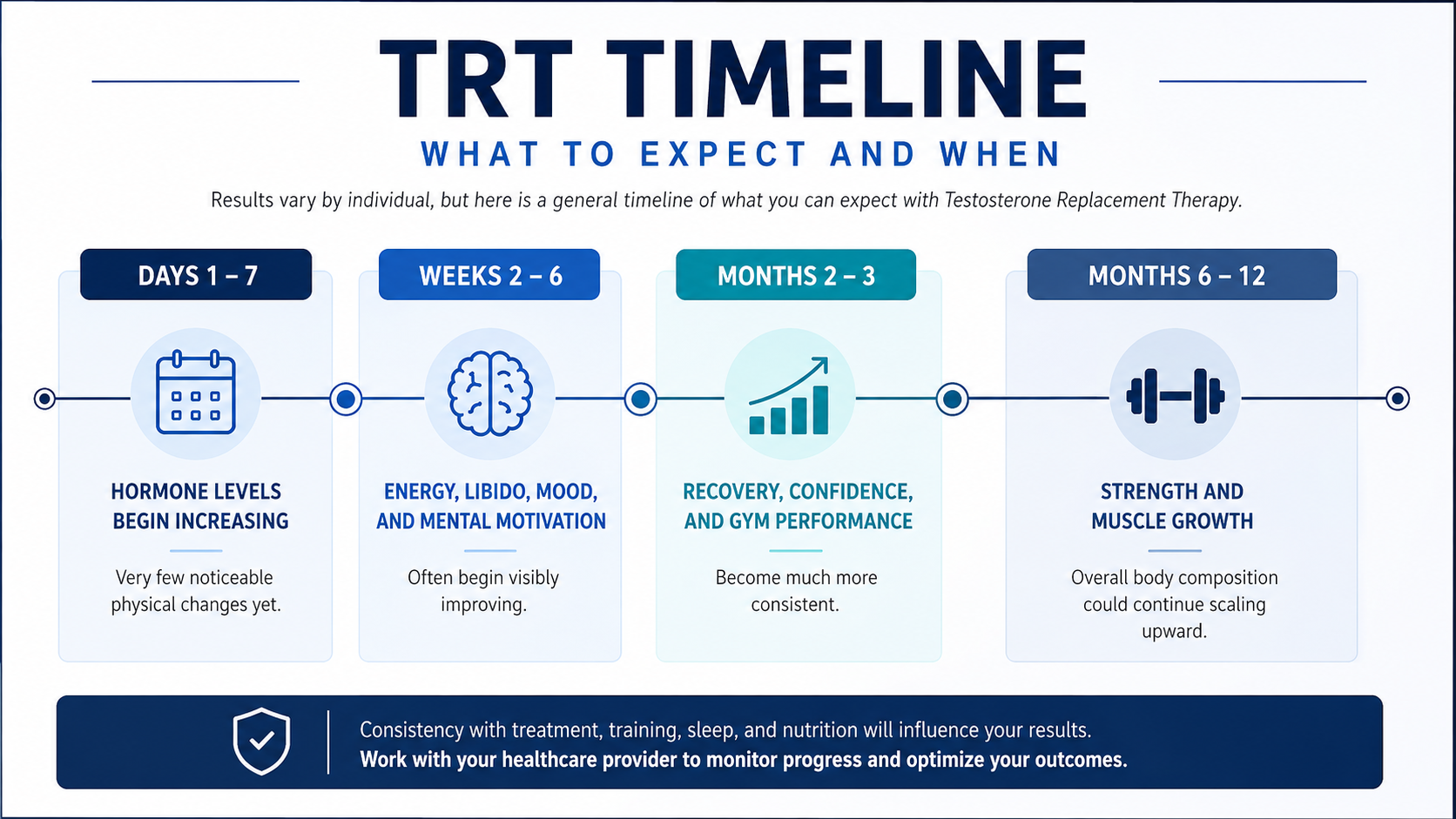
TRT should not be thought of as an instant performance enhancer. Physiological changes associated with testosterone treatment can develop over different timescales.
Changes in wellbeing or sexual symptoms may occur on a different timeline from changes in body composition. Muscle development itself is also gradual and depends heavily on whether someone is performing regular resistance training.
Rather than judging treatment by what happens during one or two gym sessions, TRT should be assessed over time using symptoms, appropriate bloodwork and clinical review.
For a broader overview, see our TRT timeline guide .
This is where thinking about TRT purely through the lens of bodybuilding can become misleading.
The goal of medical testosterone replacement is not to continually increase testosterone in pursuit of greater muscle growth. Treatment needs to balance symptom improvement with appropriate hormone levels and safety monitoring.
Increasing testosterone exposure can also influence markers such as haemoglobin and haematocrit, blood pressure and other aspects of health that may require clinical attention.
This is why ongoing TRT monitoring and TRT bloodwork matter.
For most men who are medically suitable for resistance exercise, strength training can form part of a healthy lifestyle while receiving TRT.
The fundamentals of building muscle remain largely the same: progressive resistance training, adequate protein and overall nutrition, sufficient recovery and consistency over time.
TRT should not replace these fundamentals, nor should testosterone dosage be adjusted independently in an attempt to accelerate gym progress.
Medical TRT is intended to treat testosterone deficiency — not to optimise a bodybuilding programme.
Feeling stronger or performing better does not tell you everything about how your body is responding to testosterone treatment.
Appropriate TRT monitoring may include testosterone measurements alongside other relevant blood markers and clinical observations. The exact tests and frequency depend on the individual and the clinician responsible for treatment.
For example, testosterone therapy can increase red blood cell production. Haemoglobin and haematocrit are therefore among the markers that may require monitoring during treatment.
If you want to understand the laboratory side of treatment, read our complete blood testing guide and Free Testosterone and SHBG explained .
TRT is a medical treatment for testosterone deficiency. Wanting to gain more muscle or improve gym performance is not, by itself, a diagnosis of hypogonadism.
Assessment normally involves symptoms, appropriately timed testosterone blood tests and consideration of possible underlying causes. A clinician can then determine whether testosterone replacement is appropriate.
Men researching treatment in Britain can read our guide to what testosterone levels may qualify for TRT in the UK .
You can also read our broader TRT UK guide for an overview of symptoms, diagnosis, bloodwork, treatment and monitoring.
Testosterone has genuine physiological effects on muscle. Men with testosterone deficiency may experience improvements in lean mass, strength or body composition after appropriate testosterone replacement, particularly when treatment is combined with regular resistance training.
But TRT should not be confused with a bodybuilding steroid cycle. Medical TRT aims to replace deficient testosterone and restore an appropriate physiological hormone environment — not maximise hormone exposure for muscle growth.
Results still depend heavily on training, nutrition, recovery, genetics, age and starting point.
Most importantly, whether someone needs TRT should be determined by symptoms, bloodwork and appropriate clinical assessment rather than by how quickly they want to gain muscle.
UKTRT provides general educational information and is not a medical service. We are not doctors, and the information on this page should not be used as a substitute for individual medical advice, diagnosis or treatment.
Testosterone is a prescription medicine in the UK. Decisions about diagnosis, treatment, dosage and monitoring should be made with an appropriately qualified healthcare professional who can review your symptoms, medical history and blood results.
UKTRT does not encourage or condone the non-medical use of anabolic steroids or the misuse of prescribed testosterone for bodybuilding or performance enhancement.
Testosterone replacement can increase lean body mass in some men with testosterone deficiency. The amount of muscle gained varies and is also influenced by resistance training, nutrition, sleep, age, genetics and the individual's starting point.
No. Testosterone itself is an anabolic-androgenic hormone, but medically prescribed TRT is intended to treat testosterone deficiency and restore testosterone towards an appropriate physiological range. Non-medical anabolic steroid use is typically aimed at physique or performance enhancement and may involve supraphysiological exposure or additional anabolic drugs.
TRT should not be expected to produce the results associated with bodybuilding steroid use. Men correcting genuine testosterone deficiency may experience improvements in lean mass, strength or body composition, but TRT is replacement treatment rather than a bodybuilding drug protocol.
Improvements in strength can occur in some men after testosterone deficiency is treated, particularly alongside resistance training. Results vary and strength is also strongly affected by training experience, programming, nutrition, recovery and other health factors.
Testosterone treatment can influence lean body mass, but resistance exercise provides the training stimulus used to develop strength and muscle. TRT should not be viewed as a replacement for appropriate training, nutrition and recovery.
Body-composition changes generally develop gradually rather than immediately. There is no universal timeline because baseline testosterone, treatment response, training, nutrition and individual biology all differ.
Prescribed testosterone should not be increased simply to pursue more muscle without medical advice. TRT dosing should be determined by the clinician responsible for treatment using symptoms, blood results, treatment response and safety considerations.
Poor gym progress alone does not diagnose testosterone deficiency. Training, calorie and protein intake, sleep, stress, medical conditions and many other factors can affect progress. Suspected testosterone deficiency should be assessed using symptoms, appropriately timed blood tests and clinical evaluation.