Injectable Testosterone
Testosterone esters suspended in an oil vehicle are injected either intramuscularly or, with some protocols, subcutaneously.

Testosterone Replacement Therapy is not one single treatment protocol. Several testosterone preparations and delivery methods are available, and the most appropriate option depends on the patient's diagnosis, blood results, symptoms, medical history, treatment goals and practical preferences.
In the UK, testosterone can be prescribed in injectable and transdermal forms, while particular preparations and prescribing practices vary between NHS services and private clinics.
This guide explains the main TRT treatment options, how the different testosterone preparations compare, where medications such as hCG or aromatase inhibitors may enter the conversation, and why monitoring remains part of treatment regardless of which preparation is used.
Different testosterone preparations produce different absorption patterns, injection intervals, administration requirements and practical trade-offs.
The objective is not simply to choose the preparation with the longest half-life or the most convenient dosing schedule. Treatment needs to produce an appropriate clinical response while remaining practical, tolerable and safe for the individual patient.
Testosterone preparations differ in how the hormone enters the bloodstream and how frequently treatment needs to be administered.
Testosterone esters suspended in an oil vehicle are injected either intramuscularly or, with some protocols, subcutaneously.
Testosterone gels are applied to the skin and absorbed through it into the systemic circulation.
Oral testosterone undecanoate formulations exist, although their availability and place in UK treatment vary and they are not used as routinely as injectable or transdermal preparations.
Some patients may also encounter medications such as hCG or, in selected circumstances, other hormone-modifying medicines. These are not automatically required for every TRT patient.

Injectable testosterone is widely used in testosterone replacement therapy. Rather than injecting unmodified testosterone, most injectable preparations use a testosterone ester designed to alter how quickly the hormone is released from the injection depot.
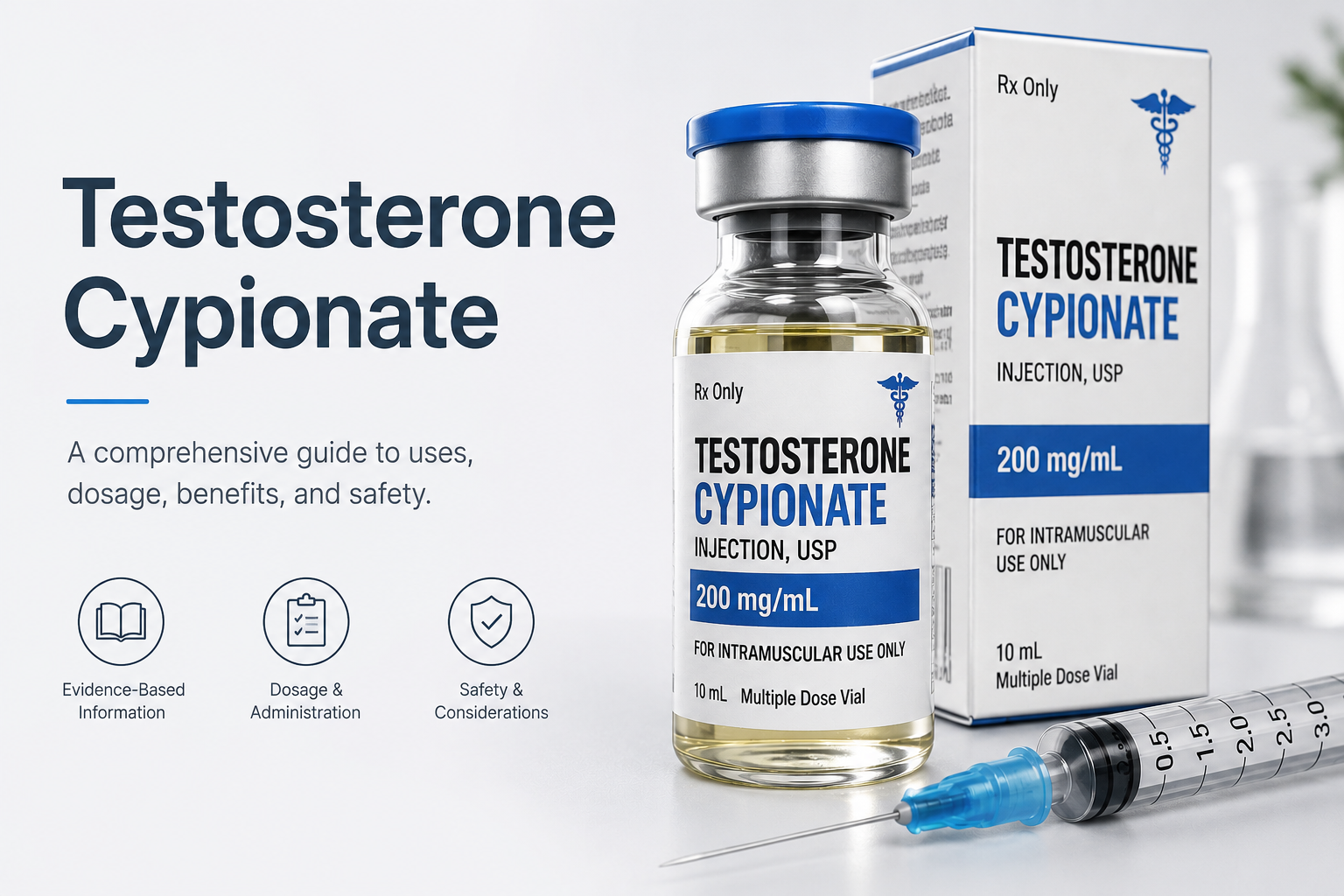
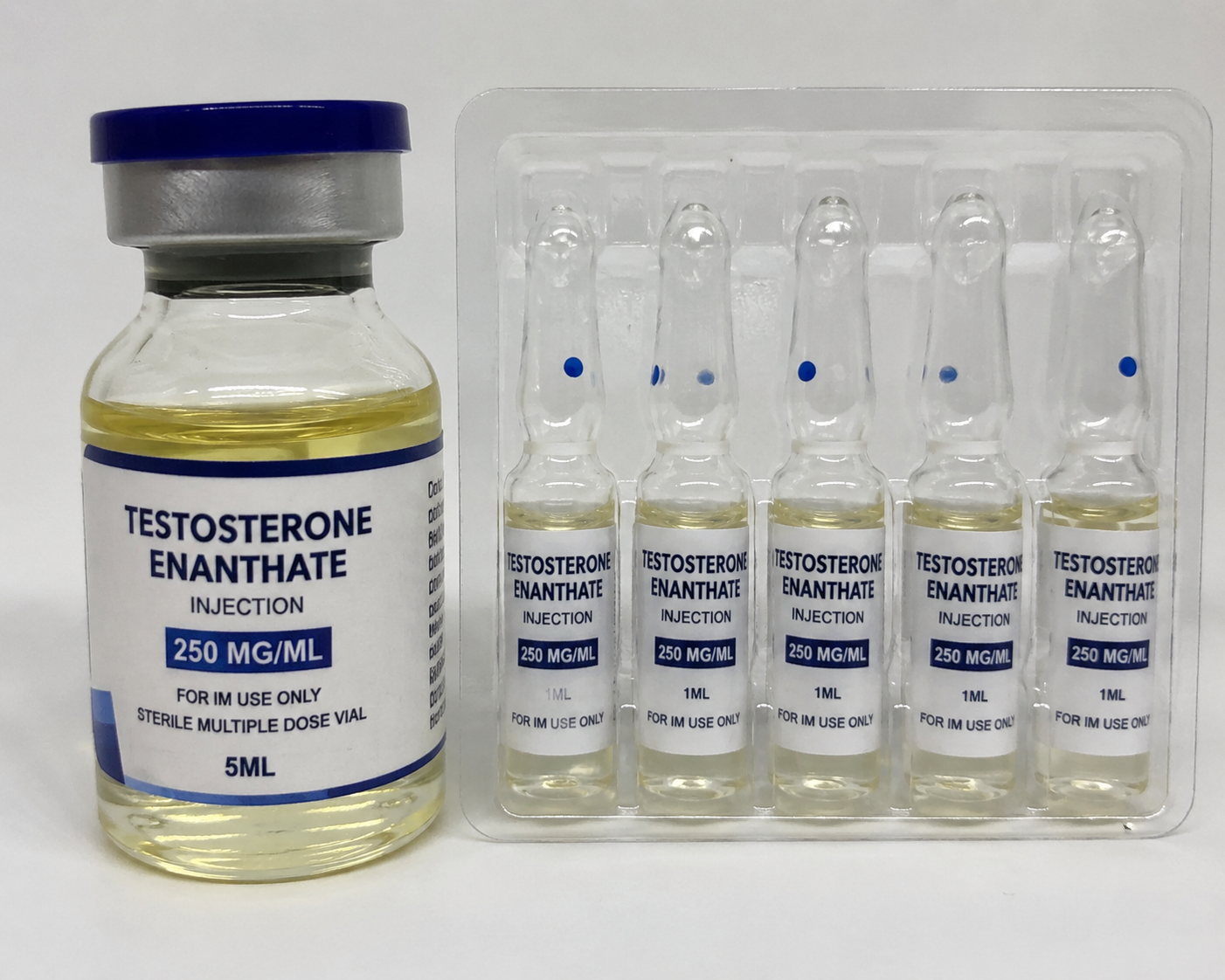
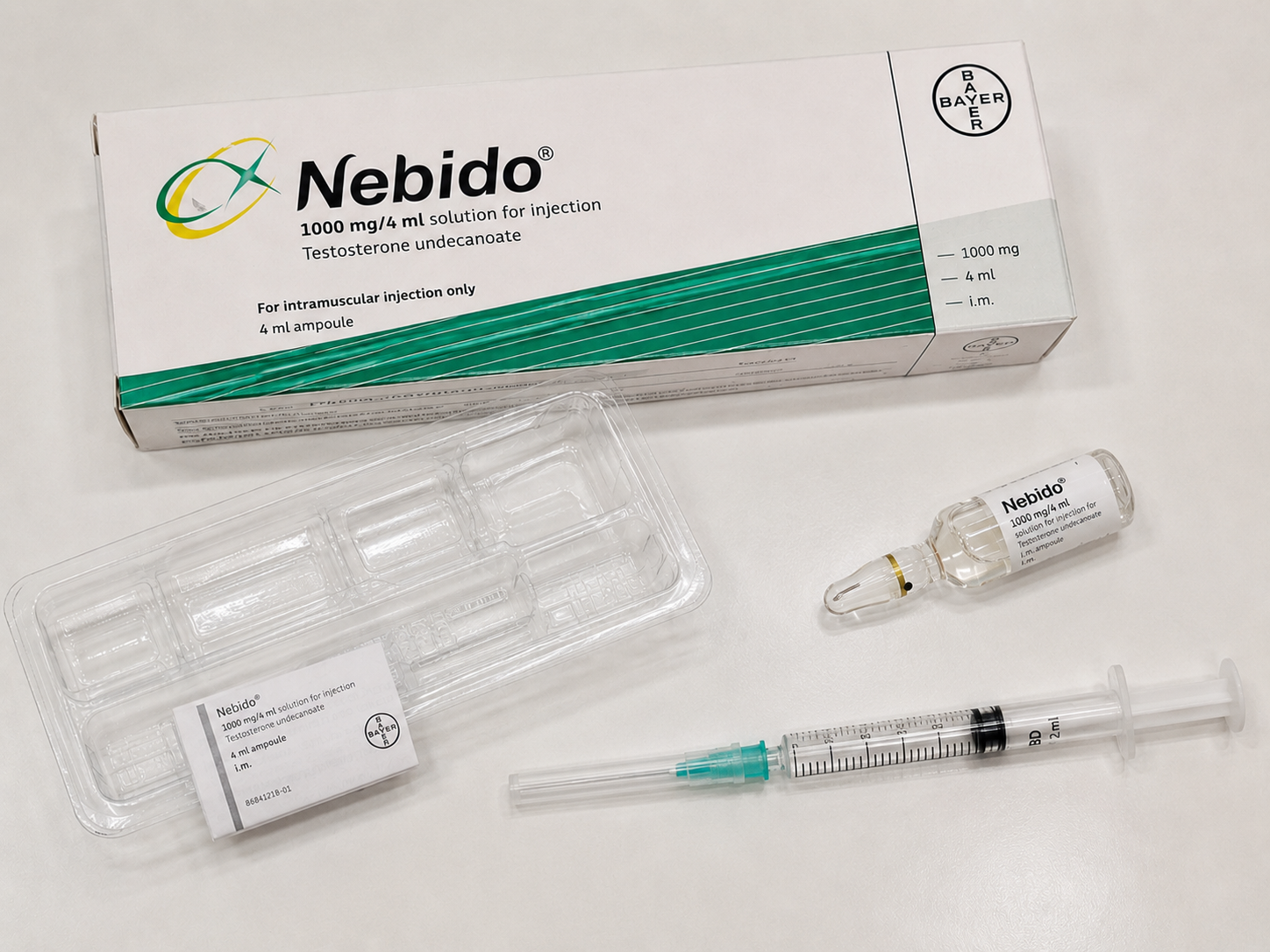
Examples encountered in UK treatment include testosterone cypionate, testosterone enanthate, Sustanon and the much longer-acting testosterone undecanoate preparation Nebido.
The preparation matters because different esters produce different pharmacokinetic profiles and therefore different administration schedules.
Intramuscular injections deposit medication within muscle, whereas subcutaneous injections deposit it into the layer of adipose tissue beneath the skin.
The appropriate route depends on the prescribed preparation, injection volume, clinician's protocol and individual circumstances.
Patients should follow the administration method supplied by their prescribing service rather than changing injection route independently.
Transdermal testosterone is applied directly to the skin. Common testosterone gel preparations are designed to deliver testosterone through the skin into the bloodstream.
This avoids injections and can make treatment attractive for men who would prefer not to self-inject.
Absorption can vary between individuals, and correct application is important. Patients also need to follow product instructions regarding washing, covering the application site and avoiding unintended transfer of testosterone to other people.
Oral testosterone preparations also exist. Testosterone undecanoate is formulated differently from older oral androgen preparations and is absorbed partly through intestinal lymphatic pathways.
However, oral testosterone should not be presented as though it is universally interchangeable with injections or gels. Availability, absorption and local prescribing practice vary, and it is not a routine first choice across UK services.
If oral testosterone is being considered, the prescribing clinician should explain the particular formulation, administration requirements and how treatment response will be monitored.
Route of administration alone does not determine whether a treatment is appropriate. Formulation, absorption, licensed use, availability and clinical monitoring all matter.
Each route solves a different practical problem. The trade-off is usually between administration frequency, convenience, absorption characteristics and patient preference.
The word “testosterone injection” can refer to several different pharmaceutical preparations. The ester attached to testosterone influences how the medicine behaves after administration.
A longer-acting injectable testosterone ester used in TRT. Its release profile allows treatment to be divided according to the prescribed administration schedule.
Testosterone enanthate is another longer-acting injectable ester with pharmacological characteristics broadly similar to cypionate, although the preparations are not identical.
Sustanon combines four testosterone esters with different release characteristics in a single injectable preparation.
Nebido contains testosterone undecanoate and is designed to provide much longer intervals between injections than shorter-acting testosterone esters.
Esterification changes how quickly testosterone is released from the injection site. It does not create a different hormone once testosterone has been released into circulation.
The practical difference is therefore largely pharmacokinetic: different preparations produce different release profiles, administration intervals and patterns of testosterone exposure.
This is why cypionate, enanthate, Sustanon and Nebido should not be treated as interchangeable products simply because they all deliver testosterone.
hCG is not testosterone. It is a gonadotrophin medication that can activate the same receptor as luteinising hormone and therefore stimulate testicular steroidogenesis.
It is often discussed because external testosterone suppresses hypothalamic-pituitary-gonadal signalling, which can reduce intratesticular testosterone and sperm production.
That does not mean every patient receiving TRT automatically needs hCG. Fertility goals, diagnosis and the individual's wider treatment plan matter.
External testosterone can substantially suppress sperm production. Men who currently want children or may want children in the future should raise this before treatment rather than waiting until fertility has already become a concern.
Testosterone can be converted into oestradiol through the aromatase enzyme. Increasing testosterone availability during TRT can therefore increase oestradiol in some men.
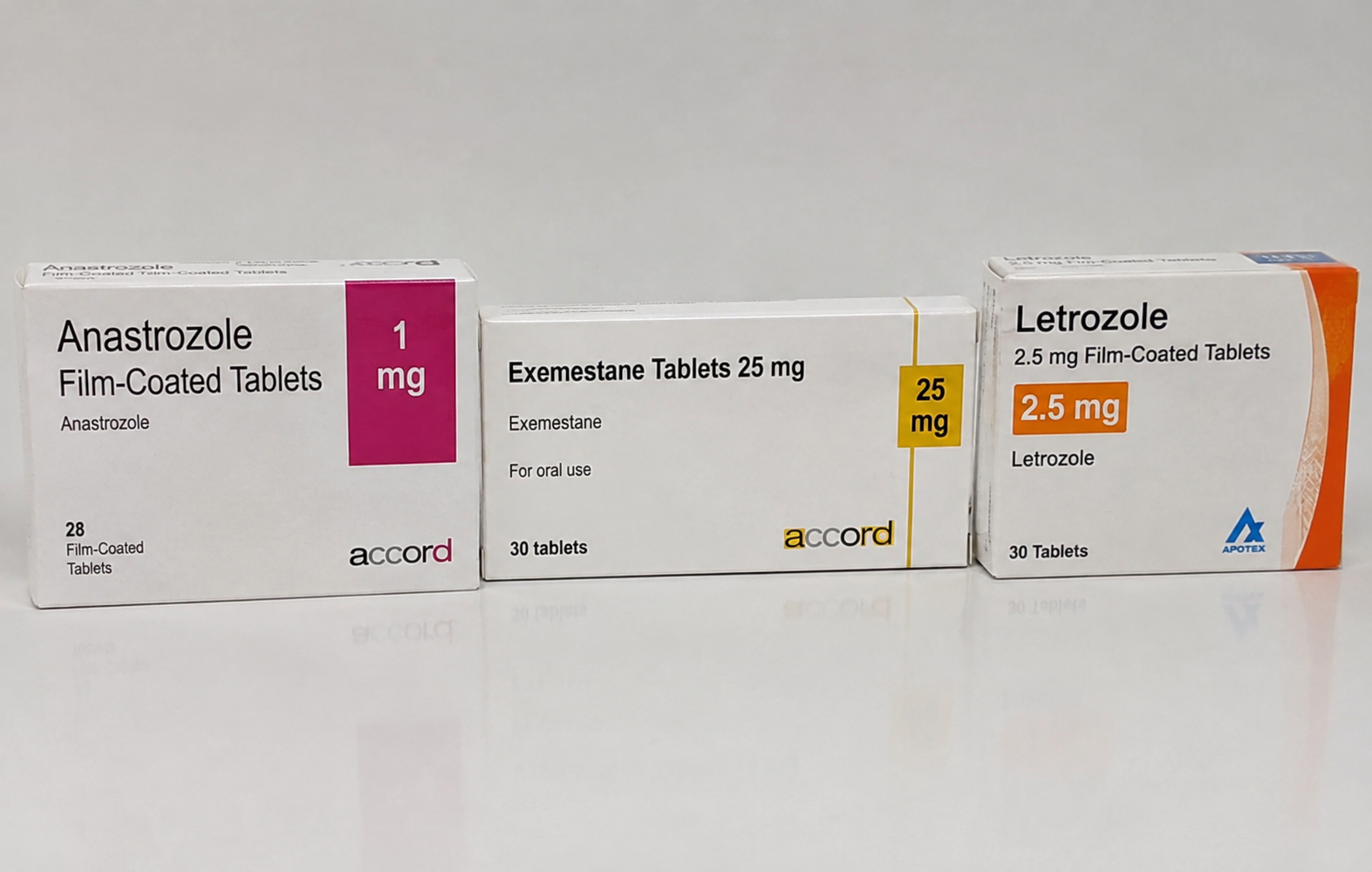
Aromatase inhibitors reduce oestrogen synthesis, but they are not a routine requirement of testosterone replacement therapy and should not be added simply because an oestradiol result appears above a laboratory reference interval.
Oestradiol has important physiological functions in men, which is why excessive suppression can create problems of its own.
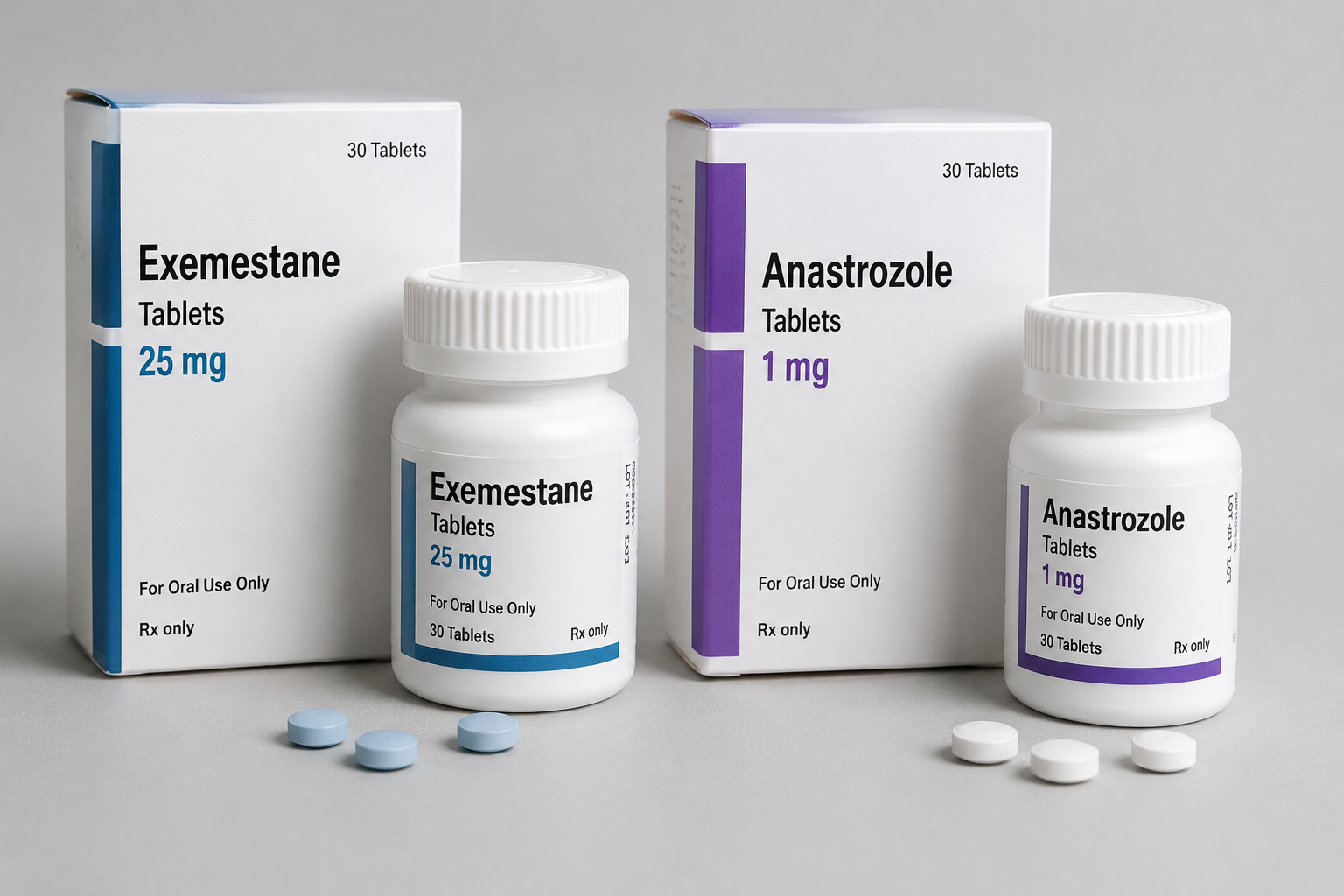
A non-steroidal reversible aromatase inhibitor.
Read Anastrozole Guide AROMATASE INHIBITORA steroidal irreversible aromatase inhibitor.
Read Exemestane Guide AROMATASE INHIBITORA potent non-steroidal aromatase inhibitor.
Read Letrozole Guide SERM · NOT AN AIModifies oestrogen receptor signalling rather than inhibiting aromatase.
Read Tamoxifen GuideChoosing the testosterone preparation is only the beginning. Treatment response and relevant safety markers need to be reviewed after therapy starts.
Testosterone measurements help assess exposure and response to the prescribed preparation.
Haemoglobin and haematocrit are monitored because testosterone can increase red blood cell production.
Laboratory results need to be considered alongside whether the symptoms that led to treatment are actually improving.
Prostate assessment and PSA monitoring may be appropriate according to age, risk profile and clinical circumstances.
Oestradiol may be measured where clinically relevant and should be interpreted alongside testosterone and symptoms.
Blood pressure, metabolic health and other relevant markers form part of the wider assessment of long-term treatment.
Comparing testosterone preparations can help you understand the options, but it does not determine what you personally should be prescribed.
Ester choice, administration route, dose, additional medication and monitoring should be based on an appropriate medical assessment.
Prescription testosterone, hCG, aromatase inhibitors and SERMs should not be started, stopped or adjusted independently.
Injectable testosterone, transdermal preparations and other treatment options all provide different ways of delivering the same underlying hormone therapy.
The appropriate preparation depends on more than convenience. Diagnosis, response, pharmacokinetics, side effects, fertility goals, monitoring and individual preference all matter.
Good TRT is therefore not defined by whether someone uses cypionate, Sustanon, Nebido or a gel. It is defined by appropriate prescribing, objective monitoring and treatment that remains suitable for the patient over time.
Continue into the individual testosterone preparations, injection guides and medications discussed alongside TRT.
Common questions about testosterone preparations, injections, gels, hCG and other medications discussed during TRT.
Testosterone replacement can be administered using injectable or transdermal preparations, while oral testosterone formulations also exist. The exact products available and preferred treatment pathway vary between services and individual clinical circumstances.
There is no universally best preparation. Treatment choice depends on diagnosis, clinical response, practical preference, tolerability, monitoring and the judgement of the prescribing clinician.
Injectable preparations encountered in UK TRT include testosterone cypionate, testosterone enanthate, Sustanon and long-acting testosterone undecanoate such as Nebido.
Both are longer-acting testosterone esters with broadly similar pharmacological characteristics, but they are separate pharmaceutical preparations and should be used according to the prescribed product and protocol.
Sustanon is an injectable testosterone preparation containing four different testosterone esters with different release characteristics.
Nebido contains testosterone undecanoate and is formulated to provide a considerably longer duration of action than shorter-acting injectable testosterone preparations.
Transdermal testosterone can be an effective form of replacement therapy when appropriately prescribed and absorbed. Individual absorption varies, which is why blood testing and clinical review remain important.
Oral testosterone formulations exist, but their place in UK prescribing varies and they are not as routinely used as injectable or transdermal preparations in many services.
No. hCG is not automatically required for every patient receiving testosterone. Whether it is appropriate depends on factors such as diagnosis, fertility goals and the overall treatment plan.
No. Aromatase inhibitors are not a routine requirement of TRT. Oestradiol should be interpreted alongside testosterone levels, symptoms and the wider clinical picture rather than automatically suppressed because a result appears elevated.
Some TRT protocols use subcutaneous administration, while others use intramuscular injections. The correct route depends on the prescribed product and clinician's instructions.
The timing and interpretation of testosterone measurements can vary according to the preparation and dosing schedule, but ongoing clinical review and relevant safety monitoring remain important regardless of the delivery method.
This guide is provided for general educational purposes and does not replace personalised medical advice, diagnosis or treatment. Testosterone, hCG, aromatase inhibitors and other prescription medicines should only be used according to the advice of an appropriately qualified healthcare professional.